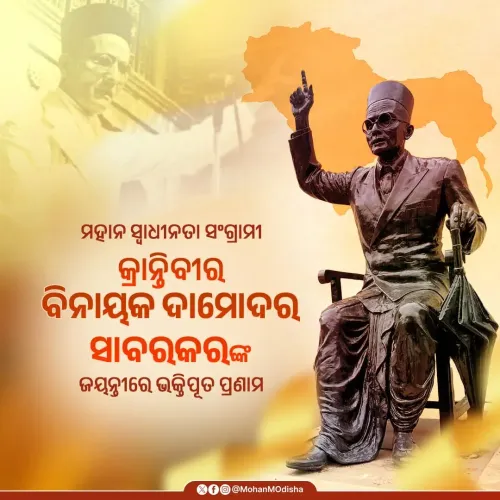
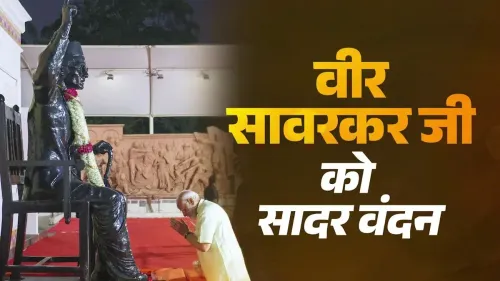
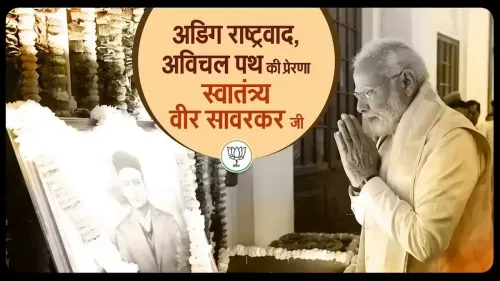
PM Modi pays tribute to Veer Savarkar on birth anniversary, 28 May
Synopsis
On Veer Savarkar's birth anniversary, Prime Minister Modi took to X to honour the freedom fighter's legacy of courage and social reform — and recalled his personal visit to the Andaman's Cellular Jail where Savarkar served his Kalapani sentence. The tribute reflects the BJP's sustained push to place Savarkar at the centre of India's national memory.
Key Takeaways
PM Narendra Modi paid tribute to Veer Savarkar on his birth anniversary on 28 May via a post and video on X .
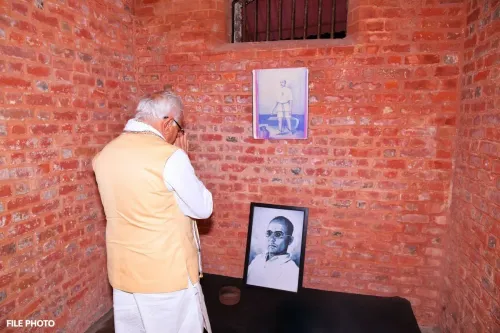
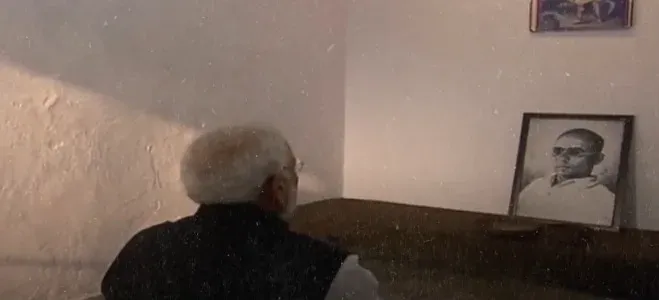
Modi recalled visiting the Cellular Jail in Andaman where Savarkar served his Kalapani sentence.
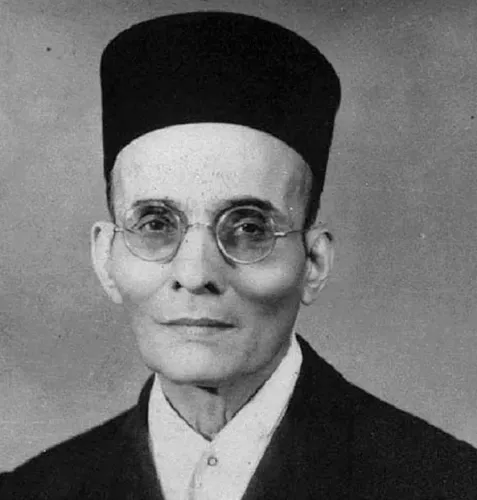
Vinayak Damodar Savarkar was born on 28 May 1883 in Nashik , Maharashtra.
Savarkar is credited with coining the term 'Hindutva' and was a leading figure in the Hindu Mahasabha .
His book 'The Indian War of Independence' , reframing the 1857 uprising , was banned by British colonial authorities.
Prime Minister Narendra Modi on Thursday, 28 May paid tribute to freedom fighter Veer Savarkar on his birth anniversary, honouring his legacy of courage, patriotism, and social reform. Modi shared both a post and a video on social media platform X, underscoring Savarkar's enduring relevance to India's national consciousness.
What Modi Said
In his post on X, Modi wrote: 'Remembering Veer Savarkar on his Jayanti. His courage and patriotism will always inspire people. His intellect and emphasis on social reform are also noteworthy.'
In an accompanying video, Modi elaborated: 'Today, on May 28, is the birth anniversary of freedom fighter Veer Savarkar. His sacrifice, courage, and determination continue to inspire us. Savarkar's personality was full of unique qualities. He was a worshipper of both weapons and scriptures. He was also a powerful poet and social reformer who emphasised harmony and unity.'
Modi also recalled a personal visit to the Cellular Jail in the Andaman Islands, where Savarkar served his infamous Kalapani sentence. 'I cannot forget the day when I visited the jail in Andaman where Veer Savarkar served his Kalapani sentence. His fearless and self-respecting nature did not conform to the mentality of slavery. I remember all that he did for the country,' he added.
Who Was Veer Savarkar
Vinayak Damodar Savarkar, popularly known as Veer Savarkar, was born on 28 May 1883 in Nashik, Maharashtra. A freedom fighter, politician, lawyer, and prolific writer, he is widely credited with coining the ideological term 'Hindutva'. He was also a prominent leader of the Hindu Mahasabha.
Savarkar's political awakening began in his high school years and deepened during his time at Fergusson College in Pune, where he was greatly influenced by nationalist leader Lokmanya Tilak. While studying law in the United Kingdom, he became active with revolutionary organisations including India House and the Free India Society.
Literary and Revolutionary Legacy
Savarkar authored several works advocating complete Indian independence through revolutionary means. His seminal book, 'The Indian War of Independence' — which reframed the 1857 uprising as the First War of Independence rather than a mere 'Sepoy Mutiny' — was banned by British colonial authorities. The work remains one of the earliest and most consequential reinterpretations of that historical event.
Historical Significance
Savarkar's legacy remains a subject of vigorous debate in Indian political discourse. His admirers, including the current government, regard him as an unsung hero whose contributions were historically marginalised. Critics, notably from opposition parties, have raised questions around certain episodes of his imprisonment. This annual tribute from the Prime Minister reflects the Bharatiya Janata Party (BJP)'s consistent effort to centre Savarkar in the mainstream national narrative. Notably, 28 May also marks the birth anniversary of several other national figures, making it a symbolically significant date in the political calendar.
Point of View
Which largely sidelined him. What is notable this year is the personal register: Modi invoking his Andaman visit adds emotional texture to what is otherwise a political statement. The Savarkar legacy debate — martyr or collaborator — remains unresolved in public memory, and the government's framing consistently presents only one side. Mainstream coverage rarely interrogates the selective nature of this remembrance or the historical context that makes it contested.
NationPress
20 Sept 2026
Frequently Asked Questions
Why did PM Modi pay tribute to Veer Savarkar on 28 May?
28 May is Veer Savarkar's birth anniversary, marking his birth on 28 May 1883 in Nashik. Prime Minister Modi paid tribute on X, praising Savarkar's courage, patriotism, and contributions to social reform and the freedom movement.
What did PM Modi say about Veer Savarkar?
Modi said Savarkar's 'courage and patriotism will always inspire people' and described him as 'a worshipper of both weapons and scriptures' and 'a powerful poet and social reformer.' He also recalled visiting the Cellular Jail in Andaman where Savarkar served his Kalapani sentence.
Who was Veer Savarkar?
Vinayak Damodar Savarkar (1883–1966) was a freedom fighter, lawyer, writer, and politician best known for coining the term 'Hindutva.' He was a leading figure of the Hindu Mahasabha and authored 'The Indian War of Independence,' which was banned by British authorities.
What was Savarkar's Kalapani sentence?
Savarkar was imprisoned by British colonial authorities in the Cellular Jail on the Andaman Islands — a notoriously harsh penal colony — where he served a rigorous sentence. The term 'Kalapani' refers to this exile, and it remains one of the most cited episodes of his life by his supporters.
Why is Savarkar's legacy politically significant in India today?
Savarkar is a contested figure in Indian history. The BJP and allied groups regard him as an underappreciated freedom fighter, while critics raise questions about certain aspects of his conduct during imprisonment. Annual tributes by senior BJP leaders, including the Prime Minister, are part of a broader effort to mainstream his legacy in the national narrative.