PM Modi promotes Gujarat water-governance model as Global South blueprint
Synopsis
Modi didn't just share an article — he positioned India's two-decade water journey, from Gujarat's Chintan Shivirs to national missions like Jal Jeevan, as a ready-made playbook for the water-stressed Global South. With a ₹73,000 crore treated-water market projected by 2047 and a USD 500 billion annual global funding gap flagged, the pitch is strategic as much as developmental.
Key Takeaways
PM Modi on 6 October 2026 shared an article on X promoting India's water-governance model as a reference for the Global South .
The article, co-authored by former Union water secretary Parameswaran Iyer and two other experts, examines reforms in Gujarat and India from 2001 to 2026 .
It identifies four lessons and a '4 Ps' framework — political leadership, financing, partnerships and people's participation — as pillars of effective water governance.
National programmes cited include Jal Jeevan Mission , Namami Gange , Atal Bhujal Yojana and Per Drop More Crop .
India's treated used-water market could generate ₹73,000 crore annually by 2047 , according to the authors' projections.
The world needs an additional USD 500 billion per year to meet SDG 6 on water and sanitation by 2030 , the article warns.
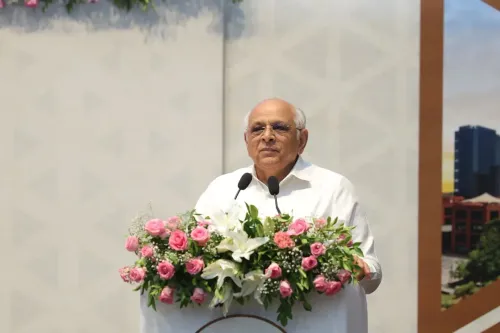
Prime Minister Narendra Modi on Tuesday, 6 October 2026, shared an article on social media platform X presenting India's water-governance journey — rooted in reforms first piloted in Gujarat — as a practical reference model for nations across the Global South. The article, titled 'From Gujarat to India: Water Lessons for the World', argues that water security is as much a governance and institutional challenge as an engineering one.
In his post, Modi said: 'Water security is not only about building infrastructure but also about good planning, strong local systems and involving communities in managing water.' He added that India's trajectory — from state-level reforms in Gujarat to large-scale national programmes — offers a replicable example for countries grappling with growing water needs.
The Article and Its Authors
The piece, published in a national daily, is co-authored by Parameswaran Iyer, former Union water resources secretary; Nitin Bassi, fellow at the Council on Energy, Environment and Water; and Daniel W Smith, assistant professor at George Mason University. Drawing on official data, policy records, existing literature and practitioner consultations, the authors examine water-governance reforms in Gujarat and India between 2001 and 2026.
Key Lessons and the '4 Ps' Framework
The authors identify four broad lessons from India's experience: prioritising governance alongside infrastructure; managing water resources and services in an integrated manner; placing communities at the centre of water management; and designing programmes with scale in mind.
Complementing these lessons is a '4 Ps' framework — political leadership, public and private financing, partnerships across levels of government and institutions, and people's participation. The article points to Gujarat's Chintan Shivirs between 2001 and 2014 as an early model for convening stakeholders and aligning water priorities with community expectations. A similar approach has since been replicated at the national level, the authors note, citing the Departmental Summit on Water organised by the Ministry of Jal Shakti and addressed by Modi in September 2026.
National Programmes Under the Spotlight
The article identifies several flagship national schemes as part of India's broader water-governance architecture: the Jal Jeevan Mission, Swachh Bharat Mission, Jal Shakti Abhiyan, Namami Gange, Atal Bhujal Yojana, and the Per Drop More Crop initiative. It traces the origins of this framework to reforms undertaken in Gujarat during Modi's tenure as chief minister from 2001 to 2014, which the authors describe as the early laboratory for what became national policy.
Market Opportunity and the Global Funding Gap
Looking ahead, the authors project that the annual market revenue from the sale of treated used water in India could reach approximately ₹73,000 crore by 2047 at current prices — highlighting reuse as a significant untapped resource. On community infrastructure, the article points to local bodies such as Pani Samitis and programmes for water conservation, harvesting and groundwater recharge as essential complements to physical infrastructure.
At the global level, the authors warn that the world remains off track on Sustainable Development Goal 6, which targets universal safe drinking water, sanitation and sustainable water resource management by 2030. They estimate that an additional USD 500 billion in annual investment is required worldwide to close the gap — underscoring the scale of the challenge India's model is being offered to address.
What Comes Next
The article's conclusion — that political commitment, financing and institutions are indispensable for large-scale water-governance reform — forms the core of what Modi amplified to his followers. Whether other Global South nations adopt elements of the Gujarat-to-India pathway will depend on how actively India's diplomatic and development channels promote the model in multilateral forums and bilateral engagements in the months ahead.
Point of View
However, carries political freight: attributing the national water missions' conceptual origins to Modi's chief ministership consolidates a personal legacy arc ahead of any multilateral water diplomacy India may pursue. The more consequential questions the article raises — the USD 500 billion annual global shortfall and whether India's own SDG 6 targets will be met on time — deserve as much scrutiny as the model being promoted. Governance frameworks travel well in conference rooms; whether they translate across vastly different political economies of the Global South is a harder, less publicised test.
NationPress
6 Oct 2026
Frequently Asked Questions
What is the Gujarat water-governance model PM Modi is promoting?
It refers to a set of institutional and community-centred water reforms first implemented in Gujarat between 2001 and 2014, during Modi's tenure as chief minister, and subsequently scaled into national programmes. The model emphasises governance and community participation alongside physical infrastructure, and is detailed in an article co-authored by former water secretary Parameswaran Iyer and two other researchers.
Which national water programmes does the article highlight?
The article cites the Jal Jeevan Mission, Swachh Bharat Mission, Jal Shakti Abhiyan, Namami Gange, Atal Bhujal Yojana and Per Drop More Crop as part of India's national water-governance framework, tracing their conceptual roots to Gujarat-era reforms.
What is the '4 Ps' framework mentioned in the article?
The '4 Ps' framework stands for political leadership, public and private financing, partnerships across levels of government and institutions, and people's participation. The authors present it as an approach to strengthening water governance that underpinned both Gujarat's early reforms and subsequent national programmes.
How large is the opportunity in treated water reuse in India?
The authors project that annual market revenue from the sale of treated used water in India could reach approximately ₹73,000 crore by 2047 at current prices. They argue that greater attention should be given to reuse for non-potable purposes to meet rising demand from cities, industry and agriculture.
Why is global water funding a concern raised in the article?
The authors note that the world is off track on Sustainable Development Goal 6, which targets universal access to safe drinking water and sanitation by 2030. They estimate a shortfall requiring an additional USD 500 billion in annual global investment, highlighting the urgency for scalable governance models such as the one India is now presenting.