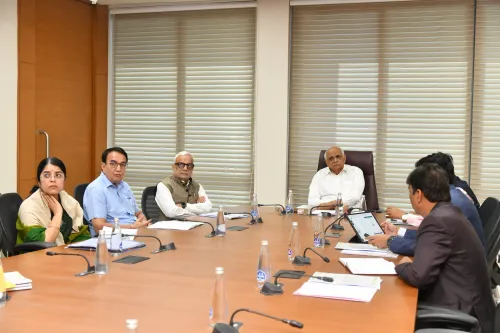
CM Bhupendra Patel: Gujarat's water reforms now a Global South blueprint
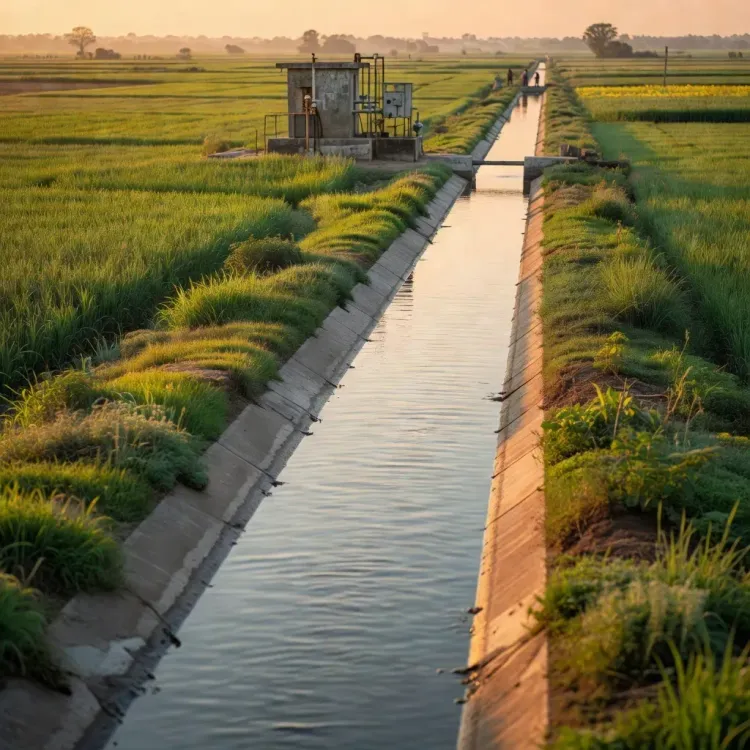
Synopsis
Gujarat CM Bhupendra Patel says the state's water governance reforms between 2001 and 2014, led by then-CM Narendra Modi, are being documented by IIM-B as a policy blueprint for the Global South — and as the template behind Jal Jeevan and Swachh Bharat Missions.
Key Takeaways
Gujarat CM Bhupendra Patel announced on October 6, 2026 that Gujarat's water reforms from 2001 to 2014 are the subject of an upcoming IIM Bangalore case study .
The case study is positioned as a governance blueprint for the Global South .
CM Patel credited the reforms to the leadership of PM Narendra Modi during his tenure as Gujarat Chief Minister.
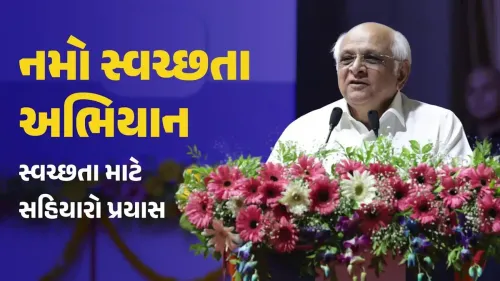
He described the reforms as a 'foundational laboratory' for the Swachh Bharat Mission and the Jal Jeevan Mission .
CM Patel called for continued 'mission mode' delivery to secure India's water future.
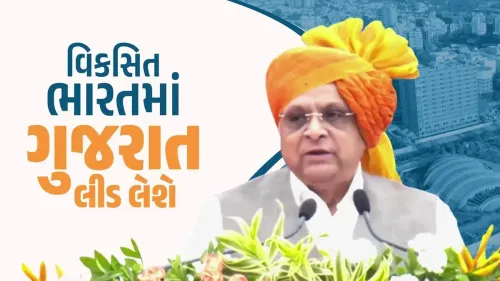
A state-level experiment in water governance, launched in the rubble of the 2001 Gujarat earthquake, is about to become a classroom case study for the developing world. Gujarat Chief Minister Bhupendra Patel on Tuesday, October 6, 2026 highlighted that Gujarat's water reforms between 2001 and 2014 — carried out under then Chief Minister Narendra Modi — are being documented by the Indian Institute of Management Bangalore (IIM-B) as a policy blueprint for the Global South.
From Gujarat's villages to a national mission template
CM Patel described Gujarat's water governance overhaul as a 'foundational laboratory' for two of India's most ambitious national programmes: the Swachh Bharat Mission and the Jal Jeevan Mission. The argument is a familiar one inside policy circles — that the administrative architecture, community mobilisation models, and delivery mechanisms field-tested in Gujarat during that thirteen-year period directly informed how New Delhi designed and scaled these schemes across the country.
The Jal Jeevan Mission, launched in 2019, aims to provide piped drinking water to every rural household in India — a target of over 190 million homes. The Swachh Bharat Mission, launched in 2014, set out to eliminate open defecation and build sanitation infrastructure at scale. Both programmes share a 'mission mode' delivery philosophy that Gujarat's reforms are credited with piloting.
IIM-B case study: what going into the curriculum means
The IIM-B documentation is not a routine government report. Business school case studies of this kind are used in classrooms across South Asia, Africa, and Southeast Asia — markets where the governance deficit in water and sanitation is acute. Having Gujarat's model enter that pedagogical circuit means administrators and policymakers in the Global South will study its sequencing, financing, and community-ownership structures alongside other canonical development interventions.
CM Patel framed the moment as a source of 'immense pride' — a rare instance where a sub-national Indian reform earns explicit international academic recognition, rather than simply being absorbed quietly into national policy.
The 'mission mode' doctrine and what it demands
The phrase 'mission mode' has become a signature of the current administration's delivery vocabulary — time-bound, target-driven, with clear accountability chains. CM Patel closed his post with a pointed declaration: 'Securing our water future indeed requires thinking big and delivering in mission mode.' The framing positions water security not as a bureaucratic routine but as a national-security imperative that demands the same urgency as an infrastructure project or a defence procurement.
With water stress intensifying across South Asia — driven by erratic monsoons, groundwater depletion, and rising urban demand — the Gujarat-to-national-policy pipeline is being offered as a replicable model precisely when the rest of the Global South needs one most.
The IIM-B case study is described as 'upcoming', meaning its formal release and curriculum integration are still ahead — and the conversation it will ignite in development-policy classrooms is just beginning.
Point of View
Internationally distributed format. For the BJP, this is brand architecture: converting governance history into a durable, peer-reviewed story. The timing, with the Jal Jeevan Mission still racing toward its household-coverage targets, also reinforces the ideological continuity argument — that present policy is the matured fruit of earlier local experimentation. For sceptics, the case study's reception will depend on whether IIM-B's methodology examines outcomes rigorously or largely affirms the political narrative already in circulation.
NationPress
6 Oct 2026
Frequently Asked Questions
What is the IIM Bangalore case study on Gujarat water reforms about?
The upcoming IIM Bangalore case study documents Gujarat's water governance reforms between 2001 and 2014 as a policy model for the Global South, examining how state-level innovations were later scaled into national programmes like the Jal Jeevan Mission.
How is Gujarat's water policy connected to the Jal Jeevan Mission?
Gujarat CM Bhupendra Patel says the administrative models and delivery mechanisms tested in Gujarat under then-CM Narendra Modi served as the foundational template for the Jal Jeevan Mission, launched nationally in 2019.
What did Gujarat CM Bhupendra Patel post about on X on October 6 2026?
CM Bhupendra Patel posted about Gujarat's 2001-2014 water reforms being recognised in an upcoming IIM Bangalore case study as a Global South governance blueprint, crediting PM Modi's leadership and calling for continued mission-mode water governance.
What is the Jal Jeevan Mission and what is its target?
Jal Jeevan Mission is a national programme launched in 2019 aimed at providing piped drinking water connections to every rural household in India, targeting over 190 million homes.
Why is the Global South interested in Gujarat's water reforms?
Countries in the Global South face acute water and sanitation deficits similar to what Gujarat addressed between 2001 and 2014; the IIM-B case study offers a documented, replicable model of how a large, resource-constrained state managed large-scale water governance reform.