Gujarat water model: 25-year case study offers Global South lessons
Synopsis
A new case study launched at IIM Bangalore documents how Gujarat's drought-era water reforms under then-CM Modi in 2001 became the blueprint for India's national water programmes — and now offers a replicable '4 Ps' governance model for water-scarce nations across the Global South.
Key Takeaways
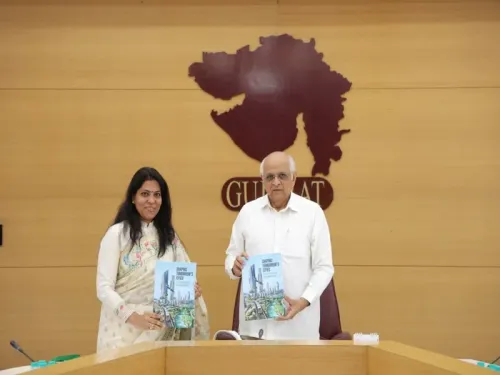
Case study 'From Gujarat to India: Water Lessons for the World' was launched at IIM Bangalore on 7 October 2026 , tracking 25 years of Indian water governance.
Gujarat's reforms begun in 2001 under then-Chief Minister Narendra Modi served as a 'laboratory' for national programmes including Jal Jeevan Mission , Namami Gange , and Atal Bhujal Yojana .
The study was co-authored by Daniel W.
Smith of George Mason University , Nitin Bassi , and former Union Secretary Parameswaran Iyer .
Four lessons for the Global South: strong governance, integrated water-resource management, community ownership, and implementation backed by political will and financing.
The '4 Ps' framework — political leadership, financing, partnerships, and people's participation — is presented as a replicable template for water-scarce nations.
A landmark academic case study titled 'From Gujarat to India: Water Lessons for the World' was launched at IIM Bangalore on 7 October 2026, documenting 25 years of water governance reform in India and presenting a replicable framework for water-scarce nations across the Global South. The study traces how localised experiments in Gujarat — initiated in 2001 — were scaled into some of the world's largest water management programmes after 2014.
From Drought-Prone State to National Blueprint
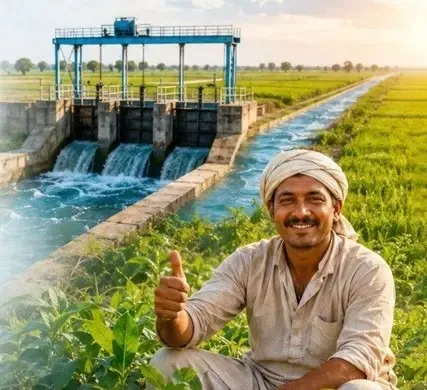
The case study records how Gujarat, then staring at recurrent droughts and chronic water scarcity, began a sweeping governance overhaul in 2001 under then-Chief Minister Narendra Modi, in coordination with George Mason University. Reforms encompassed groundwater recharge, improved water-use efficiency, institutional restructuring, and community participation — collectively transforming the state from 'water-scarce to water-abundant', according to the study.
The study characterises Gujarat's experience between 2001 and 2014 as a 'laboratory' for approaches that were later scaled nationally. Programmes such as the Jal Jeevan Mission (JJM), Jal Shakti Abhiyan, Namami Gange, Atal Bhujal Yojana (ABY), and Per Drop More Crop (PDMC) all drew on that foundational period, according to the authors.
Who Authored the Study and What It Argues
The case study was co-authored by Daniel W. Smith, Assistant Professor at George Mason University; Nitin Bassi; and Parameswaran Iyer, former Secretary to the Government of India. The three researchers collectively distil four lessons for the Global South: strong governance, integrated water-resource management, community ownership, and ambitious implementation backed by political will and financing.
Speaking at the launch, Daniel W. Smith said countries across the world 'can learn from these governance lessons and adapt them to their own circumstances as they work toward universal and sustainable water security.'
The '4 Ps' Framework
Central to the study's prescriptive argument is the '4 Ps' framework — political leadership, public and private financing, partnerships across levels of government and institutions, and people's participation. The framework was articulated by Prime Minister Narendra Modi during the Delhi Declaration in 2018 and is cited by the authors as having proved instrumental in strengthening India's water governance architecture.
Co-author Parameswaran Iyer argues that the '4 Ps' are 'worth emulating in any other context or geography' and could serve as a practical template for countries battling water scarcity. He emphasises that political leadership means concretely prioritising water — reflected in initiatives such as universal tap water access under JJM, the Clean Ganga mission, community-driven groundwater management, and awareness drives like Jal Shakti Abhiyan: Catch the Rain.
Iyer further underscores the role of community participation, citing examples such as villages resolving to become open-defecation free and preparing village-level water security plans as essential complements to top-down policy.
Global Context and What Comes Next
The study arrives as the world confronts a sharpening crisis over the availability of safe, potable water, with the Global South disproportionately exposed to water stress, agricultural disruption, and sanitation deficits. According to the case study, India's decade-long programme of large-scale water reform positions it as a credible reference model for developing nations seeking to compress timelines on water security.
The research partnership between Indian policymakers and George Mason University now stretches back over two decades, suggesting continued scope for refining and exporting these governance approaches. How the Global South's diverse governance contexts adapt the '4 Ps' model — and whether the Indian experience can survive translation to weaker institutional environments — will be the next test of its durability.
Point of View
Conditions that are rare in fragile Global South settings. The '4 Ps' framework is sound in theory, but its first 'P' — political leadership — is precisely what most water-stressed nations in Africa and South Asia lack. Without confronting that gap honestly, the case study risks being received as inspiration rather than instruction.
NationPress
7 Oct 2026
Frequently Asked Questions
What is the case study 'From Gujarat to India: Water Lessons for the World'?
It is an academic case study launched at IIM Bangalore on 7 October 2026, co-authored by Daniel W. Smith of George Mason University, Nitin Bassi, and former Union Secretary Parameswaran Iyer. It documents 25 years of water governance reform in Gujarat and India between 2001 and 2026, and draws four lessons for the Global South on replicating India's model.
What is the '4 Ps' framework for water governance?
The '4 Ps' framework refers to political leadership, public and private financing, partnerships across government levels and institutions, and people's participation. It was articulated by Prime Minister Narendra Modi during the Delhi Declaration in 2018 and is cited in the case study as central to India's water governance success.
Which national water programmes trace their origins to Gujarat's 2001 reforms?
According to the case study, programmes including the Jal Jeevan Mission (JJM), Jal Shakti Abhiyan, Namami Gange, Atal Bhujal Yojana (ABY), and Per Drop More Crop (PDMC) all drew from governance approaches first tested in Gujarat between 2001 and 2014.
Why is this study relevant to the Global South?
The Global South faces acute water stress, sanitation deficits, and agricultural water insecurity. The study presents India's 25-year reform journey — particularly the '4 Ps' framework — as a replicable governance model that countries can adapt to their own institutional contexts.
Who partnered with the Gujarat government on water governance reforms?
George Mason University, a globally recognised research institution, was a key academic partner in the water governance reforms initiated in Gujarat in 2001. The partnership has continued for over two decades and culminated in the publication of the current case study.