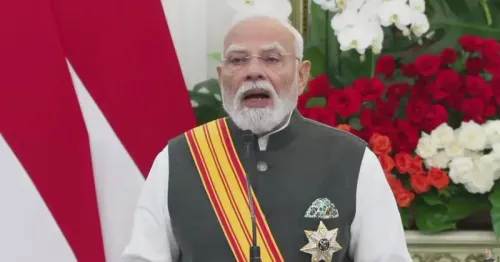
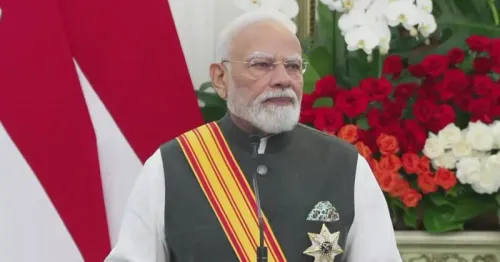
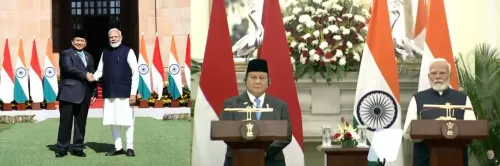
PM Modi addresses joint press meet with Indonesia's President Prabowo
Synopsis
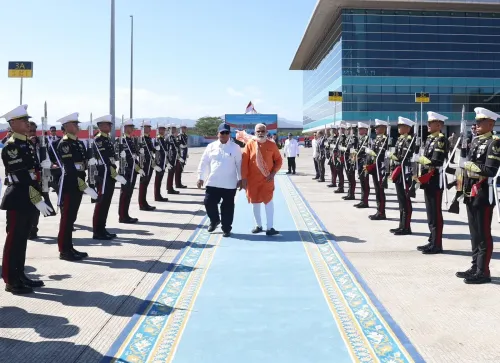
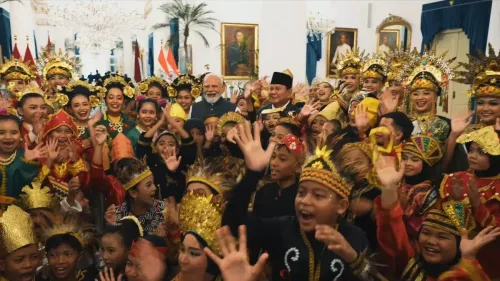
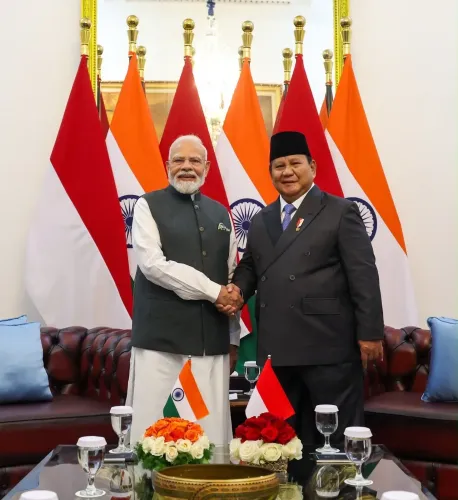
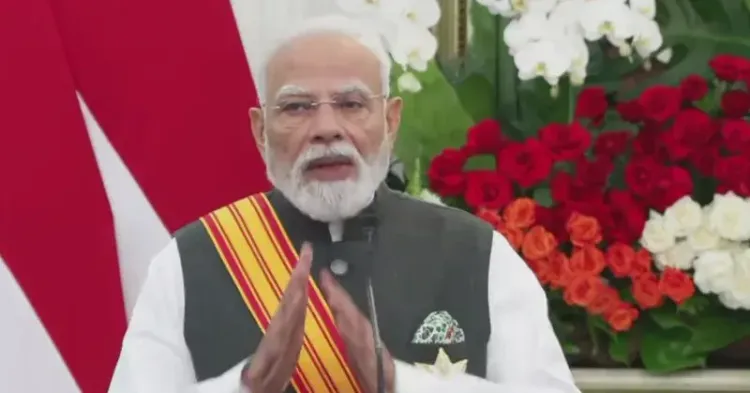
Prime Minister Narendra Modi addressed a joint press conference with Indonesian President Prabowo Subianto on 7 July 2026. The high-level engagement reflects India's deepening ties with Indonesia under the Act East Policy, spanning defence, trade, and Indo-Pacific maritime cooperation rooted in a strategic partnership dating to 2005.
Key Takeaways
PM Narendra Modi and Indonesian President Prabowo Subianto held a joint press meet on 7 July 2026 .
India and Indonesia have maintained a formal Strategic Partnership since 2005 , covering defence, trade, and counter-terrorism.
Indonesia is the largest economy in ASEAN and a key partner for India in the Indo-Pacific .
The engagement aligns with India's Act East Policy , which prioritises deeper ties with ASEAN member states.
Both nations share overlapping maritime security interests in the Indo-Pacific region.
Follow-up on defence and trade pacts, and the next ASEAN-India Summit , will be key milestones to watch.
Prime Minister Narendra Modi addressed a joint press conference alongside Indonesian President Prabowo Subianto on Tuesday, 7 July 2026, marking a high-level bilateral engagement between the two nations as part of ongoing efforts to deepen India-Indonesia ties.
Context
The joint press meet signals a significant diplomatic moment between India and Indonesia, the largest economy in ASEAN. Such summits between the two leaders provide a platform to publicly affirm shared priorities and announce the direction of bilateral cooperation. President Prabowo Subianto, a former military general, assumed the Indonesian presidency following the 2024 election, and this engagement represents a consolidation of ties at the highest level under his administration.
Policy Backdrop
India and Indonesia have maintained a formal Strategic Partnership since 2005, when both nations signed a Joint Declaration covering defence cooperation, trade, and counter-terrorism. Under India's Act East Policy, successive governments have prioritised deepening engagement with ASEAN member states, with Indonesia occupying a central position given its geographic scale and economic weight. High-level interactions between the two countries have historically addressed maritime security, connectivity, and coordination on multilateral platforms.
India and Indonesia share overlapping maritime interests in the Indo-Pacific, making defence and naval cooperation a recurring agenda item at bilateral summits. The broader pattern of India's Indo-Pacific outreach places Indonesia as a critical node in a network of partnerships that also includes Japan, Australia, and ASEAN as a bloc.
Stakeholders and Impact
The defence establishments of both countries stand to benefit from sustained high-level political signalling, which typically precedes or reinforces practical cooperation agreements. Trade and business communities on both sides also watch such summits closely, as joint statements often set the tone for investment frameworks and market-access discussions. Indonesia's position as a major emerging market and India's growing manufacturing and services base make economic complementarity a natural focus.
For the broader Indo-Pacific region, an India-Indonesia summit carries strategic weight, as both nations are large democracies with independent foreign-policy postures. Their alignment on key regional issues can influence multilateral forums, including the G20 — a grouping both countries have chaired in recent years — and ASEAN-India dialogue mechanisms.
What's Next
Observers will watch for any follow-up defence or trade agreements that may be formalised in the wake of this engagement. Progress on connectivity initiatives and maritime security frameworks will be key indicators of how the bilateral relationship translates summit-level momentum into tangible outcomes. The next ASEAN-India Summit is expected to serve as a further milestone for tracking implementation of any commitments made during this visit.
Point of View
As ASEAN's anchor economy, is not a peripheral partner but a central one in India's Indo-Pacific calculus — and summit-level optics matter for signalling intent to the region. The engagement also reflects a broader pattern in which both nations leverage bilateral momentum ahead of multilateral forums such as the ASEAN-India Summit and the G20. For the Prabowo administration, a high-profile meeting with India's Prime Minister carries domestic and regional legitimacy, reinforcing Indonesia's own ambitions as a major Indo-Pacific power.
NationPress
5 Oct 2026
Frequently Asked Questions
Why did PM Modi meet Indonesian President Prabowo Subianto?
PM Modi and President Prabowo Subianto held a joint press meet on 7 July 2026 as part of high-level bilateral engagement aimed at deepening India-Indonesia ties across defence, trade, and Indo-Pacific cooperation.
What is the India-Indonesia Strategic Partnership?
India and Indonesia signed a Joint Declaration establishing a Strategic Partnership in 2005, covering defence cooperation, trade, and counter-terrorism. It forms the foundation of the two countries' bilateral relationship.
What is India's Act East Policy and how does Indonesia fit in?
India's Act East Policy prioritises deeper engagement with ASEAN nations and the broader Indo-Pacific region. Indonesia, as ASEAN's largest economy, is a central partner in this framework.
What are the key areas of India-Indonesia cooperation?
The two countries cooperate on maritime security, defence, trade, connectivity, and multilateral coordination, including in forums such as the G20 and ASEAN-India dialogue mechanisms.
What should we watch after the Modi-Prabowo summit?
Analysts will monitor any new defence or trade agreements and progress on connectivity initiatives, with the next ASEAN-India Summit serving as a key implementation milestone.