PM Modi challenges Corporate India on jobs, wages at FICCI AGM 2026
Synopsis
At FICCI's Annual Convention, PM Modi turned the tables on Corporate India — asking point-blank whether tax cuts and policy concessions had produced more jobs or higher wages. The answer, implied in his own remarks, was no. Maharashtra's Opposition pounced, calling it a decade-late admission of failure. The exchange puts India's jobs deficit squarely at the centre of the next political battleground.
Key Takeaways
PM Narendra Modi publicly challenged corporate leaders at the FICCI AGM in New Delhi on 20 November 2026 to show job and wage growth in return for government concessions.
Modi cited a corporate tax reduction from 30% to 22% and income tax exemptions up to ₹12 lakh as examples of state support extended to industry.
Shiv Sena (UBT) MP Sanjay Raut accused the Centre of failing its own pledge of two crore jobs per year , saying not even two lakh jobs were delivered over 12 years .
Maharashtra Congress leader Vijay Wadettiwar argued job creation remains the Central government's primary duty, calling the PM's remarks a deflection.
The row surfaces amid ongoing debate about whether India's GDP growth has generated sufficient formal, quality employment.
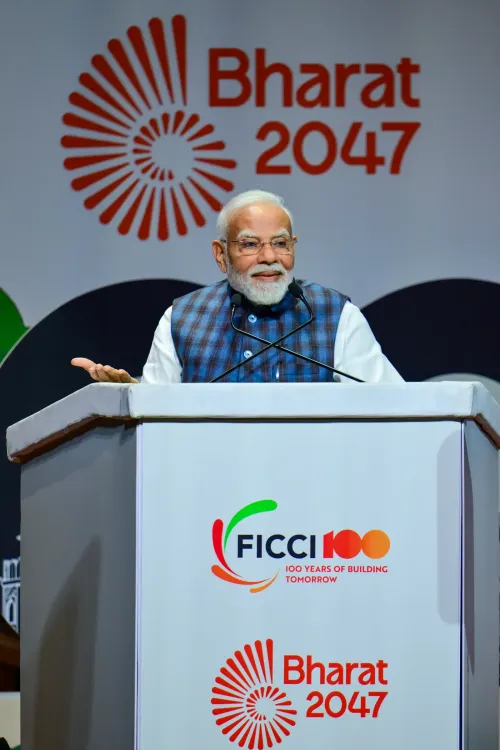
Prime Minister Narendra Modi on Thursday, 20 November 2026, publicly challenged India's top business leaders to demonstrate that government tax concessions and policy reforms have produced real gains in employment and worker salaries — triggering a sharp political row in Maharashtra that has laid bare deepening tensions between the ruling dispensation and the Opposition over the country's jobs crisis.
What PM Modi Said at FICCI AGM
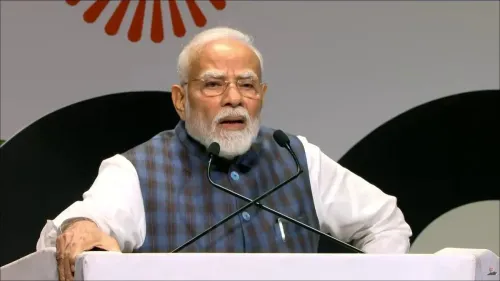
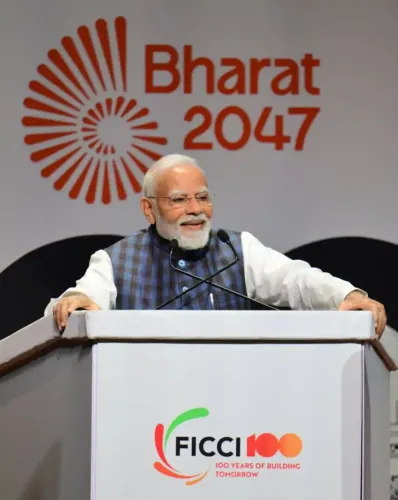
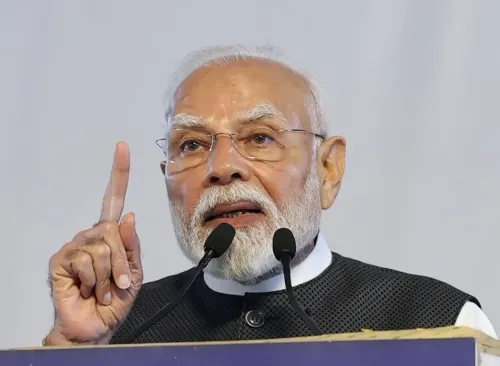
Addressing the Federation of Indian Chambers of Commerce and Industry (FICCI) Annual General Meeting and Annual Convention at Bharat Mandapam in New Delhi, Modi pointedly asked industry chiefs whether the reduction in corporate tax from 30% to 22% — and income tax exemptions for annual earnings up to ₹12 lakh — had translated into tangible benefits for workers on the ground.
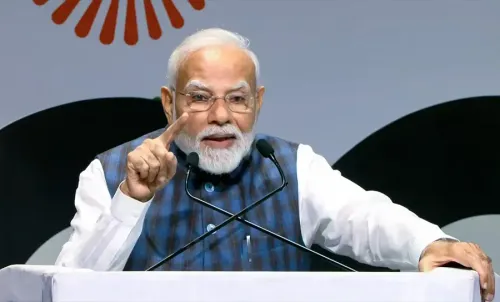
'Have you increased the salaries of your employees? Have you increased the number of employees? No! It is always: Modi ji, you do it; we will see what happens,' the Prime Minister said, addressing assembled business leaders directly.
He also flagged what he described as an insatiable appetite for further concessions within corporate circles, urging businesses to invest in large-scale manufacturing, raise domestic product standards, and compete aggressively in global markets rather than waiting for the state to lead every step of economic expansion.
Opposition Fires Back in Maharashtra
The Prime Minister's remarks drew swift and pointed pushback from Opposition leaders in Maharashtra, who argued that Modi was attempting to shift accountability for unemployment onto private industry after more than a decade in power at the Centre.
Shiv Sena (UBT) Member of Parliament Sanjay Raut launched a sharp critique, contending that job creation is fundamentally the elected government's obligation, not that of private conglomerates. Invoking the Bharatiya Janata Party (BJP)'s past electoral pledges, Raut questioned the administration's record on formal employment and public-sector privatisation.
'The Prime Minister should ask industrialists how many people they have given jobs to and how many people have lost their jobs in the public sector enterprises that have come under his control. It is your responsibility to generate employment, isn't it? If you have given industrialists so many concessions, then creating jobs is their responsibility. You had promised to provide two crore jobs every year. But in 12 years, even two lakh people have not received jobs,' Raut said.
Senior Maharashtra Congress leader Vijay Wadettiwar echoed those concerns, accusing the Prime Minister of double standards — extending substantial tax breaks to corporates while now deflecting the burden of job creation onto them. Wadettiwar insisted that generating employment for the country's youth remains primarily the Central government's responsibility, citing youth unemployment and agrarian distress as pressing, unresolved concerns.
The Wider Context: Jobs vs. Growth
Modi's remarks at FICCI arrive against a backdrop of persistent questions about the quality of job creation in India's expanding economy. While GDP growth has remained robust in recent years, critics argue that formal employment gains have lagged behind, particularly in manufacturing and the organised sector. This comes amid recurring debate about whether India's growth has been adequately 'job-rich' — a concern flagged repeatedly by economists, the International Labour Organization, and domestic think-tanks.
Notably, the government has previously pointed to production-linked incentive (PLI) schemes, infrastructure investment, and start-up ecosystem growth as evidence of employment creation. However, Opposition parties argue that aggregate informal sector data masks the full extent of joblessness among youth and rural workers.
What Happens Next
The political exchange is likely to intensify ahead of several upcoming state elections, where unemployment and economic distress remain key voter concerns. Industry bodies including FICCI are yet to issue a formal response to Modi's challenge. The government has not indicated any new policy announcement linked to the remarks, but analysts suggest the speech signals heightened pressure on Corporate India to report and demonstrate employment outcomes more transparently going forward.
Point of View
He implicitly acknowledges that they haven't — handing the Opposition a ready-made accountability line. The deeper issue the speech sidesteps is structural: India's formal employment elasticity has weakened, and PLI-linked output growth has not proportionately translated into headcount gains. Blaming corporate reticence is easier than addressing labour law rigidities, skilling gaps, and the mismatch between high-growth sectors and labour-absorbing ones. If Modi's intent is to publicly pressure industry into action, the absence of a measurement or compliance mechanism means the speech risks being remembered as a venting session rather than a policy moment.
NationPress
20 Nov 2026
Frequently Asked Questions
What did PM Modi say about jobs and wages at the FICCI AGM?
PM Modi, speaking at the FICCI Annual General Meeting on 20 November 2026 at Bharat Mandapam in New Delhi, asked corporate leaders whether the government's tax concessions — including cutting corporate tax from 30% to 22% and exempting incomes up to ₹12 lakh — had led to higher employee salaries or more jobs. He said the answer from industry had consistently been negative, with businesses continuing to ask the government to act rather than investing themselves.
Why did the Opposition in Maharashtra criticise PM Modi's remarks?
Opposition leaders argued that Modi's challenge to corporate India was an attempt to deflect the government's own accountability for unemployment. Shiv Sena (UBT) MP Sanjay Raut and Congress leader Vijay Wadettiwar both contended that generating employment is the primary duty of the elected government, not private companies, and pointed to unfulfilled promises of two crore jobs per year.
What was Sanjay Raut's specific charge against the government on jobs?
Sanjay Raut alleged that despite a promise of two crore jobs per year, the Modi government had failed to deliver even two lakh jobs over 12 years. He also questioned how many jobs had been lost in public sector enterprises that came under government control during this period.
What is the broader significance of PM Modi's remarks at FICCI?
The remarks signal a public shift in the government's framing of the jobs debate — holding corporate India accountable for employment outcomes after years of tax and policy support. It arrives amid persistent criticism that India's economic growth has not been sufficiently 'job-rich', particularly in the formal and manufacturing sectors.
What corporate tax changes did PM Modi reference in his speech?
Modi referred to the reduction of India's corporate tax rate from 30% to 22%, and the introduction of income tax exemptions for individuals earning up to ₹12 lakh annually, citing these as significant concessions the government had extended to incentivise private investment and growth.