Modi targets Congress over 'Nation First', slams 'chronic dissatisfaction'
Synopsis
Modi used a Republic TV platform to reframe the 2025 political contest as a values battle — pitting his government's 'Nation First' record against what he called the Congress's institutionalised negativity. The Gandhi invocation was pointed: he is arguing that Congress has no claim to its own founding legacy.
Key Takeaways
PM Narendra Modi on 22 June accused Congress of abandoning the 'Nation First' principle associated with Mahatma Gandhi's era.
He described the opposition's stance as 'chronic dissatisfaction' , alleging it opposes infrastructure and EV supply chains without offering alternatives.
Modi cited ₹25,000 crore in housing allocations and a metro network serving 12.8 million daily commuters as governance achievements.
The income-tax threshold has risen from ₹2 lakh (2013–14) to ₹12 lakh with zero liability, he said.
Government medicine schemes save families around ₹40,000 crore annually; senior citizens above 70 receive free treatment up to ₹5 lakh .
Modi urged youth to align with a 'Viksit Bharat' vision and warned against being misled by opposition narratives.
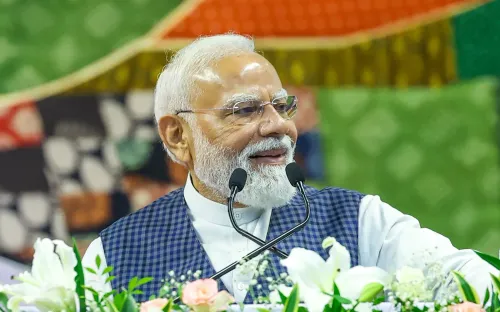
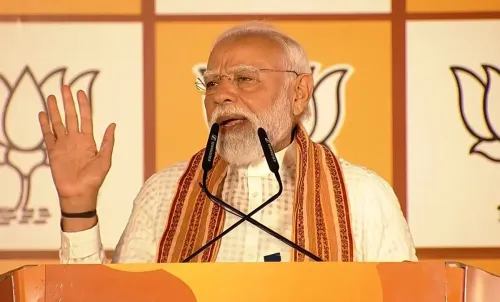
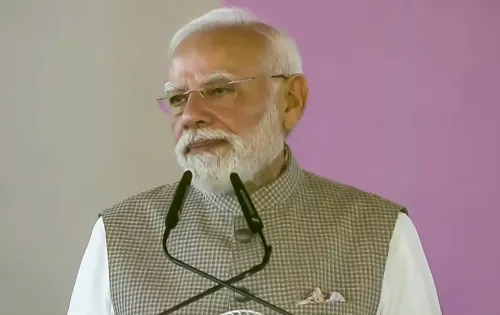
Prime Minister Narendra Modi on Monday, 22 June launched a sharp attack on the Indian National Congress, accusing the party of abandoning the 'Nation First' principle that, according to him, defined the Congress under Mahatma Gandhi. Speaking at a special programme on Republic TV, Modi contrasted what he called the opposition's 'chronic dissatisfaction' with his government's record of national development over the past 12 years.
The Gandhi Contrast
Modi argued that the Congress of Mahatma Gandhi's era was animated by genuine patriotic zeal — a spirit he said the party no longer upholds. 'This thought has also become like a false dream now. Will it ever come back in Congress which was in Gandhi ji's time?' he asked, drawing a pointed distinction between the party's historical legacy and its present-day conduct.
Opposition Accused of 'Chronic Dissatisfaction'
The Prime Minister accused Congress and its allies of opposing infrastructure projects, questioning supply chains for electric vehicles, and spreading pessimism rather than offering constructive alternatives. He urged young voters to 'understand the character of these people', warning that failing to do so would lead them astray. 'Understanding the character of these people is very important... otherwise you will be misled,' he said.
Key Governance Claims
Modi outlined several measures he said reflect the 'Nation First' philosophy in practice. On housing, he said stalled projects had been revived through an allocation of ₹25,000 crore. On urban mobility, he noted that 2.8 million people now travel daily on metro networks in major cities, with 12.8 million commuters using the broader metro system overall.
On taxation, he highlighted a shift from the 2013–14 regime — when income above ₹2 lakh was taxable — to the present threshold under which individuals earning up to ₹12 lakh pay no income tax. He also pointed to medicines available at discounts of up to 80 per cent under government schemes, helping families save approximately ₹40,000 crore annually, and said senior citizens above 70 years are now eligible for free treatment of up to ₹5 lakh.
Ease of Living and Aspirational India
The Prime Minister cited improvements in daily governance — simpler driving licence procedures and passports issued within three days — as evidence of administrative reform. He said rising public demands for better roads, punctual trains, and Vande Bharat services reflected growing aspirations rather than dissatisfaction, framing them as a vote of confidence in governance.
Modi concluded by urging entrepreneurs, innovators, and startups to view global challenges as opportunities, reiterating his government's commitment to the vision of a 'Viksit Bharat' (Developed India). He expressed confidence that India's youth would witness a developed India within their lifetimes.
Point of View
He attempts to delegitimise the opposition on its own historical turf rather than merely on policy. The 'chronic dissatisfaction' framing is also strategically useful: it repackages all criticism as pathology rather than accountability. What the speech does not address is the gap between the headline numbers — ₹25,000 crore in housing, ₹40,000 crore in medicine savings — and independently verified outcomes. In an election cycle, the burden of proof on those figures will only grow.
NationPress
21 Sept 2026
Frequently Asked Questions
What did PM Modi say about Congress and the 'Nation First' principle?
Modi argued that the Congress under Mahatma Gandhi embodied a genuine 'Nation First' spirit that the party no longer upholds. Speaking on 22 June, he questioned whether that founding ethos could ever return to the present-day Congress.
What did Modi mean by 'chronic dissatisfaction' in the opposition?
Modi used the phrase to describe what he said is a pattern of opposing government initiatives — infrastructure projects, EV supply chains — without offering constructive alternatives. He urged young voters to recognise this as a defining trait of opposition parties.
What governance achievements did Modi highlight in his speech?
Modi cited a ₹25,000 crore housing allocation, a metro network with 12.8 million daily commuters, a zero income-tax threshold up to ₹12 lakh, medicine discounts of up to 80 per cent saving families ₹40,000 crore annually, and free healthcare of up to ₹5 lakh for citizens above 70 years.
Where did PM Modi make these remarks?
The Prime Minister made these remarks during a special programme on Republic TV on Monday, 22 June, in New Delhi.
What is 'Viksit Bharat' and why did Modi invoke it?
'Viksit Bharat' translates as 'Developed India' and is the BJP-led government's overarching development vision. Modi invoked it to frame his government's agenda as aspirational and forward-looking, contrasting it with what he described as the opposition's negativity.