PM Modi to Lay Foundation of Jaipur Metro Phase-2 on July 4
Synopsis
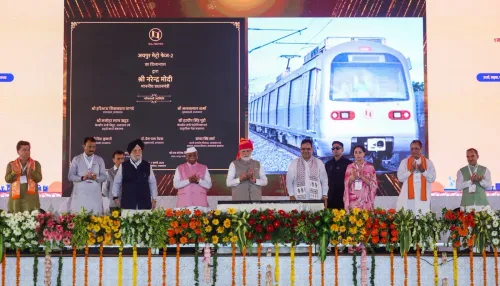
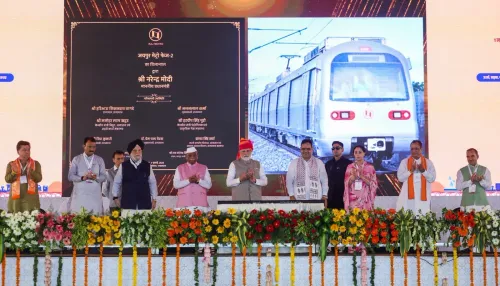
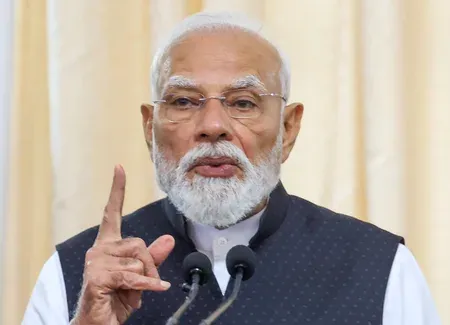
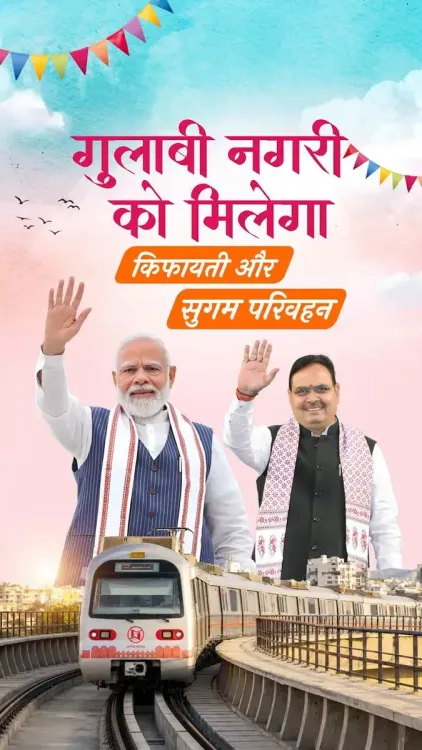
Prime Minister Narendra Modi will lay the foundation stone of Jaipur Metro Phase-2 on July 4, the Rajasthan CMO announced. The over Rs 13,000 crore project will connect Prahladpura to Pinjrapol Gaushala, aiming to ease traffic congestion and boost sustainable urban mobility in the state capital.
Key Takeaways
PM Narendra Modi will lay the foundation stone of Jaipur Metro Phase-2 on 4 July 2026 .
The project is estimated to cost over Rs 13,000 crore .
The new corridor will run from Prahladpura to Pinjrapol Gaushala .
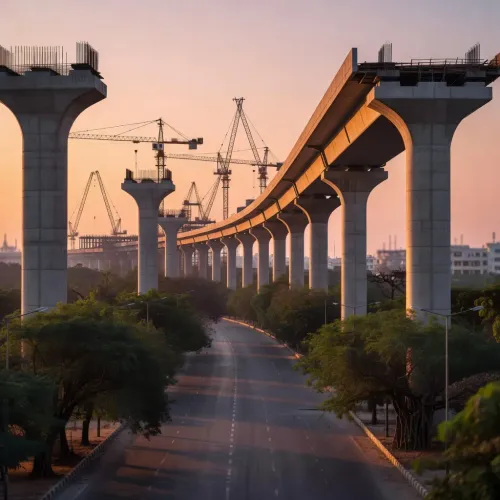
The project aims to reduce traffic congestion, cut travel time, and improve public transport access in Jaipur .
Jaipur Metro Phase-1 , covering Mansarovar to Chandpole, began commercial operations in 2015 .
The expansion aligns with Rajasthan's broader Viksit Rajasthan urban development agenda.
The Chief Minister's Office of Rajasthan announced on 1 July 2026 that Prime Minister Narendra Modi will lay the foundation stone of Jaipur Metro Phase-2 on 4 July 2026, marking a significant push for urban mobility in the state capital. The project, estimated to cost over Rs 13,000 crore, will extend metro connectivity from Prahladpura to Pinjrapol Gaushala.
Context
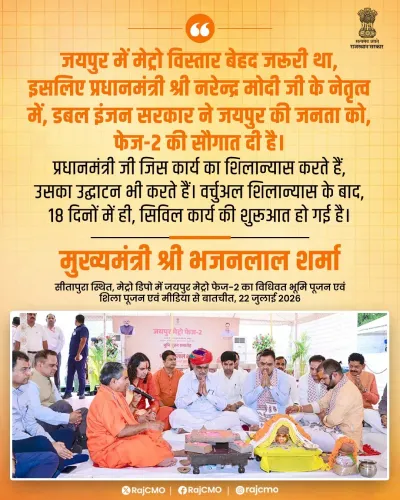
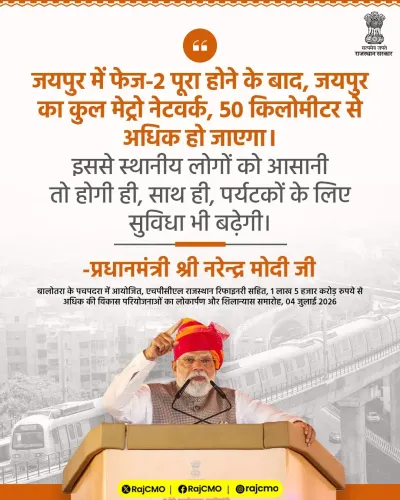
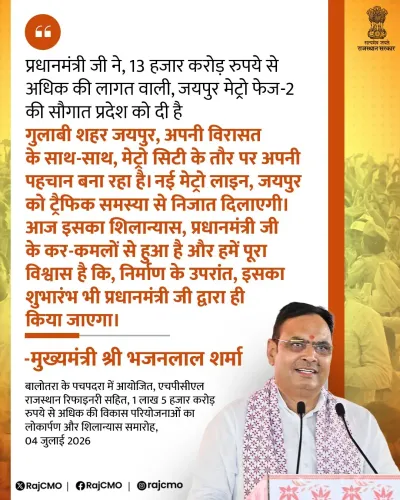
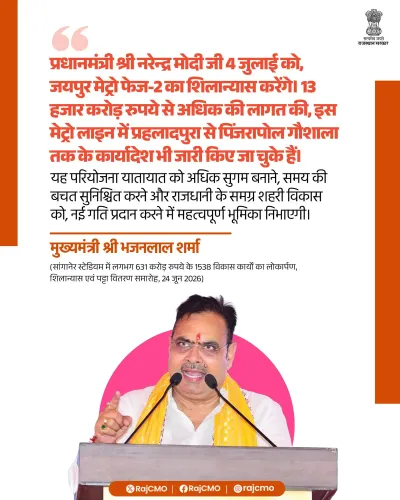
The Rajasthan CMO's post states: 'प्रधानमंत्री श्री नरेन्द्र मोदी जी 4 जुलाई को, जयपुर मेट्रो फेज-2 का शिलान्यास करेंगे' — 'Prime Minister Narendra Modi will lay the foundation stone of Jaipur Metro Phase-2 on July 4.' The announcement positions the project as a driver of sustainable urban development for Jaipur, Rajasthan's capital and largest city. According to the post, the project is expected to ease traffic pressure, reduce travel time, and make public transport more accessible across the city.
Jaipur Metro's first phase, covering the Mansarovar to Chandpole corridor, commenced commercial operations in 2015 following construction approval in 2010. Phase-2 represents the next leg of that network, with the new corridor designed to serve areas not yet connected to the metro grid.
Policy Backdrop
The project fits within a broader national pattern of phased metro expansions across Indian state capitals, driven by the National Urban Transport Policy, which has guided urban rail investments since the 2010s. Such projects typically combine central and state government funding and are framed as contributors to both local mobility goals and national urban development targets.
Prime Minister Modi has previously inaugurated metro projects in multiple state capitals, making such foundation-stone ceremonies a recurring feature of the government's infrastructure outreach. The Rajasthan government has positioned metro and urban transport investment as a pillar of its Viksit Rajasthan development agenda, as reflected in the hashtags accompanying the post.
Stakeholders and Impact
The primary beneficiaries of Phase-2 will be daily commuters and urban residents in the Prahladpura and Pinjrapol Gaushala corridors, areas that currently lack direct metro access. Improved connectivity is expected to reduce dependence on private vehicles and ease congestion on key arterial roads in Jaipur.
At a projected cost of over Rs 13,000 crore, the project represents one of the larger single infrastructure commitments in Rajasthan's recent history. Successful execution would extend the metro network's reach and potentially integrate with the existing Phase-1 line to create a more comprehensive urban transit system.
What's Next
Following the 4 July foundation-stone ceremony, attention will shift to formal project sanction from the Ministry of Housing and Urban Affairs and the release of a construction timeline. Integration plans with the existing Phase-1 corridor and land acquisition progress will be key milestones to watch in the months ahead.
If the project proceeds on schedule, Jaipur's metro network would emerge as one of the more expansive urban rail systems in northern India's non-metro-tier cities, setting a potential benchmark for similar expansions in other Rajasthan urban centres.
Point of View
Securing a Modi appearance for a Rs 13,000 crore project is a significant political and administrative win, reinforcing the state's positioning under the 'Viksit Rajasthan' branding. The project also fits a national arc of expanding metro networks beyond the largest metros into second-tier state capitals, part of a longer push to shift urban commuters away from private vehicles. How quickly construction milestones follow the ceremony will determine whether Phase-2 becomes a lasting infrastructure legacy or a recurring headline.
NationPress
30 Sept 2026
Frequently Asked Questions
When will PM Modi lay the foundation stone of Jaipur Metro Phase-2?
PM Modi is scheduled to lay the foundation stone of Jaipur Metro Phase-2 on 4 July 2026 , as announced by the Rajasthan Chief Minister's Office.
What is the cost of Jaipur Metro Phase-2?
Jaipur Metro Phase-2 is projected to cost over Rs 13,000 crore , making it one of the largest infrastructure commitments in Rajasthan in recent years.
Which areas will Jaipur Metro Phase-2 connect?
The Phase-2 corridor will connect Prahladpura to Pinjrapol Gaushala , extending metro connectivity to parts of Jaipur not currently served by the existing network.
What is the current status of Jaipur Metro?
Jaipur Metro Phase-1, covering the Mansarovar to Chandpole corridor, has been in commercial operation since 2015 . Phase-2 is the planned extension of this network.
What are the benefits of Jaipur Metro Phase-2?
According to the Rajasthan CMO, Phase-2 will make public transport more accessible, reduce traffic congestion, save travel time, and contribute to the sustainable urban development of Jaipur .