Modi: 20 Crore Historic Records Now Live on Abhilekh Patal Portal
Synopsis
PM Modi revealed on Mann Ki Baat that India's National Archives has digitised over 20 crore historical documents — from 7th-century Gilgit birch-bark manuscripts to Netaji's INA records and Constituent Assembly files — now freely accessible at abhilekh-patal.in. India's biggest-ever archival democratisation just went live.
Key Takeaways
PM Narendra Modi announced on Mann Ki Baat's 133rd episode (April 26, 2025) that over 20 crore historical documents are now publicly accessible online.
The Abhilekh Patal Portal (www.abhilekh-patal.in), run by the National Archives of India , hosts nearly 100 million digitised files for free public access.
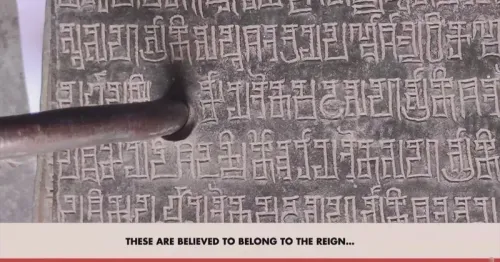
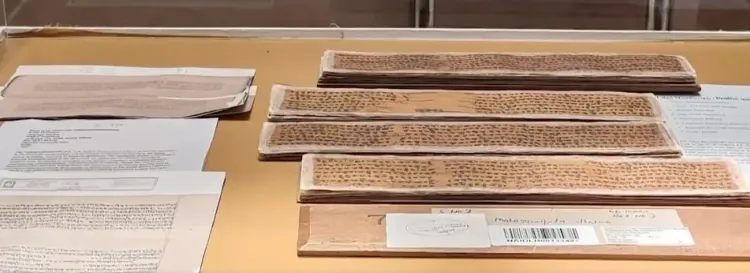
The portal includes 7th-century Gilgit manuscripts on Bhoj Patra and the 8th-century Shri Bhuvalay — a unique numerical grid text.
Historical records related to Rani Lakshmibai's 1857 uprising decisions , Netaji Bose's INA , and Pandit Madan Mohan Malaviya's BHU founding are available on the portal.
Rare documents from India's Constituent Assembly (1946–1949) are also accessible, offering primary source material on the drafting of the Indian Constitution.
The initiative marks one of India's largest-ever archival digitisation efforts , positioning the country alongside global leaders like the US and UK in open archival access.
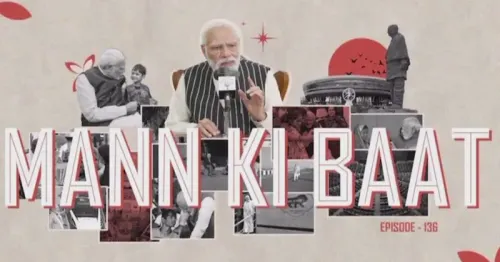
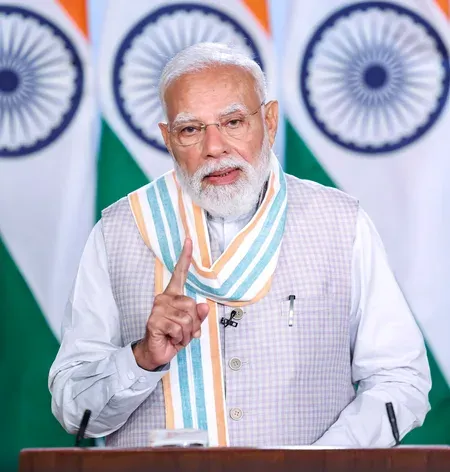
New Delhi, April 27 (NationPress): Prime Minister Narendra Modi announced on Sunday, April 26, that the National Archives of India (NAI) has made over 20 crore invaluable historical documents publicly accessible through its dedicated Abhilekh Patal Portal — a landmark digital initiative that transforms how Indians connect with their own history. The announcement came during the 133rd episode of Mann Ki Baat, Modi's monthly radio address to the nation.
What Is the Abhilekh Patal Portal
The Abhilekh Patal Portal for Access to Archives and Learning is an initiative of the National Archives of India, designed to bring its vast repository of archival records within reach of every citizen — researchers, students, historians, and the general public alike — with a single click at www.abhilekh-patal.in.
The platform houses reference material from nearly 100 million files preserved by the institution, now digitised and catalogued for open public access. This is one of the largest single-phase digitisation efforts undertaken by any Indian government institution in recent memory.
"Just a few days ago, the National Archives of India shared a unique database on a dedicated portal. This organisation has digitised and made public over 20 crore invaluable documents," PM Modi said during Mann Ki Baat.
Rare Manuscripts and Ancient Texts Now Accessible
Among the most remarkable items now available to the public are 7th-century Gilgit manuscripts written on Bhoj Patra (birch bark) — among the oldest surviving Sanskrit manuscripts in the world, originally discovered in the Gilgit region of present-day Pakistan-occupied Kashmir in 1931.
The portal also features the Shri Bhuvalay, an extraordinary 8th-century text composed entirely in numerical form arranged as a grid — a linguistic and mathematical marvel that scholars have long sought to decode. Its digital availability marks a significant moment for academic research in India.
"Some of these are very interesting — 7th-century Gilgit manuscripts written on Bhoj Patra. Here, you will also find an interesting 8th-century text, Shri Bhuvalay. This text, based on numbers, is in the form of a grid," the Prime Minister elaborated.
Freedom Struggle Documents: Rani Lakshmibai, Netaji, and Malaviya
The portal carries significant weight for those researching India's freedom movement. Historical correspondence related to Rani Lakshmibai is now accessible, shedding light on her strategic decisions during the 1857 uprising — a rebellion that many historians now regard as India's first organised war of independence.
For admirers of Netaji Subhash Chandra Bose, the portal hosts a wide collection of documents covering his life, the Azad Hind Fauj (Indian National Army), and his speeches — material that has historically been scattered across institutions in India, Germany, Japan, and the UK.
"For those who are great admirers of Netaji Subhash, there are many documents related to Netaji's life, the Azad Hind Fauj, and his speeches. You will also find many documents related to Pandit Madan Mohan Malaviya ji. These include important information related to the establishment of BHU and the Hindi Sahitya Sammelan," PM Modi stated.
Constituent Assembly Records Now Public
The portal also makes available rare documents from India's Constituent Assembly — the body that drafted the Constitution of India between 1946 and 1949. These records offer an unfiltered window into the debates, disagreements, and deliberations that shaped the world's largest democracy.
The inclusion of Constituent Assembly material is particularly significant at a time when constitutional debates remain politically charged in India, giving citizens direct access to primary source material rather than relying on interpretations.
Why This Initiative Matters: Digitisation, Access, and National Memory
India's archival infrastructure has long been criticised for being inaccessible — physical archives spread across New Delhi, Bhopal, Bhubaneswar, Jaipur, and Puducherry required in-person visits, bureaucratic permissions, and often months of waiting. The Abhilekh Patal Portal fundamentally disrupts that model.
This comes amid a broader government push toward digital public infrastructure — from DigiLocker to ONDC to Digital India — where archival access represents a softer but equally important dimension: the democratisation of historical knowledge.
Notably, comparable digital archive initiatives in countries like the United States (National Archives and Records Administration) and the United Kingdom (The National Archives) took decades to build. India's effort to digitise over 20 crore records in a structured, publicly accessible format positions it alongside global leaders in archival transparency.
PM Modi urged citizens directly: "I urge all of you to visit www.abhilekh-patal.in. It will give you a wonderful experience of our history."
As the National Archives of India continues expanding the portal's database, experts and historians are expected to mine these records for new insights into colonial-era administration, pre-independence political movements, and ancient Indian scholarship — with the potential to reshape academic narratives that have long depended on foreign-held archives.
Point of View
1857 correspondence, and INA documents freely accessible, the government is bypassing the gatekeeping role of colonial-era institutions and Western archives that have long held primary Indian sources. The deeper question, however, is institutional: will the National Archives receive sustained funding and staffing to expand and maintain this database, or will it become another ambitious portal that stagnates after the inaugural announcement? India's archival future depends not just on the portal's launch, but on the bureaucratic will to keep it alive and growing.
NationPress
16 Oct 2026
Frequently Asked Questions
What is the Abhilekh Patal Portal and what does it contain?
The Abhilekh Patal Portal is a digital archive launched by the National Archives of India, accessible at www.abhilekh-patal.in. It contains over 20 crore historical documents including 7th-century Gilgit manuscripts, Rani Lakshmibai's letters, Netaji Bose's INA records, and Constituent Assembly documents.
When did PM Modi announce the Abhilekh Patal Portal on Mann Ki Baat?
PM Modi announced the portal during the 133rd episode of Mann Ki Baat on Sunday, April 26, 2025. He highlighted the National Archives of India's achievement of digitising over 20 crore invaluable documents for public access.
What are the Gilgit manuscripts mentioned by PM Modi?
The Gilgit manuscripts are among the oldest surviving Sanskrit manuscripts in the world, dating to the 7th century and originally written on Bhoj Patra (birch bark). They were discovered in the Gilgit region and are now digitally accessible on the Abhilekh Patal Portal.
How can citizens access the National Archives of India's digital records?
Citizens can access the digitised records for free by visiting www.abhilekh-patal.in. The portal requires no special permissions and is open to researchers, students, historians, and the general public.
What documents related to Netaji Subhash Chandra Bose are on the portal?
The Abhilekh Patal Portal hosts documents covering Netaji Subhash Chandra Bose's life, the Azad Hind Fauj (Indian National Army), and his speeches. These records were previously scattered across multiple institutions globally and are now consolidated for public access.