PM Modi calls for coordinated fight against drug abuse, cyber fraud

Synopsis
Prime Minister Narendra Modi on 11 June 2026 called for coordinated national efforts to tackle drug abuse and cyber fraud, underlining their widespread social harm. The statement builds on existing frameworks including the Nasha Mukt Bharat Abhiyan and the Indian Cyber Crime Coordination Centre.
Key Takeaways
PM Modi on 11 June 2026 called for coordinated efforts to address drug abuse and cyber fraud as serious social challenges.
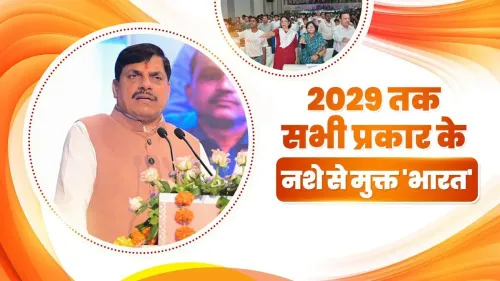
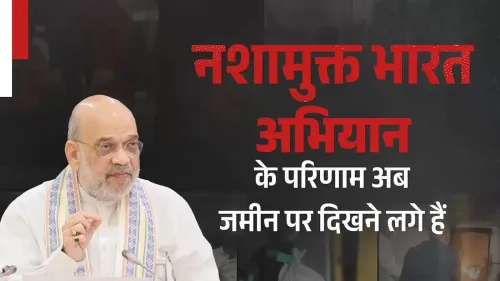
The Nasha Mukt Bharat Abhiyan , launched in August 2020 , is the Centre's flagship programme targeting substance abuse through rehabilitation and community outreach.
The Indian Cyber Crime Coordination Centre (I4C) , set up in 2018 under the Ministry of Home Affairs , is the nodal body for inter-state cyber crime coordination.
Three new criminal laws enacted in 2023 — Bharatiya Nyaya Sanhita , Bharatiya Nagarik Suraksha Sanhita , and Bharatiya Sakshya Adhiniyam — updated provisions on organised crime and cyber offences.
Both challenges require centre-state cooperation, as law and order is a State List subject under the Indian Constitution.
Follow-up at meetings of state home ministers and rollout of new criminal law modules will be key indicators of policy follow-through.
Prime Minister Narendra Modi on Thursday, 11 June 2026 called for coordinated national efforts to address the twin social challenges of drug abuse and cyber fraud, warning that both are 'negatively impacting numerous lives' across the country.
Context
In his post, PM Modi stated: 'It is important that there be coordinated efforts to tackle social challenges such as drug abuse and cyber fraud that are negatively impacting numerous lives.' The message signals the Centre's intent to keep both issues at the forefront of the national governance agenda, underscoring that neither challenge can be addressed in isolation by a single agency or state.
Both drug abuse and cyber fraud have emerged as pressing concerns cutting across state boundaries, affecting urban and rural populations alike. The call for coordination reflects the structural complexity of these problems, which involve law enforcement, public health, digital infrastructure, and community-level intervention simultaneously.
Policy Backdrop
The Centre has built a layered institutional framework to address these challenges over recent years. The Nasha Mukt Bharat Abhiyan, launched in August 2020 by the Ministry of Social Justice and Empowerment, targets substance abuse through community mobilisation, counselling, and rehabilitation infrastructure across identified high-burden districts.
On the cyber crime front, the Indian Cyber Crime Coordination Centre (I4C), established under the Ministry of Home Affairs in 2018, serves as the nodal body for inter-state intelligence sharing and capacity building against digital offences. In 2023, three new criminal laws — the Bharatiya Nyaya Sanhita, the Bharatiya Nagarik Suraksha Sanhita, and the Bharatiya Sakshya Adhiniyam — modernised legal provisions covering organised crime, drug trafficking networks, and cyber fraud.
Despite this architecture, enforcement has remained uneven, with critics noting that drug trafficking and cyber fraud networks frequently operate across state lines, demanding stronger centre-state coordination than existing mechanisms have consistently delivered.
Stakeholders and Impact
State governments are central to the implementation of both anti-narcotics and cyber crime frameworks, as law and order remains a State List subject under the Constitution. PM Modi's call implicitly reinforces the cooperative federalism model, urging states to align their enforcement machinery with central schemes and coordination bodies.
Young people bear a disproportionate burden of drug abuse, while cyber fraud victims span all age groups, with elderly citizens and first-time internet users increasingly targeted by sophisticated scam networks. Greater internet penetration in India has widened the attack surface for cyber criminals, making digital literacy and rapid law enforcement response equally critical.
Civil society organisations, rehabilitation centres, and district administrations enrolled under Nasha Mukt Bharat Abhiyan are key ground-level actors whose effectiveness depends heavily on consistent funding and inter-departmental cooperation.
What's Next
Observers will watch whether PM Modi's public statement is followed by concrete institutional action — such as agenda items at the next meeting of state home ministers or chief ministers on internal security, or an expansion of operational modules under the new criminal laws targeting cyber fraud and drug networks.
The emphasis on 'coordinated efforts' suggests the Centre may seek to strengthen the role of bodies like I4C and the Narcotics Control Bureau in facilitating real-time data sharing with states. How quickly that coordination translates from messaging into measurable enforcement outcomes will determine the practical impact of the Prime Minister's call.
Point of View
The message frames them as parallel social crises requiring unified institutional responses rather than isolated policing drives. This continues a pattern of using high-visibility public messaging to set the agenda for centre-state coordination bodies ahead of formal ministerial or chief ministers' meetings. The real test will be whether the signal translates into measurable improvements in inter-agency data sharing, prosecution rates, and rehabilitation outreach.
NationPress
26 Oct 2026
Frequently Asked Questions
What did PM Modi say about drug abuse and cyber fraud?
PM Modi on 11 June 2026 said it is important that there be coordinated efforts to tackle social challenges such as drug abuse and cyber fraud, which are negatively impacting numerous lives.
What is the Nasha Mukt Bharat Abhiyan?
Nasha Mukt Bharat Abhiyan is a nationwide campaign launched in August 2020 by the Ministry of Social Justice and Empowerment to combat drug addiction through awareness, counselling, and rehabilitation across high-burden districts.
What is the Indian Cyber Crime Coordination Centre (I4C)?
I4C is a body established in 2018 under the Ministry of Home Affairs to coordinate investigation, intelligence sharing, and capacity building against cyber crimes across Indian states and with international partners.
How does India's legal framework address cyber fraud and drug trafficking?
Three new criminal laws — the Bharatiya Nyaya Sanhita, Bharatiya Nagarik Suraksha Sanhita, and Bharatiya Sakshya Adhiniyam — were enacted in 2023, modernising provisions on organised crime, drug trafficking, and cyber offences.
Why does tackling drug abuse and cyber crime require centre-state coordination in India?
Law and order is a State List subject under the Indian Constitution, meaning states hold primary enforcement responsibility. However, drug trafficking and cyber fraud networks operate across state borders, making national coordination through bodies like I4C and the Narcotics Control Bureau essential for effective action.