PM Modi at Monsoon Session: Parliament needs experienced MPs to guide India forward
Synopsis
As the Monsoon Session opened, Modi didn't just appeal for order — he tied parliamentary productivity directly to India's economic momentum, invoking a 7.7% growth rate held despite the West Asia crisis as evidence of national strength that legislators must not squander through disruption.
Key Takeaways
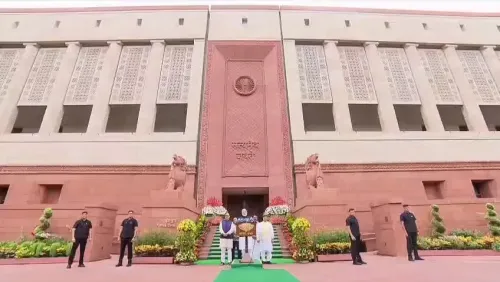
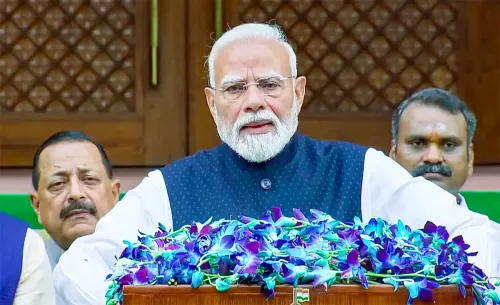
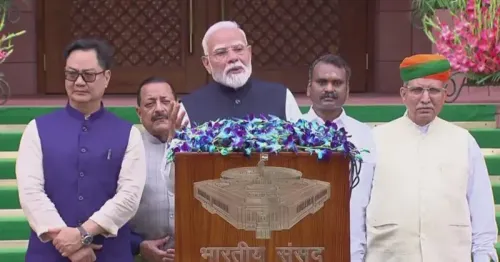
PM Narendra Modi addressed media ahead of the Monsoon Session of Parliament on 20 July .
He cited India's 7.7 per cent growth rate as proof of resilience despite the West Asia energy crisis.
Modi called on experienced MPs across party lines to bring knowledge and debate to the House.
He urged evidence-based, composed debate and said 'there is no place for creating a storm' where facts and logic prevail.
The Prime Minister invoked the aspirations of India's youth as a reason for parliamentary productivity.
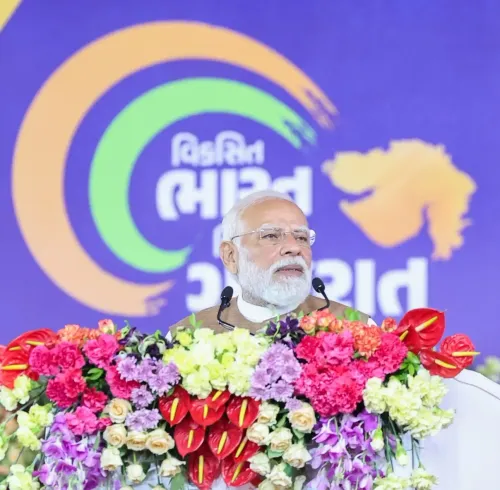
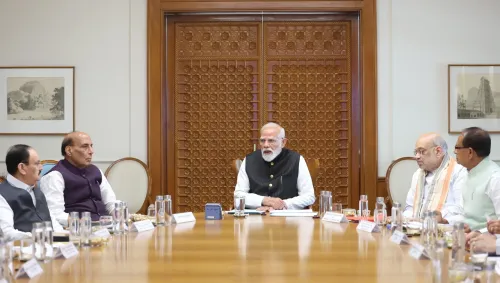
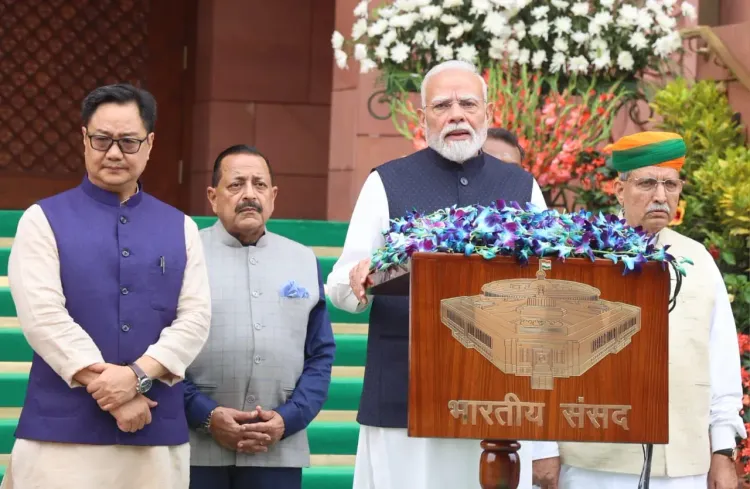
Prime Minister Narendra Modi on Monday, 20 July called on seasoned parliamentarians across party lines to bring their experience and knowledge to bear during the Monsoon Session of Parliament, stressing that amid rising global uncertainties, the nation cannot afford a dysfunctional legislature. Speaking to the media ahead of the session's opening, Modi framed productive parliamentary debate as a national imperative, not a procedural formality.
India's Growth Amid Global Headwinds
Modi highlighted India's economic resilience as the backdrop for the session's importance. 'Everyone is aware, and the world is concerned about the threat of war in various regions. The war in West Asia has posed a major crisis for nations like India, which relies on others for its energy needs, petrol, diesel, LPG, fertilisers, and chemicals. However, despite this, India has maintained a growth rate of 7.7 per cent, emerging as the fastest-growing major economy in the world,' he said.
The Prime Minister described this performance as reflecting India's 'inherent strength' and as 'a reflection of the enthusiasm and zeal' with which the country aspires to achieve new milestones. The West Asia conflict has disrupted global energy supply chains, making India's sustained growth figure — if sustained — notable for an import-dependent economy.
What the Prime Minister Said on Parliament's Role
Modi directly linked the momentum India has built economically to the functioning of Parliament. 'The nation has gathered momentum, and the spirit of Parliament infuses fresh energy into that pace. A positive spirit is very essential for achieving the country's goal,' he said.
He added: 'Our Parliament also has many experienced parliamentarians, regardless of their party affiliation. At a time like this, both Parliament and the nation need their experience and knowledge. Therefore, I believe the need of the hour is the functioning of Parliament, meaningful discussions, and a collective resolve to take the nation forward.'
A Call for Evidence-Based Debate
The Prime Minister urged members to ground their interventions in facts and reasoning rather than disruption. 'When arguments and evidence are solid, one can effectively convey their message even in a composed manner. I hope that the discussions in the House will benefit from such reasoning and evidence. May every voice have a chance to be heard, and may every concept receive due respect,' Modi said.
He also invoked the aspirations of India's youth as a moral argument for parliamentary productivity: 'The country's youth, who are full of aspirations, demand that we move forward.' He called on members to ensure that 'every voice finds an opportunity' and that those committed to national service get 'a proper platform in the House.'
Context and Significance
The Monsoon Session typically runs through July and August and is one of the three major parliamentary sittings of the year. It comes at a time when several key legislative items are expected to be tabled, and opposition parties have signalled their intent to raise issues ranging from economic distress to foreign policy. Modi's remarks are widely read as a pre-emptive appeal for order, given that recent sessions have been frequently disrupted by walkouts and adjournments.
Notably, this is not the first time Modi has opened a session with a call for constructive debate — a pattern that underlines the persistent tension between the government's legislative agenda and the opposition's floor strategy. Whether the appeal translates into a productive session will become clear in the days ahead.
Point of View
He is effectively daring the opposition to be seen as the party disrupting a nation on the rise. The real test is whether the government reciprocates by allowing robust scrutiny of its own legislative proposals, or whether 'meaningful discussion' remains a one-way demand. India's parliamentary productivity — measured by bills passed per sitting day — has declined over successive sessions, and that is a governance problem that no opening-day speech can paper over.
NationPress
20 Oct 2026
Frequently Asked Questions
What did PM Modi say at the start of the Monsoon Session of Parliament?
PM Modi called on experienced parliamentarians across party lines to contribute their knowledge and ensure Parliament functions productively. He stressed the need for meaningful debates and a collective resolve to advance the nation, citing global uncertainties as the reason such experience is critical right now.
What growth rate did PM Modi cite despite the West Asia crisis?
Modi stated that India has maintained a growth rate of 7.7 per cent despite the West Asia conflict, which he described as a major crisis for energy-import-dependent nations like India. He called this figure a reflection of India's 'inherent strength.'
When did the Monsoon Session of Parliament begin?
The Monsoon Session commenced on Monday, 20 July. It is one of three major parliamentary sittings held annually and is expected to cover several key legislative and policy matters.
Why did PM Modi appeal for composed, evidence-based debate?
Modi urged MPs to rely on facts and reasoning rather than disruption, saying that solid arguments can be conveyed effectively even in a composed manner. He also invoked the aspirations of India's youth as a moral case for a productive session.
Who did PM Modi say Parliament needs most right now?
Modi specifically highlighted experienced parliamentarians regardless of party affiliation, saying their knowledge is essential at a time of global uncertainty. He called their participation critical for both Parliament and the nation to move forward.