PM Modi Pushes Youth Empowerment, MSME Trade at Centre-State Meet
Synopsis
Prime Minister Narendra Modi on June 11, 2026, urged state governments to prioritise youth empowerment through skilling and capacity building, and to actively leverage India's bilateral trade agreements to boost MSME exports — reinforcing the Centre's cooperative federalism agenda.
Key Takeaways
Prime Minister Modi called on states to focus on youth empowerment in education, skill development, and capacity building on June 11, 2026 .
He urged states to leverage India's bilateral trade deals , with a specific focus on the MSME sector .
India's Skill India Mission , launched in 2015 , provides the central framework for large-scale youth skilling.
Key trade agreements including the India-UAE CEPA and India-Australia ECTA , both signed in 2022 , offer export opportunities for Indian MSMEs.
The NITI Aayog Governing Council remains the primary platform for Centre-state coordination on development priorities.
State-level implementation will be the critical variable in translating these national priorities into measurable outcomes.
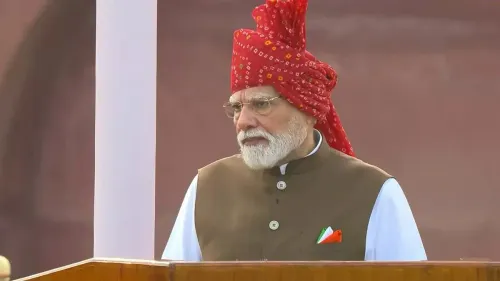
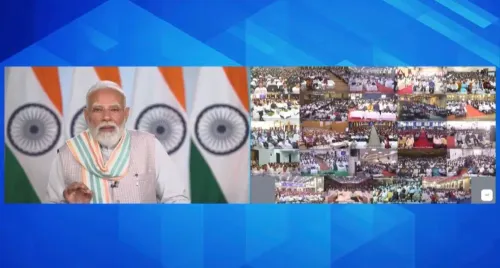
Prime Minister Narendra Modi on Thursday, June 11, 2026, called on state governments to prioritise youth empowerment through education, skill development, and capacity building, while also urging them to actively leverage India's recently signed bilateral trade agreements, particularly for the MSME sector.
Context
In a post on X, Prime Minister Modi outlined key discussion points from what appears to be a high-level Centre-state engagement. He stated: 'Talked about how the Centre and states can focus on youth empowerment. There is great scope in areas such as education, skill development and capacity building.'
The Prime Minister further noted that he 'urged the states to take advantage of the various trade deals signed by India, particularly in the MSME sector,' signalling a push for states to translate national-level agreements into ground-level economic gains.
Policy Backdrop
The remarks connect directly to two major policy pillars of the central government. The Skill India Mission, launched in 2015, was designed to train hundreds of millions of young Indians to improve employability and workforce readiness across sectors.
On the trade front, India has concluded several significant bilateral agreements in recent years, including the India-UAE Comprehensive Economic Partnership Agreement (CEPA) and the India-Australia Economic Cooperation and Trade Agreement (ECTA), both signed in 2022. These deals opened new export markets that MSME players are positioned to access, provided state-level facilitation is in place.
The NITI Aayog Governing Council, established after the dissolution of the Planning Commission in 2015, has served as the primary institutional mechanism for aligning Centre and state priorities on such development agendas.
Stakeholders and Impact
Indian youth stand at the centre of this policy push. With one of the world's largest youth populations, India's ability to channel its demographic dividend into productive employment depends heavily on how effectively states implement central skilling frameworks.
MSME exporters are the other key beneficiary group. The sector is a major contributor to employment and manufacturing output, yet its integration into global supply chains remains uneven across states. The Prime Minister's call to leverage trade deals is a direct prompt for state governments to reduce friction for small businesses seeking to export.
State governments are thus positioned both as implementers of skilling programmes and as facilitators of MSME export promotion — roles that require administrative alignment with central schemes and trade frameworks.
What's Next
The effectiveness of this push will be measured in state-level adoption rates of central skill development schemes and in MSME export performance data under existing free trade agreements. Upcoming NITI Aayog reviews and economic surveys are expected to track these indicators.
If states respond with targeted action plans, the initiative could mark a meaningful step toward converting India's demographic profile into sustained economic output — a goal that has defined the government's development narrative since 2014.
Point of View
The Centre is attempting to close the loop between demographic potential and export-led growth — a linkage that has been aspirational more than operational for much of the past decade. The explicit call-out of the MSME sector signals awareness that large corporates have been the primary beneficiaries of trade agreements thus far, while smaller enterprises lag behind. Whether state governments respond with concrete facilitation measures or treat this as a routine directive will determine the real policy impact.
NationPress
19 Sept 2026
Frequently Asked Questions
What did PM Modi say about youth empowerment at the Centre-state meeting?
PM Modi said there is great scope for Centre and state governments to collaborate on youth empowerment, particularly in education, skill development, and capacity building.
Which trade deals did PM Modi ask states to leverage for MSMEs?
PM Modi urged states to take advantage of the various trade deals signed by India, with a particular focus on the MSME sector. Key agreements include the India-UAE CEPA and India-Australia ECTA, both signed in 2022.
What is the Skill India Mission and how does it relate to Modi's remarks?
The Skill India Mission, launched in 2015, is a national initiative to train millions of young Indians for better employability. PM Modi's call for state focus on skill development aligns directly with this programme's goals.
How does NITI Aayog connect Centre and state governments on development?
NITI Aayog, established in 2015, replaced the Planning Commission and holds Governing Council meetings to align Centre and state priorities on development, serving as the key platform for cooperative federalism.
Why are MSMEs important to India's trade deal strategy?
The MSME sector is a major contributor to India's employment, manufacturing, and exports. Integrating MSMEs into global supply chains through bilateral trade agreements is central to the government's strategy of converting domestic production capacity into export growth.