PM Modi Calls on Citizens to Participate in ‘Rajaji Utsav’ at Rashtrapati Bhavan
Synopsis
Prime Minister Modi has urged the public to attend the ‘Rajaji Utsav’ at Rashtrapati Bhavan, celebrating the unveiling of C. Rajagopalachari's bust. This event signifies a shift away from colonial influences and honors India's heritage.
Key Takeaways
Rajaji Utsav celebrates C.
Rajagopalachari's contributions.
Replacement of Lutyens' bust reflects decolonization efforts.
Exhibition on Rajaji’s life planned from February 24 to March 1, 2026.
PM Modi advocates for pride in Indian heritage.
Initiatives aim to move beyond colonial legacies.
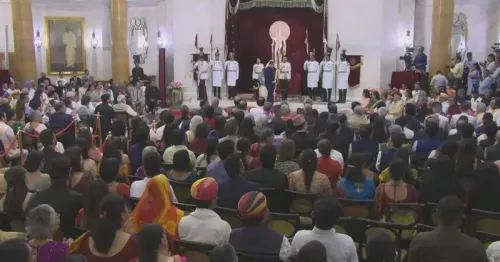
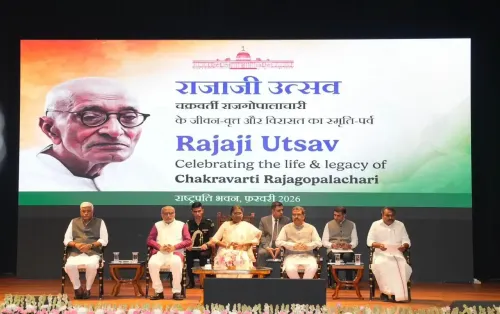
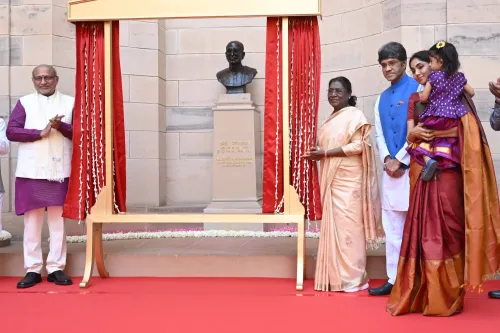
New Delhi, Feb 23 (NationPress) Prime Minister Narendra Modi on Monday emphasized the significance of unveiling the bust of C. Rajagopalachari, which replaces that of British architect Edwin Lutyens, at the ‘Rajaji Utsav’ held at Rashtrapati Bhavan. He encouraged citizens to attend this notable event.
“Rajaji Utsav is an excellent initiative that showcases various facets of Rajaji's profound contributions to our country. I urge everyone to visit and draw inspiration!” stated PM Modi in a social media post.
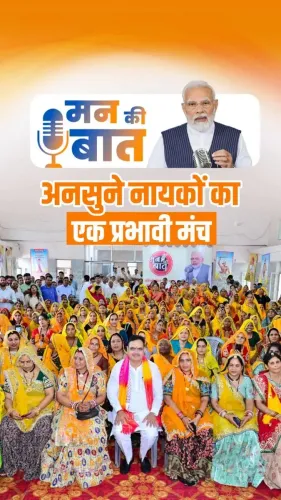
In his latest radio broadcast, “Mann Ki Baat,” PM Modi remarked, “The nation is moving away from the symbols of colonialism and is beginning to appreciate elements tied to Indian culture.”
He also indicated on February 22 that the bronze bust of Edwin Lutyens, who designed some of New Delhi’s most iconic buildings between 1920 and 1930, would no longer be featured in the central courtyard of Rashtrapati Bhavan.
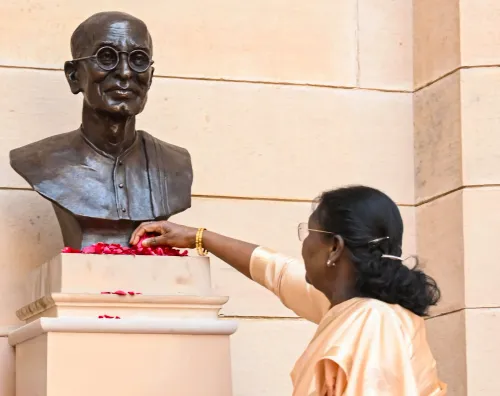
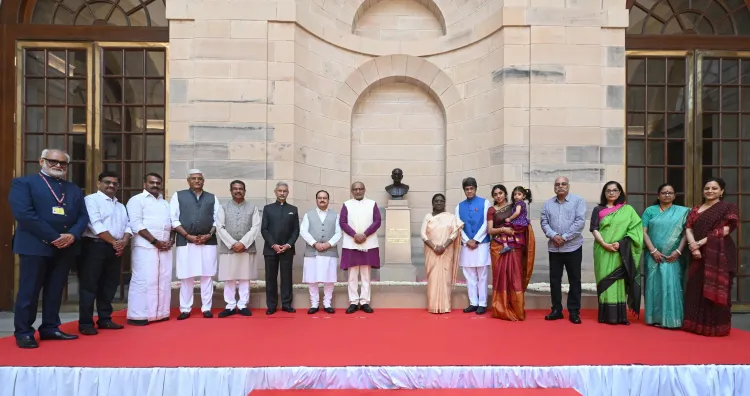
PM Modi’s call for citizens to attend ‘Rajaji Utsav’ came just hours before the event, alongside a social media post from Rashtrapati Bhavan showcasing President Murmu reviewing exhibits related to Rajaji after unveiling his bust.
The message from Rashtrapati Bhavan on X highlighted, “Rajaji exemplified the path of mental decolonization. His principles resonate with the national movement embraced by the Indian populace to take pride in India’s heritage and to eradicate remnants of the colonial mindset. As part of Rajaji Utsav, an exhibition celebrating Rajaji’s life and contributions is scheduled from February 24 to March 1, 2026, at Rashtrapati Bhavan.
During the bust unveiling of Chakravarti Rajagopalachari, India’s first and only Indian Governor-General, the President remarked that this act symbolizes a broader national effort to transcend colonial-era legacies and recognize distinguished Indian leaders who significantly shaped the country’s history.
Rajagopalachari, commonly referred to as Rajaji, was a notable freedom fighter, statesman, and scholar who served as the last Governor-General of India from 1948 to 1950.
She noted, “The bust of Chakravarti Rajagopalachari, positioned at the Grand Open Staircase near Ashok Mandap, replaces that of Edwin Lutyens.
“This initiative is part of a series of actions aimed at shedding colonial remnants and proudly embracing the richness of India’s culture, heritage, timeless traditions, and honoring those who have made extraordinary contributions to Bharat Mata,” she stated.
Vice-President C. P. Radhakrishnan underscored that India’s progress away from colonial influences is an ongoing evolution across governance, law, education, culture, and national identity, as per an official statement.
Radhakrishnan emphasized that at the core of these reforms is Prime Minister Narendra Modi's vision, who has persistently advocated for liberation from the colonial mindset that influenced institutions and attitudes during British rule.
The Vice-President remarked that the vision of “Gulami ki Mansikta se Mukti” has been realized through several initiatives, including transforming Raj Bhavans into Lok Bhavans; evolving the PMO into a Sewa Teerth; renaming the Central Secretariat as Kartavya Bhavan; abolishing colonial-era criminal laws; erecting a statue of Netaji Subhas Chandra Bose near India Gate; and constructing the National War Memorial, among others.
“These changes are not just symbolic; they embody the government’s spirit of Sewa Bhavna,” he stated.
Point of View
This initiative symbolizes a broader commitment to honor indigenous contributions while moving away from colonial legacies.
NationPress
21 Aug 2026
Frequently Asked Questions
What is ‘Rajaji Utsav’?
‘Rajaji Utsav’ is an event at Rashtrapati Bhavan celebrating the contributions of C. Rajagopalachari, featuring an exhibition on his life and work.
Who was C. Rajagopalachari?
C. Rajagopalachari, known as Rajaji, was a prominent freedom fighter and India’s first Indian Governor-General, serving from 1948 to 1950.
Why was Edwin Lutyens' bust replaced?
The bust of Edwin Lutyens was replaced as part of a national effort to move beyond colonial symbols and recognize Indian leaders who shaped the country's history.
When is the exhibition related to Rajaji being held?
The exhibition will take place from February 24 to March 1, 2026, at Rashtrapati Bhavan.
What themes are highlighted in PM Modi’s message?
PM Modi’s message emphasizes mental decolonization, pride in Indian heritage, and the importance of recognizing local contributions.