Udit Raj Challenges Historical Recognition Bias as Tharoor Celebrates Rajaji Statue
Synopsis
In a recent statement, Congress leader Udit Raj critiques the selective historical recognition following Shashi Tharoor's commendation of a statue for C. Rajagopalachari. This discourse sheds light on the complexities of India's historical narratives.
Key Takeaways
Udit Raj questions historical recognition practices.
Shashi Tharoor praises the installation of a statue for C.
Importance of preserving history is emphasized.
Critique of educational practices among political leaders.
Discussion highlights tensions between tradition and modernity.
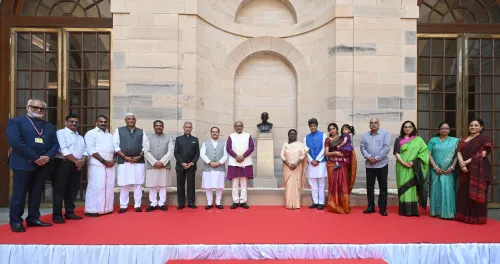
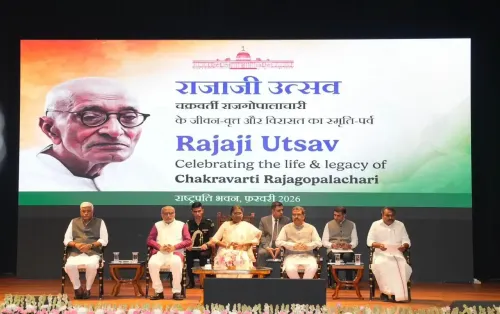
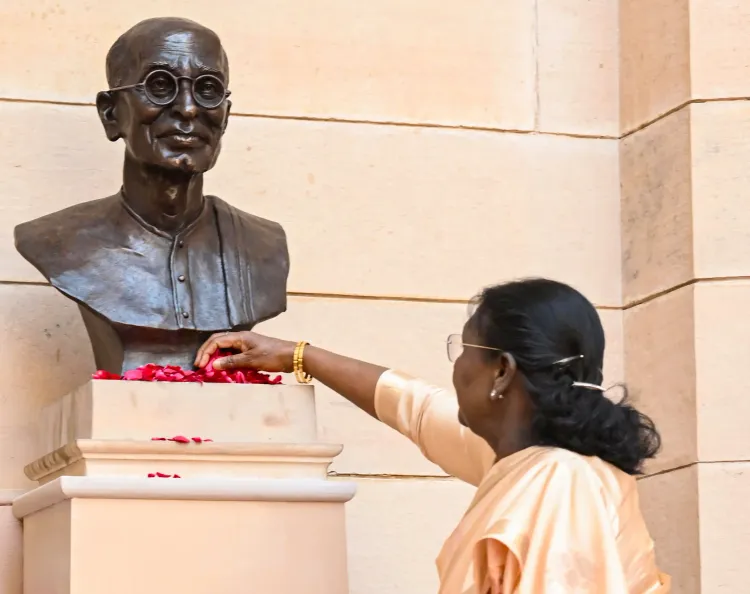
New Delhi, Feb 24 (NationPress) Congress leader Udit Raj raised concerns on Tuesday about the selective recognition of historical figures, in response to party MP Shashi Tharoor's praise for the newly unveiled statue of C. Rajagopalachari at Rashtrapati Bhavan.
In an interview with IANS, Udit Raj stated, “Edwin Lutyens was the architect behind Connaught Place, Rashtrapati Bhavan, and other significant buildings. If we are to remove his statue, we should also consider removing Rajagopalachari's. The parliamentary system and various educational institutions are also legacies of British rule. By that reasoning, should we remove everything associated with them?”
He emphasized the need to safeguard history, asserting that it serves as an essential chronological account of past occurrences that must not be altered.
“If they are genuinely committed to preserving our heritage, then leaders from the RSS and BJP should first cease sending their children to English-speaking schools. Instead, they should promote the Gurukul education system, teach in Sanskrit, and share traditional wisdom. However, what we see is that their children are enrolled at institutions like Harvard, MIT, and Oxford,” he added.
Udit Raj also criticized the government's stance, highlighting the achievements of Indian reformers, stating, “Savitribai Phule and Jyotirao Phule established the first girls' school in Pune, yet their efforts faced opposition. What tangible contributions have they made? This reflects a clear double standard.”
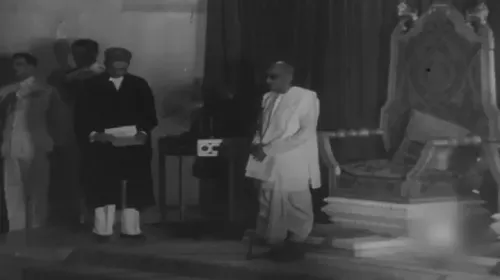
These remarks followed Tharoor's expression of admiration on social media, where he stated, “I am genuinely delighted to see Rajaji commemorated with a statue at Rashtrapati Bhavan. He was the first Indian to hold the position of Governor-General of India prior to our Republic's establishment.”
“I have long held his beliefs in high regard and was an ardent supporter of his Swatantra Party during my student years. His principles—liberal economics paired with social justice, a commitment to Indian civilization devoid of communal intolerance, and unwavering defense of constitutional rights—continue to resonate with me. It is unfortunate that so few adhere to these values today,” Tharoor wrote.
Udit Raj's comments highlight the ongoing discourse in India regarding historical narratives, their interpretations, and the tension between upholding traditions and adapting to contemporary values.
Frequently Asked Questions
What did Udit Raj criticize?
Udit Raj criticized the selective approach to historical recognition, particularly in light of the statue installation of C. Rajagopalachari.
What was Shashi Tharoor's reaction?
Shashi Tharoor expressed his admiration for the statue of Rajagopalachari, highlighting his historical significance as the first Indian Governor-General.
What issues did Udit Raj raise about education?
Udit Raj suggested that leaders from the RSS and BJP should stop sending their children to English-medium schools and instead promote traditional educational systems.
What historical figures did Udit Raj mention?
Udit Raj mentioned Savitribai Phule and Jyotirao Phule, who opened the first school for girls in Pune.
What broader theme does this discussion relate to?
This discussion relates to the ongoing debate in India regarding the interpretation of historical legacies and the balance between tradition and modernity.