C. P. Radhakrishnan Introduces C. Rajagopalachari Bust at Rashtrapati Bhavan
Synopsis
On February 23, Vice-President C. P. Radhakrishnan unveiled a bust of C. Rajagopalachari, marking a pivotal moment in India's efforts to move away from colonial influences. This event underscores ongoing transformations in governance and national identity.
Key Takeaways
Rajagopalachari's bust replaces Edwin Lutyens's at Rashtrapati Bhavan.
Event marks a step towards removing colonial influence .
Ongoing reforms reflect Prime Minister Modi's vision .
Initiatives include renaming colonial structures and promoting national identity.
Rajaji's legacy inspires citizens to prioritize the nation.
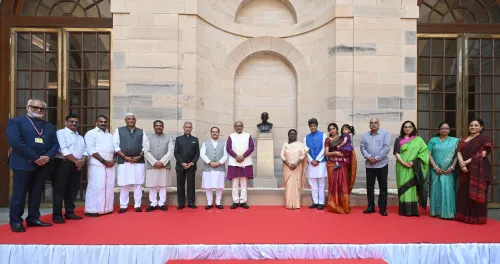
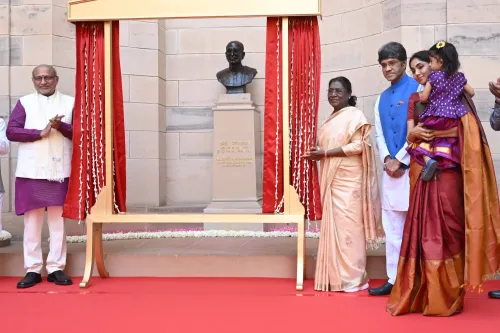
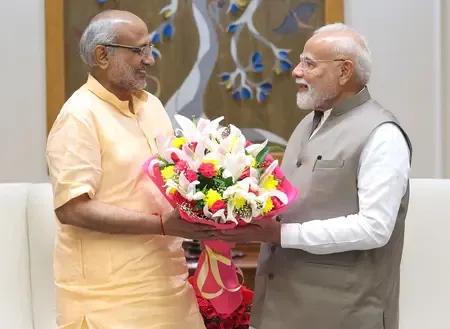
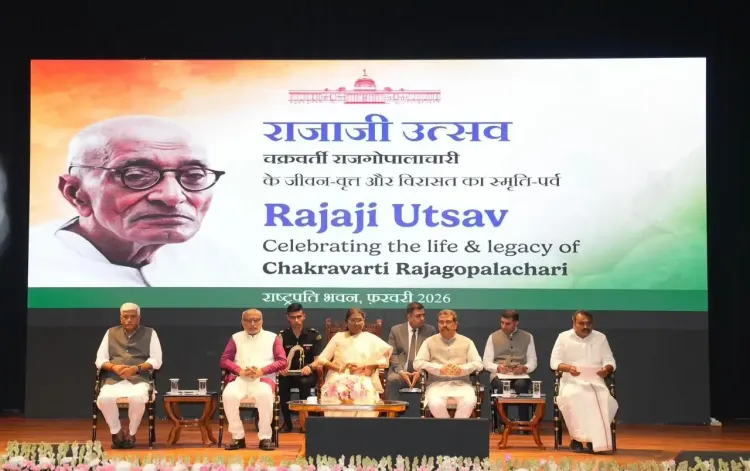
New Delhi, Feb 23 (NationPress) Vice-President C. P. Radhakrishnan announced on Monday the unveiling of a bust of C. Rajagopalachari, which replaces the bust of Edwin Lutyens, during the ‘Rajaji Utsav’ at Rashtrapati Bhavan. This event marks a significant step in eliminating the lingering effects of colonial legacy.
In his address, he asserted that India's quest to move beyond colonial remnants is not a one-off occurrence but an enduring evolution across various sectors including governance, law, education, culture, and national identity, as stated in an official release.
Radhakrishnan highlighted that these reforms are driven by the vision of Prime Minister Narendra Modi, who has persistently advocated for liberation from the colonial mindset that influenced the country's institutions and societal attitudes during British rule.
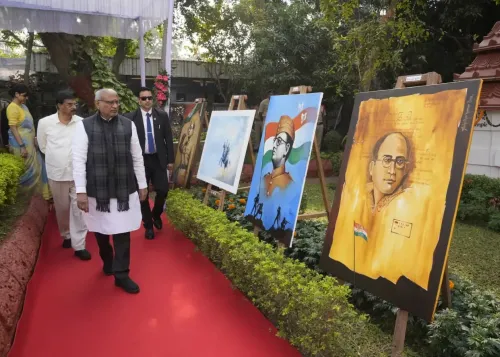
The Vice-President pointed out that the concept of “Gulami ki Mansikta se Mukti” has been actualized through numerous initiatives, such as transforming Raj Bhavans into Lok Bhavans, evolving the PMO into a Sewa Teerth, renaming the Central Secretariat to Kartavya Bhavan, abolishing colonial-era criminal laws, erecting a statue of Netaji Subhas Chandra Bose near India Gate, and establishing the National War Memorial.
“These changes are not just symbolic; they embody the Government's commitment to Sewa Bhavna,” he remarked.
He also mentioned several initiatives launched under the guidance of President Droupadi Murmu at Rashtrapati Bhavan, including opening the gardens as Amrit Udyan, renaming Durbar Hall to Ganatantra Mandap, replacing images of British ADCs with those of Param Vir Chakra awardees, and inaugurating ‘Granth Kutir’, a library dedicated to Indian classical languages.
The Vice-President noted that these measures would aid in removing the colonial mark from societal memory and bolster India’s civilizational self-assurance.
Referring to Rajaji Utsav as a well-deserved homage to a remarkable figure in Indian history, the Vice-President affirmed that C. Rajagopalachari holds a prominent position in the country’s narrative.
He praised Rajaji’s diverse talents as a lawyer, freedom fighter, statesman, politician, and author, emphasizing his exceptional range of abilities.
Radhakrishnan remarked that Rajaji was a strong proponent of economic freedom and believed that India’s economic policies should remain autonomous and progressive.
He expressed hope that Rajaji’s legacy would motivate citizens to enhance their character as they take on more responsibilities, reinforce their beliefs as their roles expand, and prioritize the nation over individual interests.
Point of View
The unveiling of C. Rajagopalachari's bust signifies a critical step towards redefining India's identity, moving beyond colonial remnants while honoring historical figures who shaped the nation.
NationPress
19 Sept 2026
Frequently Asked Questions
What was the significance of unveiling Rajagopalachari's bust?
The unveiling symbolizes India's ongoing effort to eliminate colonial influence and honor significant figures in the country's history.
Who is C. Rajagopalachari?
C. Rajagopalachari was a prominent lawyer, freedom fighter, statesman, and writer, recognized for his contributions to India's independence and governance.
What initiatives have been inspired by this unveiling?
Initiatives include renaming colonial structures, transforming Raj Bhavans into Lok Bhavans, and promoting India's cultural heritage.
How does this event relate to current governance?
It reflects the vision of Prime Minister Narendra Modi for a liberated national identity, free from colonial mindset.
What are the broader implications of this event?
This event is part of a larger movement to reinforce India’s civilizational confidence and public consciousness.