PM Modi Views Varanasi Art Show at Bratislava Presidential Palace
Synopsis
Prime Minister Narendra Modi joined Slovak President Peter Pellegrini at the Presidential Palace in Bratislava to view an exhibition on Varanasi by Slovak artists, highlighting India's use of cultural diplomacy during European state visits. The event underscores Varanasi's growing global cultural footprint.
Key Takeaways
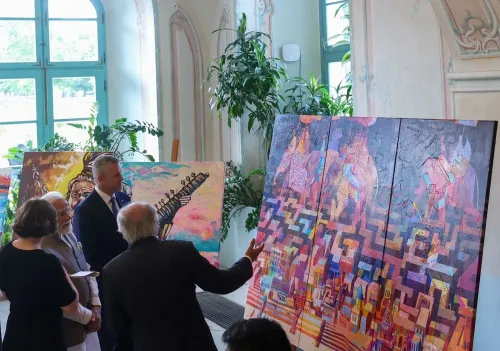
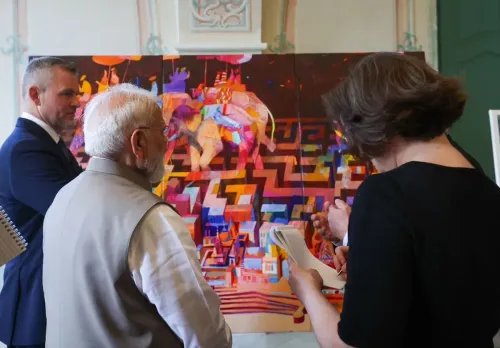
PM Modi and Slovak President Peter Pellegrini viewed a Varanasi -themed art exhibition at the Presidential Palace in Bratislava on June 15, 2026 .
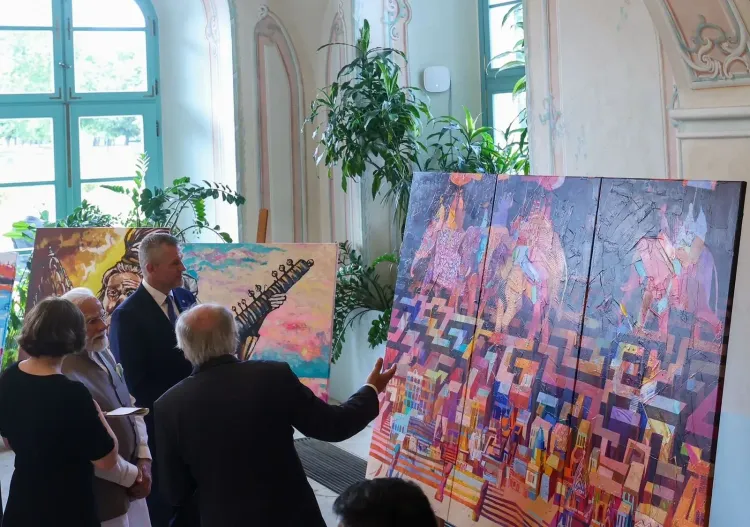
The exhibition featured works by Slovak artists who had recently visited Varanasi , reflecting active people-to-people cultural exchange.
India and Slovakia established diplomatic relations in 1993 and have maintained periodic cultural cooperation agreements since.
Varanasi is PM Modi's parliamentary constituency and holds deep personal, religious and political significance for the Prime Minister.
The event is part of a consistent pattern of art diplomacy used by Modi governments during European state visits to project India's soft power .
Possible follow-up cultural MoUs or joint festival announcements are anticipated from the broader Europe tour .
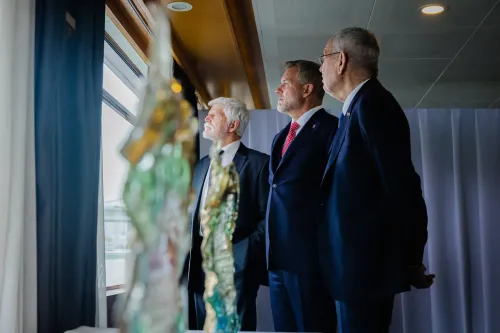
Prime Minister Narendra Modi, during his state visit to Slovakia, joined President Peter Pellegrini at the Presidential Palace in Bratislava on Monday, June 15, 2026, to view an exhibition dedicated to Varanasi — featuring works by Slovak artists who had recently visited the ancient Indian city.
Sharing the experience on social media, Modi wrote: 'A Banaras connect in Bratislava! Art and culture truly have a unique ability' — a reference to the cross-cultural resonance the exhibition appeared to generate between the two nations.
Context
Varanasi, also known as Banaras or Kashi, is one of the world's oldest continuously inhabited cities, situated on the banks of the Ganga in Uttar Pradesh. It holds deep religious, cultural and personal significance for Modi, who has represented the city as a Member of Parliament since 2014. The exhibition in Bratislava brought that connection into a European diplomatic setting, with Slovak artists presenting their interpretations of the city's ghats, temples and classical traditions after a recent visit.
Policy Backdrop
India and Slovakia established diplomatic relations in 1993, following the dissolution of Czechoslovakia, and have since maintained periodic cooperation in trade, education and cultural exchange. Bilateral cultural agreements have been renewed multiple times over the decades, including artist exchange programmes and heritage-focused exhibitions. Modi governments have consistently used city-specific cultural showcases during European state visits as instruments of soft power, spotlighting heritage destinations alongside strategic and economic discussions.
Varanasi has featured prominently in such outreach — both because of its global recognition as a spiritual and cultural landmark and its direct political association with the Prime Minister. The Bratislava exhibition fits a broader pattern of art diplomacy that complements formal bilateral talks with smaller European Union member states.
Stakeholders and Impact
The exhibition is likely to benefit India's heritage tourism sector, drawing attention to Varanasi among European audiences and potentially encouraging further Slovak artistic and academic interest in the city. The Indian diaspora in Central Europe and visual artists on both sides stand to gain from deepened cultural linkages. For Slovakia, hosting such an event at the Presidential Palace signals a deliberate elevation of cultural diplomacy in its engagement with India.
What's Next
The Bratislava cultural moment is expected to feed into broader outcomes from Modi's Europe tour, with the possibility of follow-up cultural memoranda of understanding or joint festival announcements in the days ahead. Parliamentary and diplomatic references to the Slovakia leg of the visit will be closely watched as indicators of how deeply the two sides intend to institutionalise people-to-people and artistic ties. The exhibition underscores how Varanasi's global cultural footprint continues to grow as a pillar of India's international identity.
Point of View
Visually compelling moment that places Varanasi — and by extension the Prime Minister's own constituency — on a global stage. By staging the event at the Presidential Palace itself, Slovakia signalled a willingness to elevate cultural ties beyond routine diplomatic courtesy. For India, weaving heritage diplomacy into state visits to smaller EU members has proven an effective tool for building goodwill that outlasts any single summit. The episode also reinforces a broader arc in which Modi's personal identity as Varanasi's MP becomes an asset in projecting Indian civilisational continuity to international audiences.
NationPress
19 Sept 2026
Frequently Asked Questions
Why did PM Modi visit Slovakia in June 2026?
PM Modi was in Slovakia as part of a broader Europe tour , meeting President Peter Pellegrini in Bratislava for bilateral talks that included a cultural showcase centred on Varanasi .
What was the Varanasi exhibition in Bratislava about?
The exhibition at the Presidential Palace in Bratislava featured artworks by Slovak artists who had recently visited Varanasi , depicting the city's ghats, temples and classical cultural traditions.
What is the relationship between PM Modi and Varanasi?
Varanasi , also known as Banaras , is PM Modi's parliamentary constituency — he has represented the city in the Lok Sabha since 2014 , making it a site of deep personal and political significance.
What are India-Slovakia diplomatic relations like?
India and Slovakia established diplomatic relations in 1993 and cooperate on trade, education and cultural exchanges, with bilateral cultural agreements renewed periodically over the decades.
How does India use cultural diplomacy during European state visits?
Modi governments have consistently used city-specific cultural showcases — exhibitions, performances and heritage events — during European state visits to project India's soft power and complement economic and strategic discussions.