Giriraj Singh shares PM Modi's pitch on India's youth dividend
Synopsis
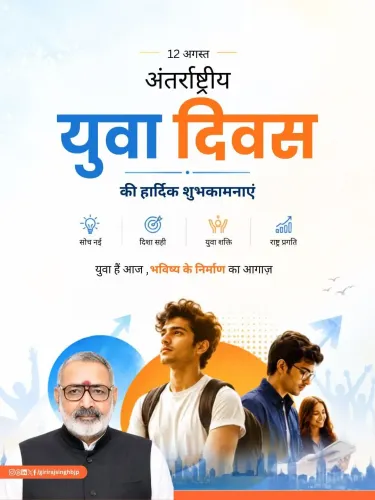
Union Textiles Minister Giriraj Singh amplified PM Modi's statement on 24 May 2026, asserting that the world is excited about India's vast youth population and eager to participate in the country's economic growth journey — a message rooted in India's demographic dividend narrative.
Key Takeaways
Giriraj Singh , Union Textiles Minister and BJP MP from Begusarai , shared PM Modi's statement via the NaMo App on 24 May 2026 .
PM Modi stated that the world is excited about India's youth and wants to join the country's growth story.
India has a median age of approximately 28 years , making it one of the world's youngest major economies.
The demographic dividend message has underpinned key initiatives including Make in India (2014), Skill India (2015), and Skill India 2.0 .
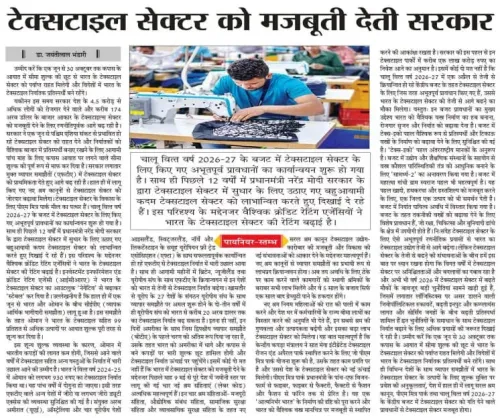
The Textiles sector , overseen by Giriraj Singh, is a major employer of young Indians and a focal point for production-linked incentive schemes.
Upcoming Union Budget allocations and diplomatic summits will be watched for concrete follow-through on youth-focused policy commitments.
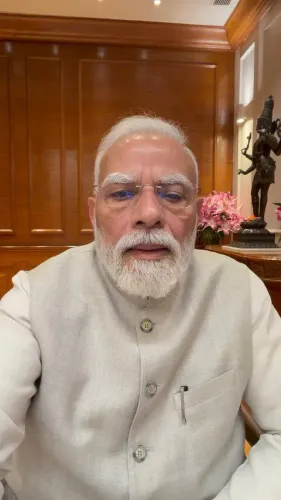
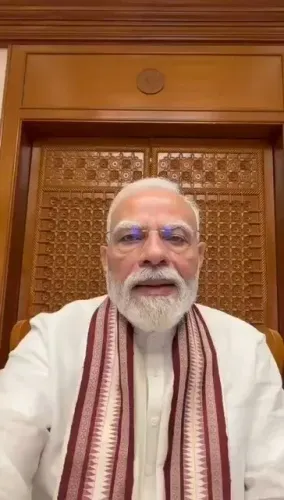
Union Textiles Minister Giriraj Singh on Sunday, 24 May 2026, shared a statement attributed to Prime Minister Narendra Modi via the NaMo App, highlighting global enthusiasm for India's youth and the country's growth story. The post, shared on X, quoted PM Modi as saying the world is excited about India's young population and is eager to join the nation's growth journey.
Context
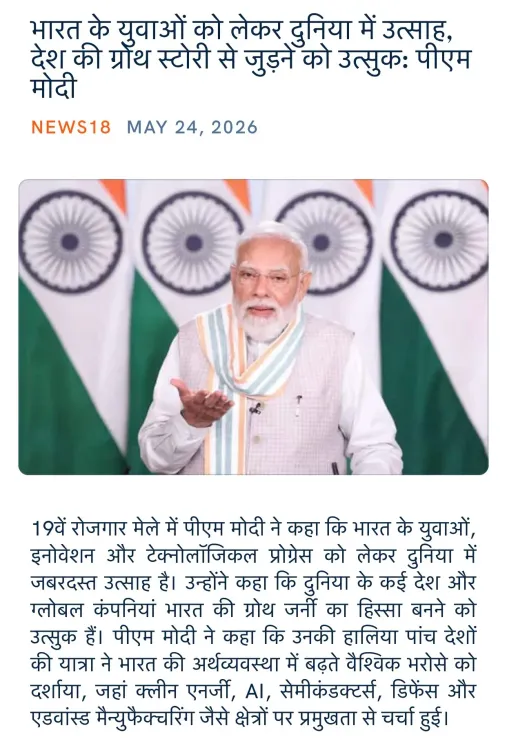
The statement, shared in Hindi, reads: 'भारत के युवाओं को लेकर दुनिया में उत्साह, देश की ग्रोथ स्टोरी से जुड़ने को उत्सुक: पीएम मोदी' — translated as 'World excited about India's youth, eager to join the country's growth story: PM Modi.' The post was amplified by Giriraj Singh, a senior BJP leader and Lok Sabha MP from Begusarai, Bihar, underscoring how the ruling party's ministers routinely disseminate PM Modi's messaging on economic themes through official party platforms.
India is the world's most populous nation with a median age of approximately 28 years, a demographic profile that the government has consistently positioned as a strategic economic advantage over ageing populations in Europe, Japan, and parts of East Asia.
Policy Backdrop
The framing of India's youth as a 'demographic dividend' has been a cornerstone of government communications since at least 2014, when the National Youth Policy and the Make in India initiative were launched. The Skill India Mission, announced in 2015, set an ambitious target of skilling 400 million youth by 2022 to align workforce capacity with projected economic expansion.
This messaging has intensified in recent years alongside India's efforts to attract global supply-chain investments, particularly as multinational companies diversify manufacturing away from single-country dependence. Forums such as the G20 and the World Economic Forum have provided platforms for PM Modi to project this demographic narrative to international investors and policymakers.
Stakeholders and Impact
Indian youth — a cohort that numbers in the hundreds of millions — stand as the primary stakeholders in any policy that flows from this narrative, whether in the form of skilling programmes, employment-linked incentives, or export-oriented manufacturing schemes. For global investors, India's youthful workforce represents a long-run cost and productivity argument in favour of relocating or expanding operations in the country.
The Textiles Ministry, which Giriraj Singh heads, is directly relevant to this conversation: the sector is among India's largest employers of young workers, particularly in states such as Gujarat, Tamil Nadu, Maharashtra, and Uttar Pradesh, and is a key target of production-linked incentive schemes designed to attract foreign investment and generate youth employment.
What's Next
Attention will now turn to whether this messaging translates into concrete announcements — including updates on Skill India 2.0, youth-focused allocations in the next Union Budget, or new bilateral agreements at upcoming economic and diplomatic summits. The government's ability to convert the demographic dividend narrative into measurable employment and income gains for young Indians will remain the central test of its economic credibility heading into the latter half of the decade.
Point of View
Senior ministers like Giriraj Singh function as force-multipliers for the administration's economic narrative, extending its reach across party networks and vernacular audiences. The Textiles Ministry's stake in this story is not incidental: youth employment in labour-intensive manufacturing is both a policy priority and a political deliverable, especially in states like Bihar where Giriraj Singh draws his electoral base. The real measure of this narrative will be whether Skill India 2.0 and sectoral incentive schemes produce verifiable employment data ahead of the next electoral cycle.
NationPress
22 Sept 2026
Frequently Asked Questions
What did PM Modi say about India's youth and global interest?
PM Modi stated that the world is excited about India's youth and is eager to join the country's growth story, a message shared by Union Textiles Minister Giriraj Singh via the NaMo App on 24 May 2026.
Why does India emphasise its youth population in economic messaging?
India has a median age of around 28 years, giving it one of the world's youngest major workforces. The government positions this demographic dividend as a long-term advantage for attracting foreign investment and sustaining economic growth.
What is the NaMo App and why do BJP ministers use it?
The NaMo App is an official platform associated with PM Modi and the BJP that allows party leaders and supporters to share curated content. Ministers use it to amplify the Prime Minister's statements and policy messaging to a broad party network.
What schemes back India's youth employment and skilling goals?
Key initiatives include the National Youth Policy (2014), Make in India (2014), and the Skill India Mission (2015), which targeted skilling 400 million youth by 2022. Skill India 2.0 continues this agenda with updated targets and digital components.
What is Giriraj Singh's role and why is he relevant to youth employment?
Giriraj Singh is Union Minister of Textiles and a BJP Lok Sabha MP from Begusarai, Bihar. The textiles sector is one of India's largest employers of young workers, making his ministry central to translating the demographic dividend narrative into actual jobs.