CM Bhupendra Patel: PM Modi gifts Bhildi ₹14,000 Cr dev push

Synopsis
Prime Minister Modi launched projects worth over ₹14,000 crore from Bhildi in Gujarat's Banaskantha district, including the country's first Kankrej cattle breeding centre, bio-CNG plants, an Ahmedabad-Mehsana eight-lane corridor, and the 24th PM-KISAN instalment benefiting 9.34 crore farmers. CM Bhupendra Patel hailed the package as a model of integrated rural development.
Key Takeaways
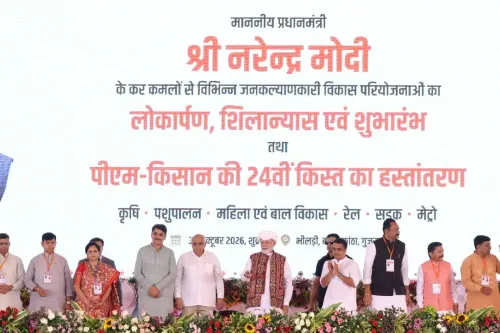
PM Narendra Modi announced projects worth over ₹14,000 crore from Bhildi , Banaskantha, Gujarat on 30 October 2026 .
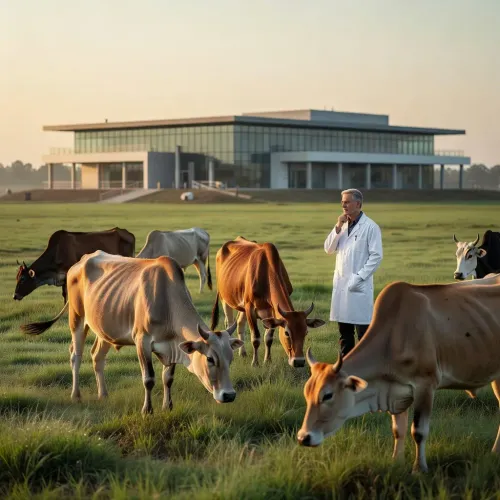
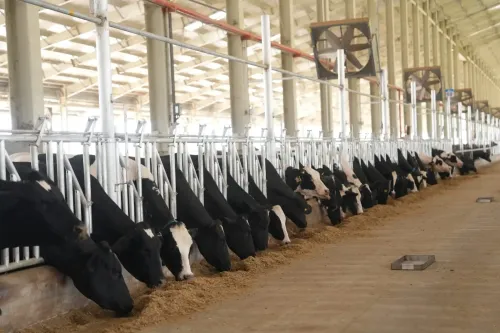
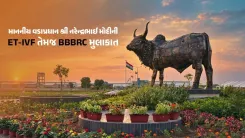
The package includes what the post describes as India's first Kankrej cattle breeding and research centre , dedicated to the indigenous Gujarat breed.
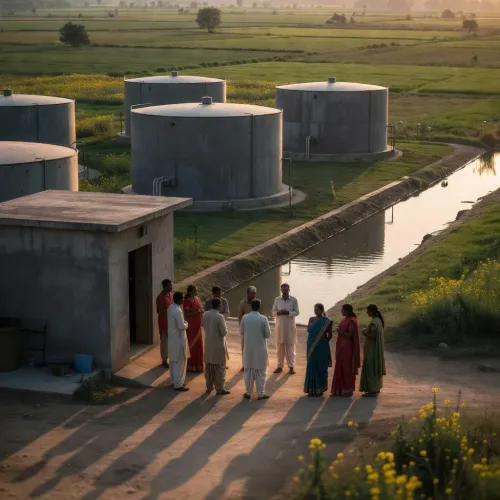
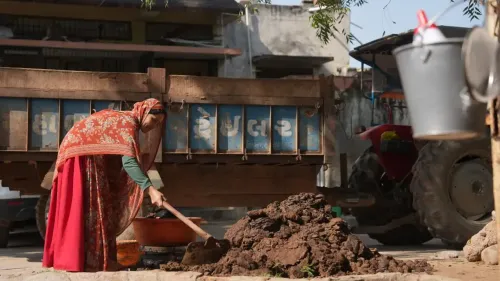
Bio-CNG plants converting cattle dung into green energy were announced, aligned with India's National Policy on Biofuels.
An eight-lane corridor on the Ahmedabad–Mehsana route and new metro and rail projects form the connectivity component.
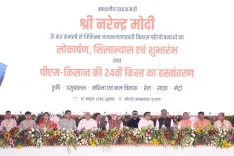
The 24th PM-KISAN instalment was simultaneously transferred to more than 9.34 crore farmers nationwide.
Thousands of child-friendly Anganwadis and a modern potato-processing facility were also part of the Bhildi announcements.
A cattle-breeding lab, biogas from cow dung, an eight-lane expressway, and cash in 9.34 crore farmers' accounts — all in one day. Gujarat Chief Minister Bhupendra Patel on Friday, 30 October 2026, hailed a sweeping package of development projects unveiled by Prime Minister Narendra Modi from Bhildi in Banaskantha district, calling it a journey 'from heritage to science' that defines a 'developed Gujarat'.
What Modi launched from Bhildi
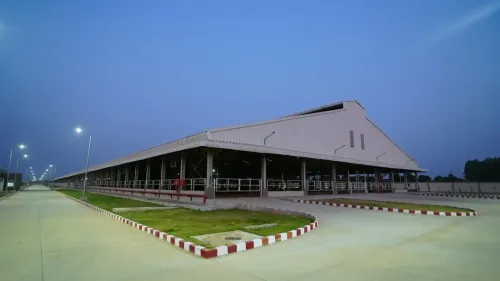
CM Patel's post lists a constellation of announcements the Prime Minister unveiled at Bhildi, a town in Banaskantha district — Gujarat's pastoral heartland. The centrepiece, according to the post, is what is described as the country's first breeding and research centre for the Kankrej breed, an indigenous cattle variety prized across western India for its milk yield and draught strength. Alongside it, bio-CNG plants that convert cattle dung into green energy were announced — an extension of India's national policy push for compressed biogas from farm waste, active since 2018.
A modern processing facility for potato farmers and an eight-lane corridor on the Ahmedabad–Mehsana route round out the infrastructure slate. New metro and rail connectivity upgrades were also cited, alongside thousands of child-friendly Anganwadis — early-childhood centres that serve as the frontline of rural nutrition and childcare.
PM-KISAN's 24th instalment: 9.34 crore farmers, one transfer
Beyond bricks and biogas, the announcement carried a direct cash dimension. The post states that the 24th instalment of the PM-KISAN scheme reached the accounts of more than 9.34 crore farmers nationwide on the same day. PM-KISAN, launched in February 2019, provides ₹6,000 per year in three instalments as direct income support to landholding farmers — one of the largest direct benefit transfer programmes in the world by beneficiary count. Each successive instalment has been used as a platform for wider rural-welfare messaging, and this one is no exception.
Banaskantha's integrated rural model
The geography of the announcement is not accidental. Banaskantha is Gujarat's dominant potato-growing belt and home to the Banas Dairy cooperative, one of Asia's largest milk-processing networks. Breed improvement work on Kankrej cattle has been conducted through the Gujarat Livestock Development Board for over a decade; a dedicated national research centre, if operationalised, would formalise and scale that effort.
The bio-CNG plants fit a pattern visible across rural Gujarat — converting dairy-farm waste into a revenue stream rather than a disposal problem. The Ahmedabad–Mehsana corridor upgrade matters because Mehsana is the commercial hub linking Banaskantha's farms to Gujarat's processing and export pipeline. Infrastructure and agriculture, in this model, are designed to reinforce each other.
Patel's framing: 'field to Anganwadi, heritage to science'
CM Patel wrapped the announcements in an evocative phrase — 'khet se gaushala tak, sadak se Anganwadi tak' (from field to cattle-shelter, from road to Anganwadi) — stitching together agriculture, animal husbandry, connectivity and child welfare into a single political narrative. The hashtag #KisanKalyanSeRashtraKalyan ('From Farmer Welfare to National Welfare') signals that the ruling party intends the Bhildi event to travel well beyond Gujarat's borders as a model.
Whether the Kankrej centre, the bio-CNG plants and the eight-lane corridor move from announcement to ground-level operation at the pace promised will be the real test. Gujarat's integrated rural development record is long; the Bhildi package asks whether that record can be compressed into one ambitious afternoon.
Point of View
Dairymen and urban commuters. For CM Bhupendra Patel, amplifying the event with cultural imagery ('soil that smells of hard work') reinforces his rural credentials ahead of any electoral cycle. The 'heritage to science' framing also serves a national purpose: positioning Gujarat as proof-of-concept for the Centre's integrated rural development doctrine. The real credibility test will come in the operational timelines of the bio-CNG plants and the eight-lane corridor, where past ambitious announcements have sometimes outpaced on-ground delivery.
NationPress
30 Oct 2026
Frequently Asked Questions
What projects did PM Modi launch at Bhildi Gujarat?
According to CM Bhupendra Patel's post, PM Modi launched projects worth over ₹14,000 crore at Bhildi in Banaskantha, including India's first Kankrej cattle breeding and research centre, bio-CNG plants, a modern potato-processing facility, an Ahmedabad-Mehsana eight-lane road corridor, metro and rail upgrades, and thousands of new Anganwadis.
What is the PM-KISAN 24th instalment and how many farmers benefited?
PM-KISAN is a central government scheme that provides ₹6,000 per year in direct income support to landholding farmers. According to the post, the 24th instalment was transferred to more than 9.34 crore farmers across India on 30 October 2026.
What is the Kankrej cattle breed and why is its breeding centre significant?
Kankrej is an indigenous cattle breed from Gujarat's Banaskantha and Kutch regions, known for high milk yield and strength as a draught animal. A dedicated national breeding and research centre, as described in the post, would be the first of its kind in India for this breed, formalising ongoing state-level conservation work.
What is the Ahmedabad-Mehsana eight-lane corridor project?
The Ahmedabad-Mehsana route is a key commercial artery linking Gujarat's capital to the Mehsana district hub and Banaskantha's agricultural belt. The announced eight-laning project aims to improve freight movement and reduce travel time along this corridor.
What are bio-CNG plants and how do they relate to Gujarat's dairy sector?
Bio-CNG plants convert organic waste — in this case cattle dung from dairy farms — into compressed biogas usable as fuel. Gujarat's dense dairy cooperative network makes Banaskantha a natural site for such plants, turning a disposal challenge into a renewable energy revenue stream aligned with India's National Policy on Biofuels.