Mahua Moitra Alleges ₹225 Cr Govt Loss in Adani Project Revision
Synopsis
TMC MP Mahua Moitra has alleged on X that a public project was revised from ₹5,675 crore to ₹56.75 crore, claiming the government was shortchanged by over ₹225 crore and naming Gautam Adani as responsible. The specific project remains unverified.
Key Takeaways
TMC MP Mahua Moitra posted on 14 November 2026 alleging a public project linked to Adani was revised from ₹5,675 crore to ₹56.75 crore .
She claims the revision shortchanged the government by over ₹225 crore .
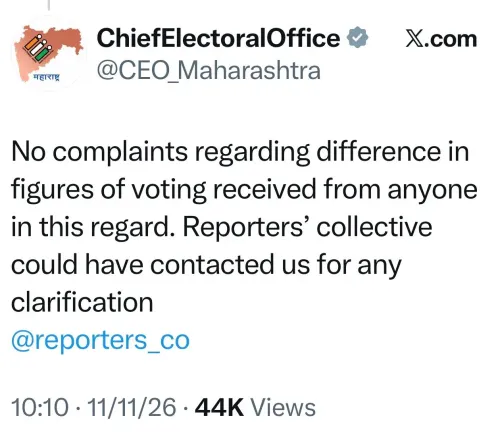
The post was accompanied by four images presented as documentary evidence.
The Adani Group , chaired by Gautam Adani , has faced sustained opposition scrutiny over government infrastructure contracts for several years.
The specific project and ministry involved have not been independently verified from public records.
No official response from the Adani Group or the concerned ministry has been issued as of publication.
A number that shrinks by a factor of a hundred is not a rounding error — it is a question that demands an answer. TMC MP Mahua Moitra fired that question on Saturday, 14 November 2026, posting on X that a public project originally valued at ₹5,675 crore was revised down to ₹56.75 crore, allegedly shortchanging the government by over ₹225 crore — and pointing the finger squarely at Gautam Adani.
The Figures Moitra Is Putting on Record
In her post, Moitra wrote: 'Adani is a Chor. But we are monkeys for letting him make monkeys of us all for so many years now. A ₹5,675 cr project revised to ₹56.75 cr so the govt gets shortchanged by over ₹225 crores.' The post was accompanied by four images, which Moitra appears to be using as documentary support for the cost-revision claim. The specific project and the ministry involved have not been independently verified from public records.
The arithmetic at the centre of her allegation is stark: a project value compressed to exactly one-hundredth of its original figure. Moitra's framing suggests the revision was not a genuine scope reduction but a mechanism that denied the exchequer its due — a charge the Adani Group and the concerned ministry have not, as of publication, publicly addressed.
Where This Fits in a Longer Opposition Campaign
Moitra's post lands inside a sustained pattern of parliamentary and public scrutiny of infrastructure contracts awarded to Adani Group companies. The conglomerate — chaired by Gautam Adani and active across ports, airports, energy, and logistics — has been at the centre of opposition questions for several years. In January 2023, a short-seller report alleged stock manipulation and accounting irregularities at Adani Group entities, triggering a months-long political storm that spilled into parliamentary sessions and prompted calls for a joint parliamentary committee inquiry.
Cost revisions in large public-private infrastructure projects have a fraught history in Indian governance. When a contract value changes dramatically — upward or downward — it raises questions about original project scoping, competitive bidding integrity, and the final revenue the government actually collects. Opposition MPs have repeatedly used such revisions as leverage to demand transparency in how mega-contracts are structured and monitored.
What Comes Next: RTIs, Parliament, and an Official Response
The immediate pressure point is official clarification. Moitra's post, backed by images she presents as evidence, creates a public record that could anchor a parliamentary question, a Right to Information filing, or a notice to the relevant ministry. The Adani Group has previously denied wrongdoing in response to similar allegations and has contested the findings of the January 2023 short-seller report.
Until the specific project is identified and the ministry responds, the figures remain Moitra's assertion — serious enough to demand a rebuttal, unverified enough to require one. In Indian public-finance accountability, the burden of that answer sits with the government.
A hundred-fold cost revision with no explanation is not governance — it is a question the exchequer cannot afford to leave unanswered.
Point of View
If substantiated, would constitute a textbook case of revenue loss to the exchequer. The allegation fits a broader arc in which opposition parties have tried to convert corporate-governance concerns into a direct indictment of the ruling government's procurement oversight. Without an official project identification and ministerial response, the claim occupies the contested space between serious allegation and unverified charge — exactly the terrain where RTI filings and parliamentary questions do their most consequential work. The political stakes are high: if the numbers hold up, they hand the opposition a concrete, auditable grievance; if they do not, the government has a ready rebuttal.
NationPress
14 Nov 2026
Frequently Asked Questions
What is Mahua Moitra's allegation against Adani?
Moitra alleges that a public project originally valued at ₹5,675 crore was revised down to ₹56.75 crore, shortchanging the government by over ₹225 crore, and she holds Gautam Adani responsible.
Which project is Mahua Moitra referring to in her Adani post?
The specific project has not been identified in publicly available records; Moitra posted four images as supporting evidence but did not name the project or ministry in the post text.
Has the Adani Group responded to Moitra's allegation?
As of publication, neither the Adani Group nor the concerned ministry has issued a public response to this specific allegation.
What is the history of opposition scrutiny of Adani Group contracts?
Opposition MPs have questioned Adani Group infrastructure contracts for several years; scrutiny intensified after a January 2023 short-seller report alleged stock manipulation and accounting irregularities, leading to calls for a parliamentary committee inquiry.
What action could follow Moitra's post?
The allegation could anchor a parliamentary question, a Right to Information filing, or a formal notice to the relevant ministry seeking details of the cited cost revision.