Mahua Moitra Alleges MLAs Being Poached for Crores in Horse-Trading Jibe

Synopsis
TMC MP Mahua Moitra publicly alleged on June 17, 2026 that legislators are being offered crore-rupee packages to switch sides, claiming her party's MLAs were offered ₹4 crore upfront plus ₹1 crore monthly for 36 months — and mocking a reported ₹15 crore offer as 'going too cheap.'
Key Takeaways
TMC MP Mahua Moitra posted on X on June 17, 2026 alleging large-scale monetary inducements to legislators to switch political loyalties.
She claimed the going rate, based on her party's experience, was ₹4 crore upfront plus ₹1 crore per month for 36 months — a potential total of ₹40 crore .
The post was addressed to Uddhav Thackeray (Shiv Sena UBT) and Abhishek Banerjee (TMC), suggesting cross-party opposition coordination.
The specific incident and the figures cited are unverified; the post is political commentary, not a formal complaint.
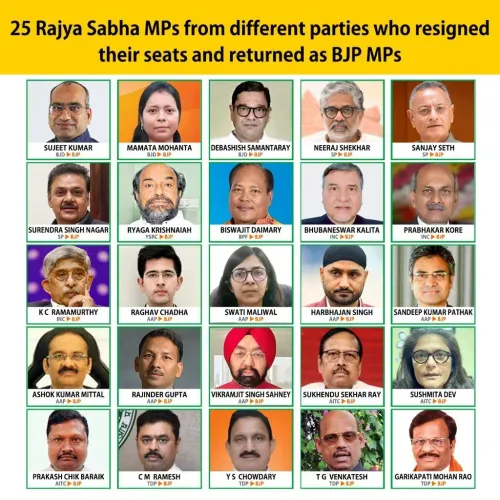
The anti-defection law (1985) exists to disqualify party-switchers, but allegations of off-the-record financial deals have persisted across Indian states for decades.
Maharashtra has been a focal point for such allegations since the 2022 Shiv Sena split .
TMC MP Mahua Moitra on Wednesday, June 17, 2026, took to X to allege that legislators are being offered crores of rupees to switch political loyalties, questioning why a reported offer of ₹15 crore was considered too low — and claiming that her party's experience suggests the going rate is far higher.
Context
Moitra's post, addressed to Uddhav Thackeray of the Shiv Sena (Uddhav Balasaheb Thackeray) faction and TMC MP Abhishek Banerjee, read: 'Only ₹15 cr? Saste mein kyo jaa rahe hai?' ('Only ₹15 crore? Why are you going so cheap?'). She went on to claim that legislators aligned with her own side allegedly received ₹4 crore upfront and ₹1 crore per month for the remaining 36 months of their term — implying a total package of up to ₹40 crore. She closed with the phrase 'Honey plus Money,' suggesting a combination of political inducements beyond cash.
The post is framed as political commentary rather than a formal complaint, and the specific incident or state it references is not named explicitly. The figures cited by Moitra are her own claims and have not been independently verified.
Policy Backdrop
Allegations of monetary inducements to legislators — commonly called 'horse-trading' — have been a recurring feature of Indian politics, particularly during government-formation crises in states with thin majorities or hung assemblies. The 52nd Constitutional Amendment of 1985 introduced the anti-defection law to disqualify legislators who switch parties, but critics argue it has not eliminated back-channel inducements.
Maharashtra has been a particular flashpoint since the 2022 Shiv Sena split, which triggered prolonged legal and political disputes over MLA loyalties, Speaker rulings, and the legitimacy of rival factions. That episode drew national attention to the mechanics of legislative defection and the scale of alleged financial offers involved.
Stakeholders and Impact
Uddhav Thackeray's Shiv Sena (UBT) faction has consistently positioned itself as a victim of orchestrated defection since the 2022 split, and Moitra's tagging of Thackeray appears to invoke that shared political experience. Abhishek Banerjee, as TMC's national general secretary, is central to the party's organisational strategy in states beyond West Bengal, making him a key figure in any multi-state political calculus.
For ordinary voters and legislators, such public allegations — regardless of their verifiability — reinforce concerns about the integrity of representative democracy and the effectiveness of existing anti-defection safeguards. Opposition parties routinely use such claims to build political narratives ahead of assembly sessions or elections.
What's Next
It remains to be seen whether Moitra's post prompts a formal response from the Shiv Sena (UBT), a rejoinder from the parties implicitly targeted, or any reference to the Election Commission of India or the judiciary. Given the post's pointed figures and its public tagging of senior opposition leaders, follow-up statements or denials could sharpen the political exchange in the days ahead.
With multiple state assemblies either in session or approaching electoral cycles, allegations of legislative poaching are likely to remain a live issue — and Moitra's intervention signals that opposition parties may be coordinating a more vocal pushback against what they describe as institutionalised horse-trading.
Point of View
It signals solidarity with Uddhav Thackeray's faction, and it positions TMC as a party that has 'seen it all' and cannot be easily bought. By framing the alleged ₹15 crore offer as laughably low, she inverts the usual victim narrative and projects confidence. The post fits a broader pattern in which opposition parties have increasingly chosen social media provocation over formal legal channels to highlight horse-trading allegations, betting that viral outrage is more politically effective than slow-moving Election Commission proceedings. Whether this triggers a substantive policy conversation about strengthening anti-defection mechanisms — or remains a social media moment — will depend on whether other opposition leaders amplify it with specifics.
NationPress
15 Sept 2026
Frequently Asked Questions
What did Mahua Moitra say about MLA horse-trading?
Mahua Moitra alleged on June 17, 2026 that legislators are offered large sums to switch sides, claiming her party's MLAs received ₹4 crore upfront and ₹1 crore per month for 36 months, and mocked a reported ₹15 crore offer as too low.
Who did Mahua Moitra tag in her horse-trading post?
She tagged Uddhav Thackeray, leader of the Shiv Sena (UBT) faction, and Abhishek Banerjee, TMC national general secretary and Lok Sabha MP.
Is horse-trading of MLAs illegal in India?
Directly switching parties can attract disqualification under the anti-defection law introduced by the 52nd Constitutional Amendment in 1985, but allegations of off-the-record cash payments remain difficult to prosecute and have persisted across states for decades.
What is the anti-defection law in India?
The anti-defection law, inserted into the Constitution in 1985, disqualifies a legislator who voluntarily gives up party membership or votes against party direction without prior permission, but it does not directly address alleged private monetary inducements.
Why is Maharashtra significant in MLA defection cases?
Maharashtra became a national focal point after the 2022 Shiv Sena split, when a large group of MLAs shifted allegiance, triggering legal battles over the party's name, symbol, and the legitimacy of the resulting government.