Mahua Moitra Questions Judicial Process Before Media 'Exclusive'
Synopsis
TMC MP Mahua Moitra publicly challenged a journalist on X on 30 May 2026, questioning whether judicial adjudication had been verified before a report was published as an 'exclusive,' reigniting debate on sub-judice reporting norms in Indian media.
Key Takeaways
TMC MP Mahua Moitra posted on X on 30 May 2026 questioning a journalist's 'exclusive' report.
She asked whether any judicial process or adjudication had been followed before the report was published.
The post was directed at @KamalikaSengupt and included an attached image.
The Press Council of India has previously issued advisories urging media to verify judicial status before sensitive reporting.
Opposition MPs have increasingly used X to flag procedurally deficient media exclusives on legal matters.
The exchange may draw attention from the Editors Guild of India or feature in the next Lok Sabha session.
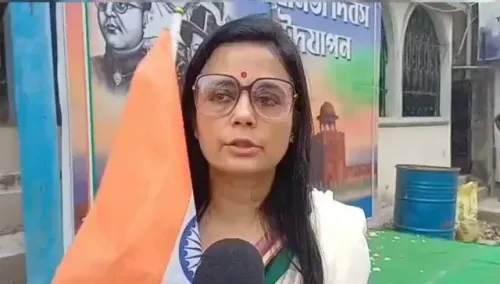
TMC MP Mahua Moitra on Saturday, 30 May 2026, publicly challenged a journalist on X, questioning whether any judicial process or adjudication had been followed before a report was published as an 'exclusive.' The post, directed at the handle @KamalikaSengupt, raised pointed questions about verification standards in media reporting on legally sensitive matters.
Context
Moitra's post asked: 'Does it occur to you or to anyone in your channel to even ask whether any judicial process/adjudication has been followed? Is that not a vital check before reporting on this so-called exclusive?' The question implies that the report in question relates to a matter that may be pending before a court or is otherwise subject to legal adjudication.
The Krishnanagar MP has a consistent record of raising procedural and accountability concerns — both inside Parliament and on social media — particularly on matters touching institutional processes and media standards.
Policy Backdrop
The Press Council of India, operating under the Press Council Act, 1978, has issued multiple advisories urging news organisations to verify the judicial status of a matter before publishing reports that could be construed as prejudicial to ongoing proceedings. The sub-judice convention, though not a statutory bar in all cases, is a widely recognised ethical standard in Indian journalism.
Opposition MPs, particularly from non-BJP parties, have increasingly used X to flag what they describe as procedurally deficient 'exclusives' on legal or political matters — a pattern that reflects a broader tension between press freedom and safeguards against prejudicial coverage.
Stakeholders and Impact
The exchange places the spotlight on the responsibilities of broadcast and digital media channels when reporting on matters that may be before courts or regulatory bodies. Legal practitioners and press-freedom advocates have long debated where the line falls between the public's right to information and the risk of influencing judicial outcomes through premature or unverified reporting.
For Trinamool Congress, the post is consistent with the party's broader posture as a vocal critic of what it characterises as institutionally irresponsible media coverage. The attached image in the original post, while not described in detail here, suggests Moitra may have shared a screenshot or visual evidence to substantiate her challenge.
What's Next
Whether the Editors Guild of India or the Press Council responds to this specific exchange remains to be seen. If the underlying matter surfaces during the next Lok Sabha session, it could become the basis for a formal question or adjournment motion. The exchange is likely to keep the debate around sub-judice reporting norms and media accountability active in political and legal circles in the weeks ahead.
Point of View
Particularly on legally sensitive stories. The pointed reference to 'adjudication' signals that the underlying matter may be before a court, making the sub-judice question substantively serious rather than merely rhetorical. This episode adds to a growing body of public pressure on Indian newsrooms to build judicial-status verification into their editorial workflows. If the Press Council or Editors Guild responds, it could crystallise an informal norm into a more enforceable standard.
NationPress
14 Oct 2026
Frequently Asked Questions
Why did Mahua Moitra question the journalist's 'exclusive' report?
Moitra questioned whether the journalist or her channel had verified that no judicial process or adjudication was pending before publishing the report, raising concerns about sub-judice reporting standards.
What is the sub-judice rule in Indian media?
The sub-judice convention discourages media from publishing reports that could prejudice ongoing court proceedings; the Press Council of India has issued advisories supporting this standard, though it is not a blanket statutory prohibition.
Who is @KamalikaSengupt that Mahua Moitra addressed?
@KamalikaSengupt is a journalist handle on X whom Moitra directly tagged in her post challenging the basis of a report published as a channel exclusive.
What action can the Press Council of India take in such cases?
The Press Council of India can take cognisance of complaints against print and digital media for violating journalistic ethics, including premature or prejudicial reporting on matters before courts, and can censure the outlet concerned.
Has Mahua Moitra raised media accountability issues before?
Yes, Moitra has a consistent record of raising procedural and accountability concerns in Parliament and on social media, including questions about institutional processes and the conduct of media organisations.