Mahua Moitra Defends Jantar Mantar Protests, Slams Modi Govt
Synopsis
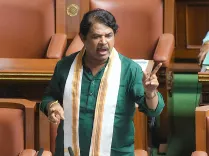
TMC MP Mahua Moitra on 14 October 2026 challenged apparent trespassing action against two citizens at Jantar Mantar, defending their right to unfurl the tricolour and declaring that Delhi's public spaces do not belong to the Prime Minister.
Key Takeaways
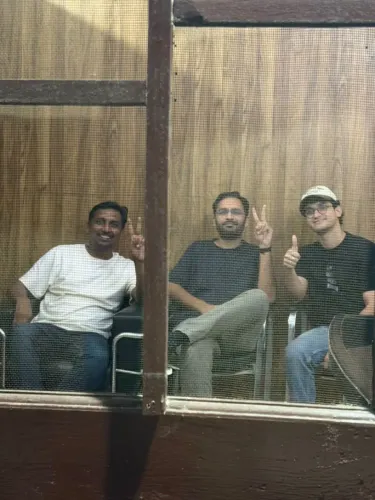
TMC MP Mahua Moitra posted on 14 October 2026 defending @SauravDassss and @AshutoshRanka against what she described as an unjust trespassing complaint at Jantar Mantar .
She asserted that citizens have an absolute right to unfurl the tricolour at Jantar Mantar, a long-recognised public protest site in central Delhi .
Her phrase 'Delhi is not Modi's Baap ka Jaagir' directly challenges the BJP-led central government's perceived control over public spaces in the capital.
Jantar Mantar has been a focal point of protest restrictions during major movements including the anti-CAA agitation and farmers' protest .
Delhi Police operates under the Union Home Ministry , making access decisions at the site a persistent centre-opposition friction point.
A democratic flashpoint erupted on Wednesday, 14 October 2026, when TMC MP Mahua Moitra fired back at what she framed as an illegitimate trespassing charge against citizens peacefully hoisting the national flag at Jantar Mantar, Delhi's most iconic public protest ground — and aimed her sharpest line directly at the Prime Minister's Office.
The Jantar Mantar Question: Who Owns a Public Space?
Moitra's post is unambiguous: 'Trespassing on what? Jantar Mantar belongs to citizens and we are free to unfurl the tricolour there.' She stood by two individuals — @SauravDassss and @AshutoshRanka — who appear to have faced some form of legal or administrative pushback for their presence at the site. The nature of that action has not been independently confirmed, but Moitra's intervention signals that the incident has crossed into political territory.
The closing phrase — 'Delhi is not Modi's Baap ka Jaagir' (Delhi is not Modi's ancestral estate) — is a deliberate, idiomatic provocation: it frames the dispute not as a law-and-order matter but as a question of who has sovereignty over the capital's public squares.
Jantar Mantar's Long History as a Protest Flashpoint
Jantar Mantar, the UNESCO-listed astronomical observatory on Parliament Street, has served as the designated protest zone for civil society and political movements for decades. It became especially charged during the 2019-2020 anti-CAA demonstrations and the 2020-2021 farmers' protests, both of which saw periodic police restrictions on access. The site's dual identity — heritage monument and democratic forum — makes any restriction on its use symbolically potent far beyond the legal technicality involved.
Permission requirements have long been a source of friction between Delhi Police (which answers to the Union Home Ministry, not the Delhi government) and opposition parties or protest organisers. That administrative reality sits at the heart of Moitra's charge: in the capital, the line between civic regulation and political control is perpetually contested.
TMC's Consistent Challenge to Centre's Grip on Delhi
Trinamool Congress leaders have made the defence of protest rights in Delhi a recurring political plank, particularly as opposition coordination has intensified. Moitra, known for combative interventions on civil liberties, is among the party's most visible voices on this front. By tagging two private citizens apparently caught up in an access dispute, she is also performing a representational act — signalling that TMC stands with ordinary demonstrators, not just headline politicians.
The episode reflects a broader pattern: opposition parties using high-visibility social-media posts to reframe policing decisions as constitutional challenges, keeping the spotlight on protest rights between formal parliamentary sessions. Whether Delhi Police or any other authority responds publicly will determine how far this particular skirmish travels.
Point of View
An apparent access dispute at a protest site — to elevate the stakes to a constitutional argument about civic freedoms. By invoking the tricolour, she makes any pushback politically costly for the ruling establishment. The 'Baap ka Jaagir' formulation is not new; it has a long lineage in Indian political rhetoric against centralised power, and its redeployment here signals that the TMC is calibrating its Delhi narrative for an audience well beyond West Bengal. The real question this episode raises is whether restrictions on Jantar Mantar access will harden into a sustained legal or parliamentary fight, or remain a social-media moment.
NationPress
14 Oct 2026
Frequently Asked Questions
What is Jantar Mantar and why is it used for protests?
Jantar Mantar is a UNESCO-listed 18th-century astronomical observatory on Parliament Street in central Delhi. It has served as a designated protest zone for decades and is one of the few spaces in the capital where demonstrations are permitted, making it a recurring site of political activism and civic agitation.
What did Mahua Moitra say about Jantar Mantar on 14 October 2026?
TMC MP Mahua Moitra posted that 'trespassing on what?' — arguing that Jantar Mantar belongs to citizens and that anyone is free to unfurl the tricolour there. She defended two individuals tagged in her post and said 'Delhi is not Modi's Baap ka Jaagir', meaning Delhi is not the Prime Minister's ancestral property.
Who controls Delhi Police and why does it matter for protests?
Delhi Police reports to the Union Home Ministry under the central government, not to the elected Delhi government. This means decisions on protest permissions at sites like Jantar Mantar are ultimately in the hands of the central administration, which opposition parties argue enables political interference in civic freedoms.
Has Jantar Mantar access been restricted before?
Yes. Access to Jantar Mantar faced notable restrictions during the 2019-2020 anti-CAA demonstrations and the 2020-2021 farmers' protests. Organisers have repeatedly been required to seek police permission, a requirement that has been a source of ongoing friction between the Centre and opposition groups.
What does 'Baap ka Jaagir' mean in Indian political discourse?
'Baap ka Jaagir' is a Hindi idiom meaning 'ancestral estate' or 'inherited property'. In political usage, it is a sharp rebuke implying that a leader is treating a public resource or institution as personal property — a phrase with a long history in Indian democratic debate.