Mahua Moitra Slams Red Road Eid Ban vs Yoga Day Closure

Synopsis
TMC MP Mahua Moitra on 18 June 2026 publicly alleged that Eid prayers were denied permission on Red Road in Kolkata for even one hour, while the same road was shut for a week for International Yoga Day — directly challenging three named public figures to question their political patrons.
Key Takeaways
TMC MP Mahua Moitra posted on 18 June 2026 alleging unequal treatment of Eid prayers versus Yoga Day on Red Road, Kolkata .
She claimed Eid congregational prayers were refused permission for one hour on one day at the venue.
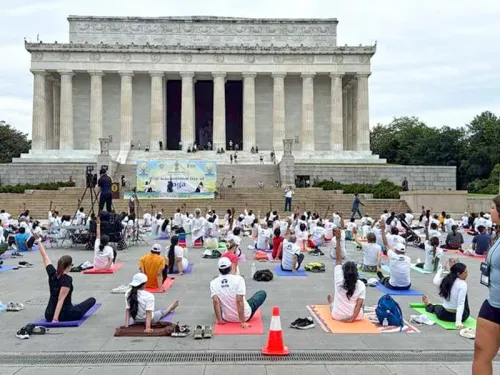
She alleged the same road was closed to traffic for a full week for International Yoga Day celebrations.
She named Abu Taher Khan , Khalilur Rahman , and former cricketer Yusuf Pathan , challenging them to raise the issue with their 'paymasters'.
Red Road is administered by Kolkata Police , which operates under the West Bengal government, and is the city's premier venue for large public events.
International Yoga Day falls on 21 June , established by a UN General Assembly resolution in 2014 at India's initiative.
TMC MP Mahua Moitra on Thursday, 18 June 2026, sharply criticised the differential treatment of public space on Red Road in Kolkata, alleging that Eid prayers were denied permission for one hour on a single day at the venue while the same road was closed to traffic for an entire week for International Yoga Day celebrations.
Context
Moitra's post directly challenged three individuals — Abu Taher Khan, Khalilur Rahman, and former Indian cricketer Yusuf Pathan — asking them to put the same question to their 'paymasters', a term widely understood in Indian political discourse as a reference to those funding or directing one's political activities. The post did not name any government authority explicitly but the implication pointed at administrative decisions governing Red Road, an iconic arterial stretch in central Kolkata that serves as the city's premier venue for large public gatherings and state functions.
The three individuals named are public figures associated with political activity in West Bengal. The current party affiliations of Abu Taher Khan and Khalilur Rahman could not be independently verified at the time of publication. Yusuf Pathan, the former Indian cricketer, has been publicly associated with political engagements in the state.
Policy Backdrop
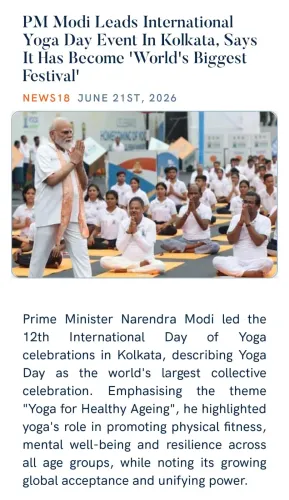
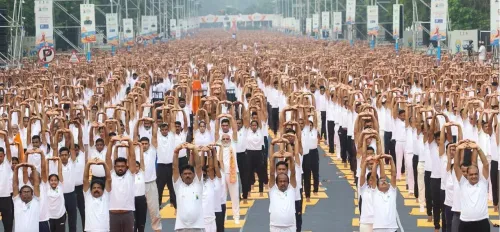
International Yoga Day falls on 21 June every year. It was established by a United Nations General Assembly resolution in December 2014 at the initiative of the Government of India, and has been observed with large-scale state-sponsored events across the country since 2015. Red Road has been a preferred venue for the Kolkata edition of the observance, with Kolkata Police issuing temporary traffic and congregation orders annually for the event.
The same road has historically been the site of Eid congregational prayers, large political rallies, and Republic Day parades. Kolkata Police, which operates under the West Bengal government, is the authority responsible for granting permissions for gatherings and managing road closures at the venue. The specific permissions or denials issued for Eid 2026 on Red Road have not been officially confirmed in publicly available records at the time of writing.
Stakeholders and Impact
The controversy touches directly on Kolkata's Muslim community, which has historically used Red Road for large Eid congregations. Any restriction on that use — whether for a single morning or a longer period — carries significant symbolic weight in a city where the festival draws tens of thousands of worshippers to open-air venues.
Moitra's post also places pressure on minority-community political figures within the state, suggesting they should hold the administration accountable rather than remain silent. The framing reflects a recurring pattern in West Bengal politics where public-space allocation decisions become flashpoints for debates on communal equity and centre-state administrative authority. Residents of central Kolkata affected by any extended road closure for Yoga Day are a secondary stakeholder in the practical, civic dimension of the dispute.
What's Next
Attention will now turn to whether Kolkata Police or the West Bengal government issues any clarification on the permissions granted — or denied — for Eid prayers and International Yoga Day 2026 on Red Road. Any official response from Abu Taher Khan, Khalilur Rahman, or Yusuf Pathan to Moitra's public challenge is also likely to extend the political conversation.
With International Yoga Day on 21 June just days away, the debate over equitable allocation of Kolkata's most prominent public road is set to intensify, and could shape how state and city authorities frame permissions for large gatherings at the venue in future years.
Point of View
She shifts the frame from an administrative dispute to one of political accountability, pressuring minority-community figures to take a public stand. The contrast she draws — one hour versus one week — is designed to be arithmetically stark and emotionally resonant, making it difficult for opponents to rebut on procedural grounds alone. The timing, days before Yoga Day, ensures the controversy peaks precisely when the event's optics are most visible.
NationPress
18 Sept 2026
Frequently Asked Questions
Why did Mahua Moitra criticise Red Road Eid prayers being stopped?
Mahua Moitra alleged that Eid congregational prayers were denied permission on Red Road in Kolkata for even one hour on a single day, while the same road was closed to traffic for a full week to accommodate International Yoga Day celebrations, which she called an unequal treatment of religious gatherings.
What is Red Road in Kolkata?
Red Road is an iconic arterial road in central Kolkata that serves as the city's premier venue for large public events including Republic Day parades, political rallies, and religious congregations. Permissions for gatherings and road closures there are managed by Kolkata Police.
When is International Yoga Day and how is it observed in Kolkata?
International Yoga Day is observed on 21 June every year. It was established by a UN General Assembly resolution in December 2014 and has been marked with large state-sponsored events in Kolkata, often centred on Red Road, since 2015.
Who are Abu Taher Khan, Khalilur Rahman and Yusuf Pathan?
Yusuf Pathan is a former Indian cricketer who has been publicly associated with political engagements in West Bengal. Abu Taher Khan and Khalilur Rahman are public figures in West Bengal politics; their current party affiliations could not be independently verified at the time of publication.
What authority controls permissions for events on Red Road?
Kolkata Police, which functions under the West Bengal state government, is the authority responsible for granting permissions for public gatherings and issuing traffic closure orders on Red Road.