Is the MP Assembly Budget session starting tomorrow?
Synopsis
As the Madhya Pradesh Assembly gears up for its Budget session, tensions rise with numerous questions and motions from MLAs. The government is set to unveil a significant Budget, leading to intense scrutiny from both sides. Key issues include infrastructure, welfare schemes, and fiscal management, promising a dynamic session ahead.
Key Takeaways
Madhya Pradesh Assembly Budget session begins tomorrow.
Over 3,400 questions submitted by MLAs.
Budget exceeding Rs 4 crore expected.
Intense scrutiny from both ruling coalition and opposition.
Key issues include infrastructure and welfare schemes.
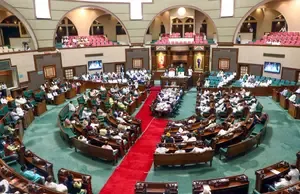
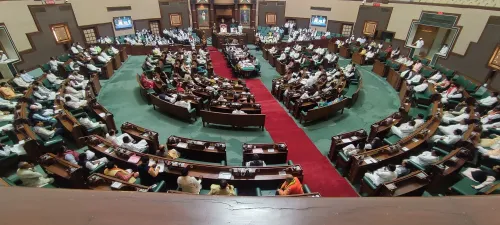
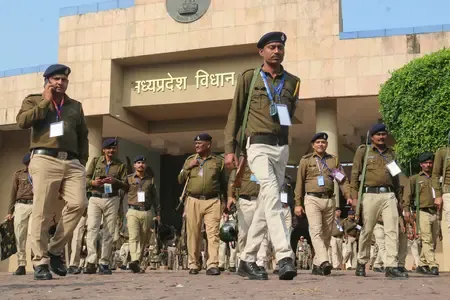
Bhopal, Feb 15 (NationPress) The political climate in Madhya Pradesh has significantly intensified as the state Assembly gears up for its pivotal Budget session commencing tomorrow.
The government is anticipated to unveil a considerable Budget exceeding Rs 4 crore for the fiscal year 2026-27, likely on February 18. Both the ruling coalition and opposition are sharpening their tactics to examine every facet of governance and financial planning.
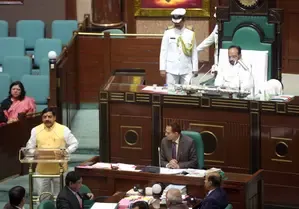
Spanning 19 sittings, this session will wrap up on March 6. It will kick off with the Governor's address, which typically reviews the government's accomplishments and outlines future goals.
Subsequently, the finance minister will present the budget for 2026-27, detailing revenue forecasts, expenditure distributions, and new policy initiatives.
Given the extensive number of questions and motions already submitted, the upcoming weeks in the Vidhan Sabha are expected to feature vibrant discussions, pointed inquiries, and potentially heated confrontations between government and opposition members.
In preparation for the session, members of the Legislative Assembly have filed an unprecedented number of questions, indicating a strong resolve to hold the administration accountable on various issues.
The Assembly Secretariat has received a total of 3,478 questions from MLAs across different parties.
Out of these, 2,253 were submitted via the online portal, showcasing the increasing use of digital processes, while the remaining 1,225 were submitted through traditional offline methods.
The questions are fairly divided in format: 1,750 are starred, requiring direct oral responses from ministers in the house, and 1,728 are unstarred, to be answered in written form.
In addition to questions, the opposition has intensified its efforts through various procedural tools.
Notices for 192 call attention motions have been filed, allowing lawmakers to highlight urgent public issues and demand prompt government responses.
Additionally, eight adjournment motions have been proposed by the opposition. If accepted, these motions could lead to extended and vigorous debates on pressing issues, potentially disrupting regular proceedings and drawing public attention to perceived administrative failures or policy shortcomings.
The concerns raised encompass both local and state-wide issues. Numerous MLAs have pointed out constituency-specific problems, such as insufficient infrastructure, delays in welfare initiatives, water shortages, and law-and-order challenges.
Simultaneously, broader inquiries tackle state priorities such as industrial growth, agricultural assistance, educational reforms, healthcare services, and fiscal management amidst increasing expenditure demands.
Point of View
I find the upcoming Budget session in Madhya Pradesh crucial for understanding regional governance dynamics. The heightened number of questions from MLAs indicates a determined effort to hold the administration accountable. This session could shape the state's political landscape and influence public policy significantly.
NationPress
19 Sept 2026
Frequently Asked Questions
What is the key focus of the MP Assembly Budget session?
The key focus is on the substantial Budget expected to be presented for the fiscal year 2026-27, alongside crucial questions regarding governance and fiscal management.
When will the Budget session start and conclude?
The Budget session will start on February 18 and is scheduled to conclude on March 6.
How many questions have been submitted by MLAs?
A total of 3,478 questions have been submitted by MLAs across party lines.
What are call attention motions?
Call attention motions are procedural tools that allow lawmakers to raise urgent public issues and request immediate responses from the government.
What issues are being highlighted by MLAs?
MLAs are raising concerns related to infrastructure, welfare scheme delays, water scarcity, and law-and-order challenges, among other state priorities.