CM Mohan Yadav backs MP's new fisheries export policy
Synopsis
Madhya Pradesh CM Dr. Mohan Yadav on October 23, 2026 welcomed the State Fisheries Investment and Export Promotion Policy-2026, citing a government resolve to make the landlocked state an export-oriented economy and a leader among India's inland states.
Key Takeaways
MP's State Fisheries Investment and Export Promotion Policy-2026 has been issued by the Madhya Pradesh government, targeting inland fisheries growth.
Mohan Yadav personally welcomed the policy, framing it as central to making MP an export-oriented state.
The policy explicitly aims for MP to lead among India's inland states in fisheries investment and exports.
Union Minister Rajiv Ranjan Singh was cited by CM Yadav, signalling potential central-state alignment on the policy push.
The policy builds on the national Pradhan Mantri Matsya Sampada Yojana (launched 2020 ), which included components for inland states.
Key beneficiaries include fish farmers, aquaculture entrepreneurs, and fisheries exporters across Madhya Pradesh.
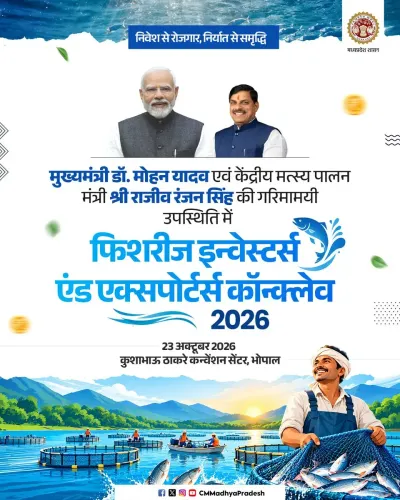
A landlocked state is making a bold bet on fish. Madhya Pradesh Chief Minister Dr. Mohan Yadav on Friday, October 23, 2026, offered a strong personal welcome to the Madhya Pradesh State Fisheries Investment and Export Promotion Policy-2026, framing it as a landmark step toward transforming the state into an export-oriented economy and a leader among India's inland states.
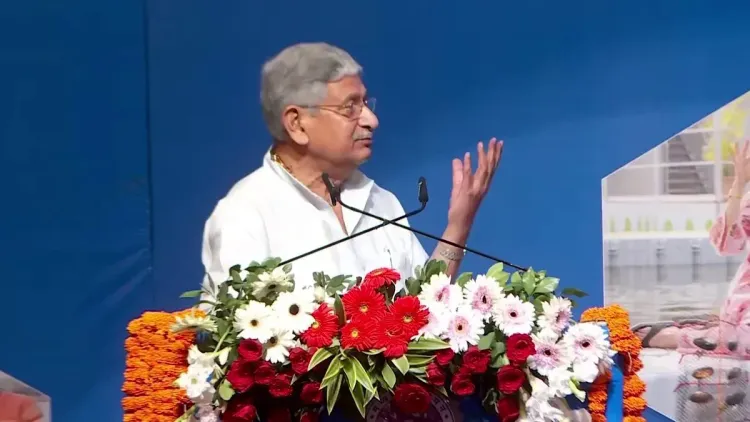
Posting in Hindi on X, Dr. Yadav quoted Union Minister Rajiv Ranjan Singh — tagging him as 'माननीय केंद्रीय मंत्री' (Honourable Union Minister) — and said: 'I particularly welcome this policy issued by the Madhya Pradesh government. This policy reiterates the government's resolve to make Madhya Pradesh an export-oriented state and to lead the inland states.'
Why a landlocked state is chasing seafood exports
Madhya Pradesh has no coastline, but it sits atop an extensive network of rivers, reservoirs, and water bodies that have long sustained local fishing communities. The new Policy-2026 signals the state's intent to convert that geographic asset into a competitive export engine — a pivot from subsistence to scale. The logic is straightforward: India's overall seafood export basket has historically been dominated by coastal states, leaving inland fisheries as an underdeveloped flank.
National policy has been pushing in this direction for some time. The Pradhan Mantri Matsya Sampada Yojana, launched in 2020, created a dedicated framework to boost fish production, infrastructure, and exports with specific components designed for inland states. MP's new policy appears to be the state-level architecture that builds on that central scaffolding — translating the national ambition into local investment incentives, aquaculture expansion, and export promotion mechanisms.
Rajiv Ranjan Singh's endorsement signals central alignment
The explicit citation of Union Minister Rajiv Ranjan Singh by CM Yadav is more than a courteous tag. It signals that the state's fisheries push carries backing — or at minimum, resonance — at the Union level, which matters enormously for policy implementation. Central-state coordination is often the make-or-break variable in sector-specific export schemes, determining access to funds, infrastructure support, and market facilitation.
The broader pattern here is recognisable. Several Indian states have rolled out sector-specific export promotion policies in recent years, seeking to diversify their revenue bases beyond traditional agriculture. MP, a major agricultural state, is now applying that same diversification logic to its inland water resources — putting fish farmers, aquaculture entrepreneurs, and fisheries exporters at the centre of a structured growth story.
What the policy signals for fish farmers and investors
The specific incentives, investment targets, and implementation timelines within the Policy-2026 are yet to be detailed in full public notifications. But the directional signal is clear: the state government wants private capital flowing into aquaculture, processing, and export logistics — sectors that have remained fragmented and under-capitalised in inland India. For fish farmers across MP's rivers and reservoir belts, the policy represents institutional recognition of a livelihood that has long operated at the margins of formal economy.
Whether the policy's ambitions translate into measurable export growth will depend on the granular incentives announced, the speed of implementation, and the coordination mechanisms built with the Centre. The blueprint is on the table. Now comes the harder work of execution.
Point of View
CM Yadav is also playing a dual game: signalling policy seriousness to investors while firming up Centre-state cooperation optics ahead of implementation. The real test will be whether the policy's incentive architecture is specific enough to attract private capital into what has historically been an under-formalised sector. If successful, MP's model could become a template for other landlocked states looking to move up the fisheries value chain.
NationPress
23 Oct 2026
Frequently Asked Questions
What is the Madhya Pradesh State Fisheries Investment and Export Promotion Policy-2026?
It is a policy issued by the Madhya Pradesh government to boost investment, production, and exports in the inland fisheries sector, with the stated goal of making MP an export-oriented state and a leader among India's inland states.
Why is a landlocked state like Madhya Pradesh focusing on fisheries exports?
Madhya Pradesh has an extensive network of rivers, reservoirs, and water bodies that support inland fisheries. The state is seeking to formalise and scale this sector to diversify its economy beyond traditional agriculture and capture a larger share of India's seafood export market.
What is the Pradhan Mantri Matsya Sampada Yojana and how does it relate to this policy?
The Pradhan Mantri Matsya Sampada Yojana was launched by the central government in 2020 to increase fish production, infrastructure, and exports, with specific components for inland states. MP's 2026 policy is a state-level effort building on that national framework.
Who is Union Minister Rajiv Ranjan Singh and why was he cited in CM Yadav's post?
Rajiv Ranjan Singh is a Union Minister referenced by CM Dr. Mohan Yadav in connection with the fisheries policy, suggesting central-level alignment or endorsement for Madhya Pradesh's fisheries export push.
Who benefits from Madhya Pradesh's new fisheries policy?
The primary beneficiaries are fish farmers, aquaculture entrepreneurs, and fisheries exporters operating across Madhya Pradesh's rivers and reservoir belts, who stand to gain from structured state investment and export support.