MP Cabinet Clears ₹3,768 Cr Irrigation and AYUSH Extensions
Synopsis
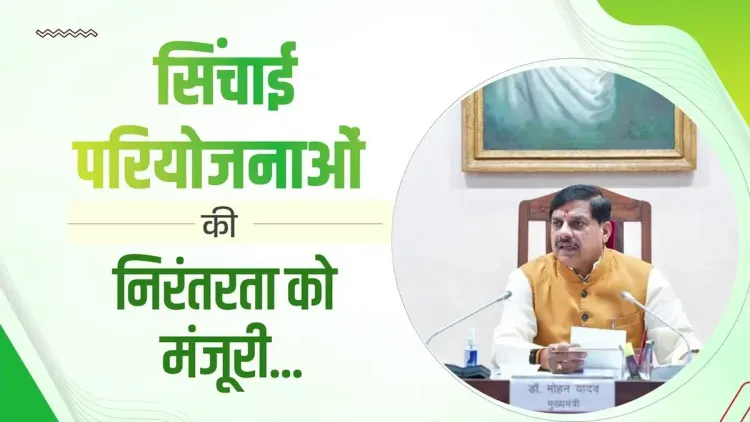
The Madhya Pradesh cabinet approved five-year extensions for irrigation projects across Burhanpur, Raisen and Singrauli worth over ₹2,070 crore, alongside a ₹1,698 crore National AYUSH Mission continuation, CM Dr. Mohan Yadav confirmed on 15 October 2026.
Key Takeaways
MP cabinet on 15 October 2026 approved continuation of multiple Water Resources Department irrigation projects for five years .
A ₹750 crore scheme for Sitamau and a ₹1,320 crore micro-irrigation project for Singrauli are among the key approvals.
Beneficiary districts include Burhanpur , Raisen (Udaypur and Bhojpur areas), and Singrauli .
The National AYUSH Mission programme in MP, worth approximately ₹1,698 crore , was also cleared for a five-year extension.
Combined committed outlay across the three major approvals stands at roughly ₹3,768 crore .
Mohan Yadav announced the decisions, continuing MP's pattern of aligning state irrigation funding with central PMKSY objectives.
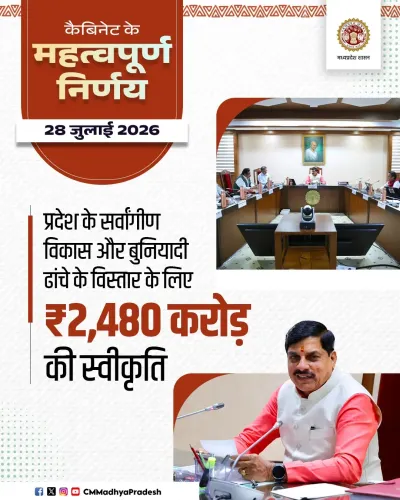
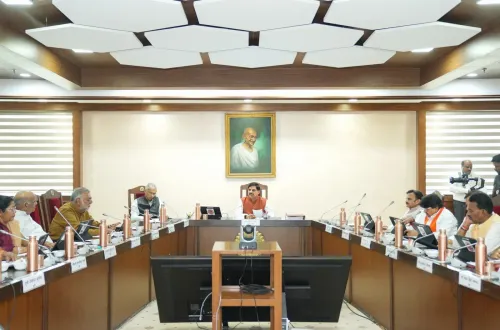
Three major schemes — worth a combined ₹3,768 crore — will continue running across Madhya Pradesh for the next five years after the state cabinet approved their extension on Thursday, 15 October 2026. The Chief Minister's Office of Madhya Pradesh confirmed the decisions, with Chief Minister Dr. Mohan Yadav announcing the approvals covering irrigation infrastructure in multiple districts and a flagship traditional medicine mission.
Three Big Approvals, Five More Years Each
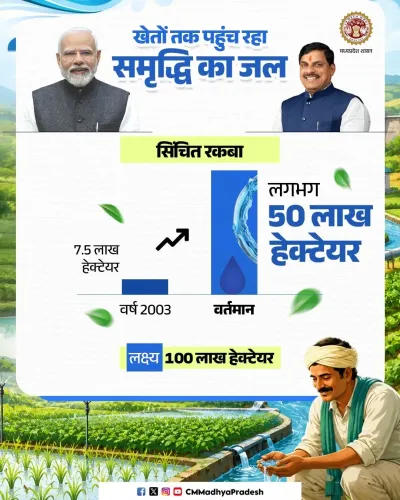
The cabinet greenlit the continuation of the Water Resources Department's various irrigation projects across Burhanpur, the Udaypur and Bhojpur areas of Raisen district, and several other beneficiary regions. These projects focus on expanding and improving irrigation access for farmers who have historically faced water deficits in central and western Madhya Pradesh.
Two headline approvals stand out. A scheme centred on Sitamau, valued at approximately ₹750 crore, received a five-year continuation nod. So did a micro-irrigation project for the Singrauli region, carrying a price tag of ₹1,320 crore — one of the larger targeted water-use investments in eastern MP, a district better known for coal and power infrastructure than agricultural irrigation.
National AYUSH Mission Gets ₹1,698 Crore Lifeline
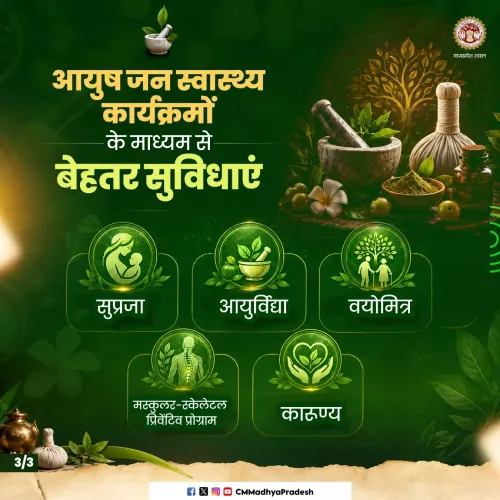
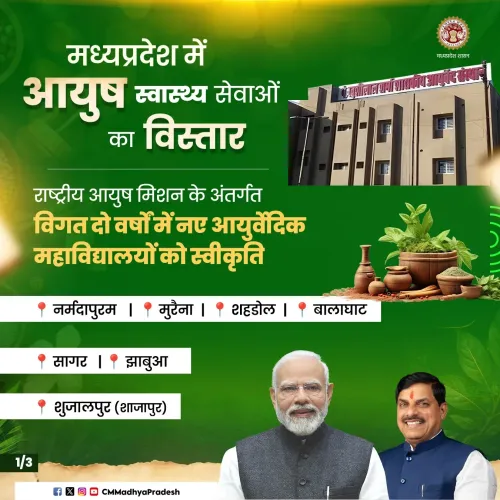
Beyond irrigation, the cabinet also cleared the continuation of the state's programme under the National AYUSH Mission, worth approximately ₹1,698 crore, for another five years. The National AYUSH Mission — launched by the Union Cabinet in 2014 — channels central funding to states to strengthen traditional Indian medicine systems including Ayurveda, Yoga, Unani, Siddha, and Homeopathy. Madhya Pradesh's sustained allocation signals that traditional healthcare delivery remains a priority alongside physical infrastructure.
A Pattern of Five-Year Commitments Across MP
The decisions slot neatly into a longer arc. Madhya Pradesh has repeatedly renewed multi-year irrigation schemes under the framework of the Pradhan Mantri Krishi Sinchayee Yojana (PMKSY), launched nationally in 2015 to expand assured irrigation coverage. Districts like Burhanpur, Raisen, and Singrauli have seen recurring extensions precisely because regional water deficits remain stubborn problems — a single five-year cycle rarely resolves them.
The cumulative approvals — ₹750 crore + ₹1,320 crore + ₹1,698 crore — represent a ₹3,768 crore commitment over the next half-decade, spread across rural farmers, rural households dependent on traditional healthcare, and the contractors and departments implementing the works. Real accountability, however, will come at budget sessions: fund utilisation reports and implementation progress will determine whether the rupee numbers translate into field outcomes.
The villages of Singrauli and Sitamau will now watch — not for the announcement, but for the water.
Point of View
Meanwhile, keeps the state aligned with the Centre's push for traditional medicine at scale, a policy priority that has only deepened since 2014. The real test for CM Dr. Mohan Yadav's administration will be whether these extensions are accompanied by measurable utilisation targets or remain open-ended funding pipes.
NationPress
15 Oct 2026
Frequently Asked Questions
What did the Madhya Pradesh cabinet approve on 15 October 2026?
The MP cabinet approved five-year continuations of several Water Resources Department irrigation projects across Burhanpur, Raisen, and Singrauli, as well as the state's National AYUSH Mission programme — with a combined outlay of approximately ₹3,768 crore.
How much is the Singrauli micro-irrigation project worth?
The Singrauli micro-irrigation project has been approved at approximately ₹1,320 crore and will continue for five years.
What is the Sitamau irrigation scheme in Madhya Pradesh?
The Sitamau scheme is an irrigation project in Madhya Pradesh valued at approximately ₹750 crore , which the state cabinet cleared for a five-year extension on 15 October 2026.
What is the National AYUSH Mission and how does Madhya Pradesh benefit?
The National AYUSH Mission is a central government scheme launched in 2014 to strengthen traditional Indian medicine systems. Madhya Pradesh has been allocated approximately ₹1,698 crore under the mission, now extended for another five years.
Which districts benefit from MP's extended irrigation projects?
Key beneficiary districts and areas include Burhanpur , Raisen (specifically Udaypur and Bhojpur regions), Singrauli , and Sitamau , along with other areas covered under the Water Resources Department projects.