MP CMO Flags State's Coal and Copper Ore Dominance
Synopsis
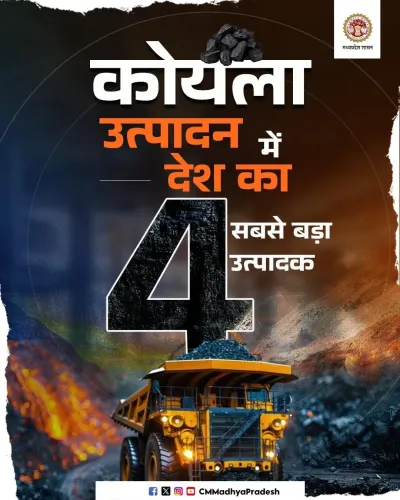
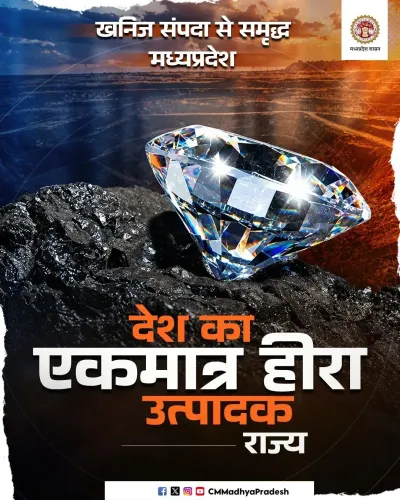
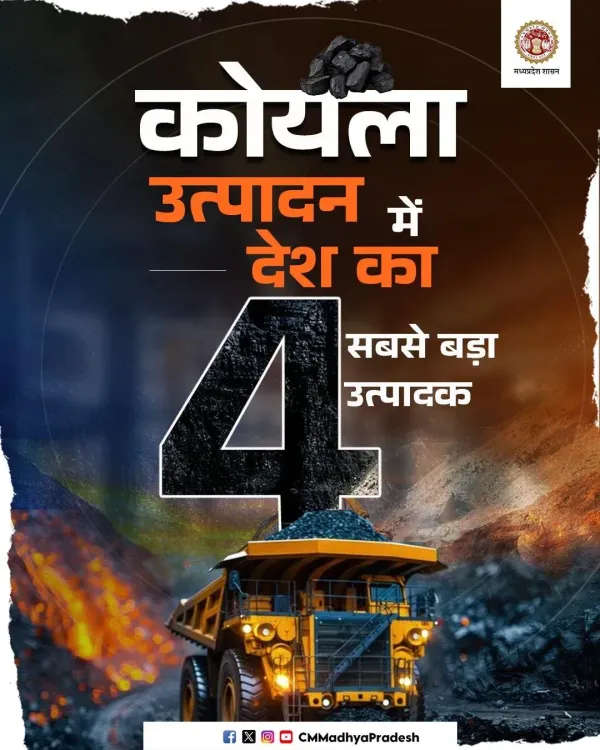
The Chief Minister's Office of Madhya Pradesh has highlighted the state's position as India's fourth-largest coal producer and the holder of 73% of the country's copper ore reserves, signalling a push to attract mining investment after the 2015 shift to auction-based lease allocation.
Key Takeaways
The Chief Minister's Office of Madhya Pradesh posted on 3 August 2026 flagging two key mineral rankings.
The state claims to be India's fourth-largest coal-producing state .
Madhya Pradesh holds 73% of India's copper ore reserves , largely anchored by the Malanjkhand mine in Balaghat district.
The Mines and Minerals (Development and Regulation) Amendment Act 2015 made auction-based lease allocation the norm, giving states a strong incentive to publicise reserve data.
Mining companies, state revenue departments, and investors in upcoming mineral block auctions are the primary audience for this positioning.
Madhya Pradesh is staking its claim as one of India's most mineral-rich states — and the numbers it is putting forward are striking. The Chief Minister's Office of Madhya Pradesh posted on X on Monday, 3 August 2026, highlighting two headline figures: the state ranks as the fourth-largest coal-producing state in the country, and it holds 73% of India's copper ore reserves.
The copper story runs through Malanjkhand
The copper ore claim is anchored, in large part, by Malanjkhand in Balaghat district — one of Asia's largest open-cast copper mines and the single biggest reason Madhya Pradesh dominates India's copper ore reserve map. The site has driven the state's outsized share of national copper ore deposits for decades, making it a recurring centrepiece whenever the state positions itself to investors.
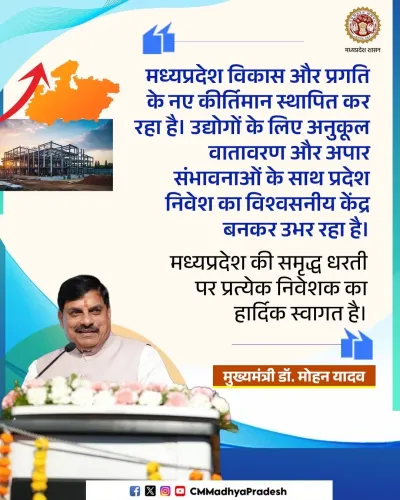
The post's framing — ranking, percentage, leadership — is a deliberate investment pitch. Since the Mines and Minerals (Development and Regulation) Amendment Act of 2015 introduced transparent, auction-based allocation of mining leases, Indian states have had both the incentive and the mechanism to publicise their mineral credentials aggressively. A strong reserve-share number is, in effect, a billboard aimed at mining companies eyeing the next block auction.
Coal's fourth-place ranking in a competitive field
India's coal production is dominated by a handful of states — Jharkhand, Odisha, and Chhattisgarh routinely occupy the top three positions. A fourth-place ranking for Madhya Pradesh, if confirmed in the next Indian Bureau of Mines annual production report, would represent a meaningful position in a sector that powers the country's electricity grid and heavy industry.
Mining companies, state revenue departments, and prospective investors in mineral block auctions are the immediate audience for this kind of data. For the state government, each ranking point translates into negotiating leverage — higher royalties, more competitive bids, and a louder voice in national mineral policy discussions.
Madhya Pradesh is not just counting its reserves — it is advertising them. Whether the next round of block auctions converts that advertisement into signed leases will be the real measure of this moment.
Point of View
And Madhya Pradesh is playing that game with two of its strongest cards. The copper ore figure, if it holds up in official Bureau of Mines data, is genuinely significant — a 73% share is near-monopoly territory that gives the state outsized leverage in royalty negotiations. The coal ranking matters less in absolute terms but signals that MP is diversifying its mineral pitch beyond copper. Watch whether these figures translate into notified auction blocks in the next quarter, which would be the real test of whether this is strategy or just optics.
NationPress
17 Sept 2026
Frequently Asked Questions
Which state has the most copper ore reserves in India?
Madhya Pradesh holds the largest share of India's copper ore reserves, with the Chief Minister's Office citing a figure of 73%, driven primarily by the Malanjkhand mine in Balaghat district.
What rank is Madhya Pradesh in coal production in India?
The Madhya Pradesh Chief Minister's Office has stated that the state is the fourth-largest coal-producing state in India, though this ranking is subject to confirmation in official annual production reports.
Where is the Malanjkhand copper mine located?
The Malanjkhand copper mine is located in Balaghat district of Madhya Pradesh and is one of Asia's largest open-cast copper mines, accounting for a significant portion of India's copper ore reserves.
How does the 2015 Mines Act affect state mineral auctions?
The Mines and Minerals (Development and Regulation) Amendment Act of 2015 replaced discretionary lease grants with a transparent, auction-based system, giving states a direct financial incentive to publicise their mineral assets to attract competitive bids.
Why is Madhya Pradesh promoting its mineral rankings?
States routinely highlight production rankings and reserve shares to attract mining companies ahead of mineral block auctions, negotiate higher royalties, and strengthen their position in national mineral policy discussions.