CM Rekha Gupta links Emergency, 1984 riots to Rahul Gandhi
Synopsis
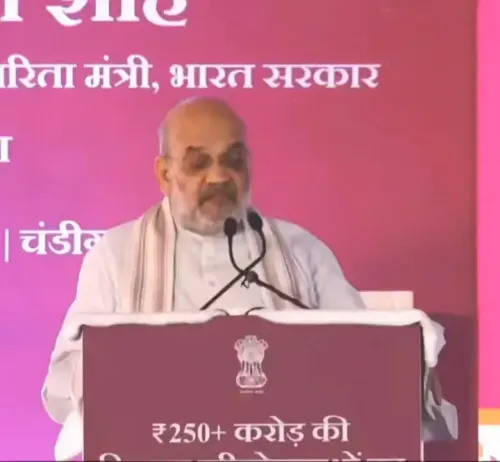
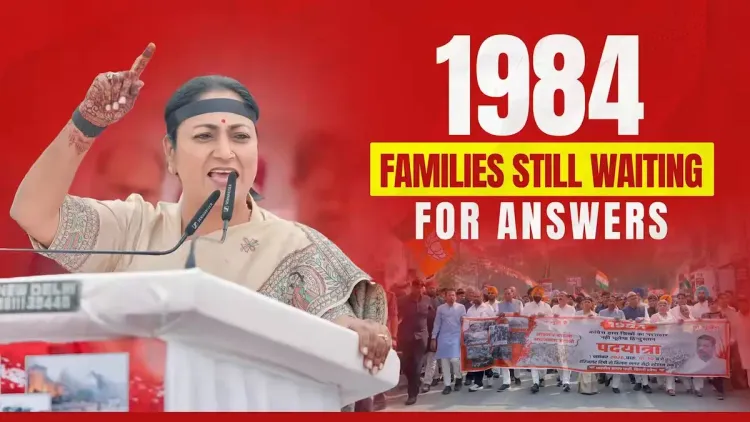
Delhi CM Rekha Gupta invoked the 1975 Emergency and the 1984 anti-Sikh riots on November 1, 2026, to accuse the Gandhi family — including Rahul Gandhi today — of a continuous pattern of undermining Indian democracy for political gain.
Key Takeaways
Delhi CM Rekha Gupta posted a sharp attack on the Gandhi family on November 1, 2026 .
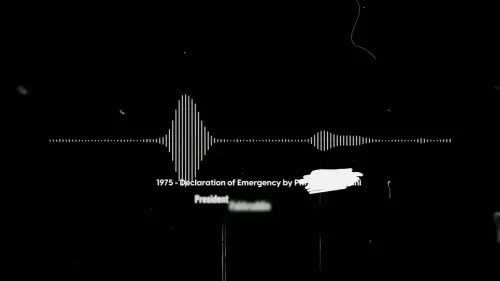
She linked Indira Gandhi's 1975 Emergency (which lasted 21 months ) to alleged political self-preservation.
She accused Rajiv Gandhi of using the 1984 anti-Sikh riots to consolidate his rise to the prime ministership.
She extended the accusation to Rahul Gandhi , alleging he is actively working to spread 'anarchy' in India today.
The post is tagged #SaveDemocracyRemoveAnarchy , signalling a nationally targeted communication strategy.
Congress had not publicly responded at the time of publication.
Delhi Chief Minister Rekha Gupta reached back across five decades of Indian political history on Sunday, November 1, 2026, drawing a direct line from Indira Gandhi's 1975 Emergency to the 1984 anti-Sikh riots — and then pointing that line squarely at Rahul Gandhi today.
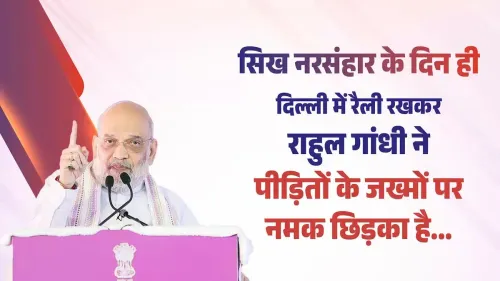
In a Hindi post carrying the hashtags #SaveDemocracyRemoveAnarchy and #लोकतंत्र_बचाओ_अराजकता_हटाओ ('Save Democracy, Remove Anarchy'), Gupta wrote: 'Indira Gandhi imposed the Emergency to save her own power. Rajiv Gandhi engineered the massacre of Sikhs to become Prime Minister. And Rahul Gandhi is doing the same today — working to spread anarchy across the country.'
The historical charges Gupta is invoking
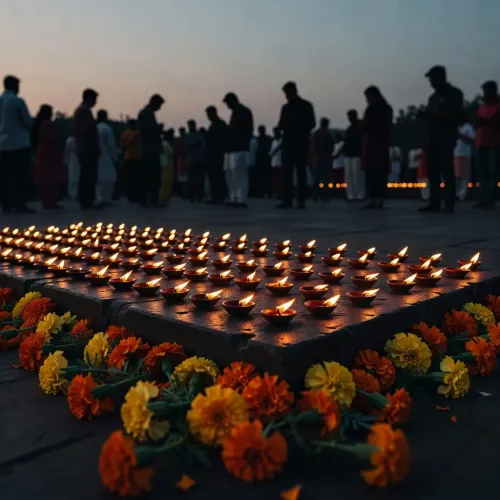
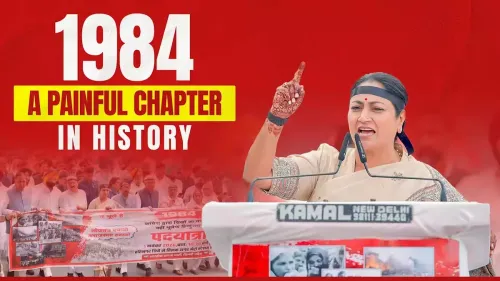
The two events cited are among the most contested chapters in modern Indian political memory. Indira Gandhi declared a national Emergency in June 1975, suspending civil liberties for 21 months until March 1977 — a period the BJP has long framed as Congress's defining act of democratic subversion. The second charge concerns the anti-Sikh riots of October–November 1984, which broke out across India following Indira Gandhi's assassination and left thousands dead. Rajiv Gandhi, who assumed the prime ministership in the aftermath, has been accused by critics and successive inquiries of failing to prevent the violence — an accusation his party has consistently disputed.
By linking both episodes to the current Congress leader, Gupta is deploying a well-established rhetorical device in BJP political communication: using dynastic continuity as evidence of institutional pattern, not just individual failure.
Routine sparring or escalating pressure?
This is not new territory for BJP leaders. The party has cited the Emergency and the 1984 riots repeatedly in national and state-level political contests as the sharpest available evidence of what it calls Congress's authoritarian instincts. What gives this iteration its edge is the direct attribution to Rahul Gandhi of an active, present-tense role in fomenting 'anarchy' — a charge the post makes without specifying events. The research does not detail which current actions Gupta had in mind, and the party has not elaborated publicly.
Congress has not yet responded to the post. But the hashtag pairing — one in English, one in Hindi — signals a message calibrated for national amplification, not just a Delhi-specific audience.
The BJP's consistent revival of Emergency-era and 1984 imagery suggests these remain live electoral fault lines, not settled history — and Gupta's post is the latest marker on that long-running map.
Point of View
She attempts to collapse history and current politics into a single narrative of dynastic authoritarianism. The combative hashtag in both English and Hindi suggests the message is aimed at a pan-India audience, not just a Delhi base, possibly previewing a broader campaign frame. The absence of any specific current event to anchor the 'anarchy' charge, however, leaves the accusation open to challenge and invites a Congress counter-narrative.
NationPress
1 Nov 2026
Frequently Asked Questions
What did Delhi CM Rekha Gupta say about Rahul Gandhi?
Rekha Gupta accused Rahul Gandhi of working to spread anarchy in India, drawing a parallel with what she described as Indira Gandhi imposing the 1975 Emergency and Rajiv Gandhi's alleged role in the 1984 anti-Sikh riots.
What was the 1975 Emergency in India?
The national Emergency was declared by Prime Minister Indira Gandhi in June 1975, suspending civil liberties for 21 months until March 1977. It remains one of the most contested periods in Indian democratic history.
What is the BJP's position on the 1984 anti-Sikh riots?
The BJP has consistently accused the Congress party and the Gandhi family of responsibility for the anti-Sikh violence that erupted after Indira Gandhi's assassination in October 1984, in which thousands of Sikhs were killed.
Why does the BJP keep raising the Emergency and 1984 riots?
BJP leaders use these events as evidence of what they describe as Congress's authoritarian and communally divisive tendencies, deploying them as a recurring contrast to their own democratic credentials during election campaigns.
Has Congress responded to Rekha Gupta's post?
Congress had not issued a public response to the November 1, 2026 post at the time of publication.