CM Mohan Yadav launches Mukhyamantri Sugam Parivahan Seva

Synopsis
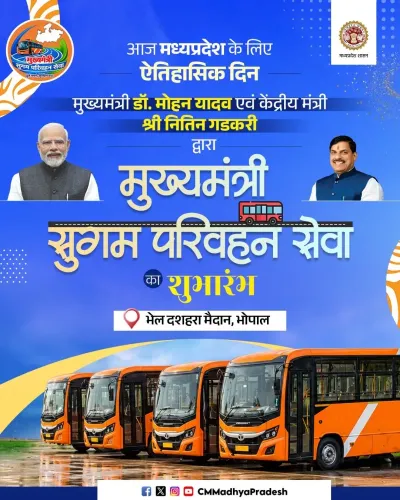
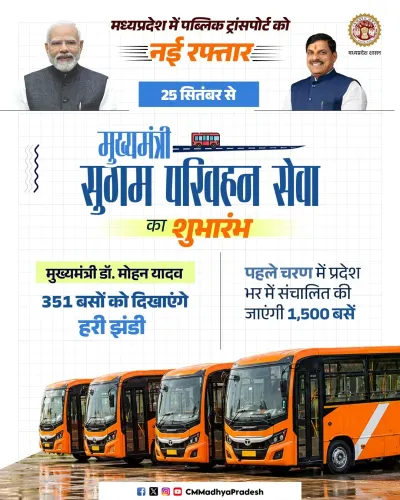
Madhya Pradesh CM Dr. Mohan Yadav flagged off 351 buses in Bhopal on 25 September 2026 to launch the Mukhyamantri Sugam Parivahan Seva, a city-village connectivity scheme under the Seva Sankalp Abhiyan, in the presence of Union Minister Nitin Gadkari.
Key Takeaways
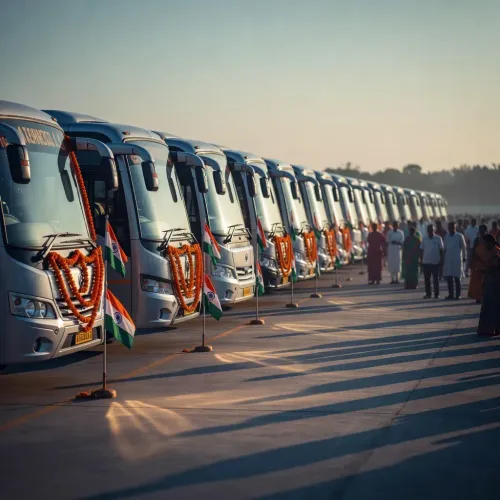
351 buses were flagged off from Bhopal on 25 September 2026 to formally launch the Mukhyamantri Sugam Parivahan Seva .
The launch was held under Seva Sankalp Abhiyan , the Madhya Pradesh government's public welfare outreach campaign.
Union Minister Nitin Gadkari was present, signalling centre-state alignment on the transport initiative.
The scheme aims to improve connectivity between urban centres and rural areas in Madhya Pradesh , offering safer and more reliable public transport.
Route coverage, ridership figures, and safety audits in the coming months will determine the scheme's real-world impact.
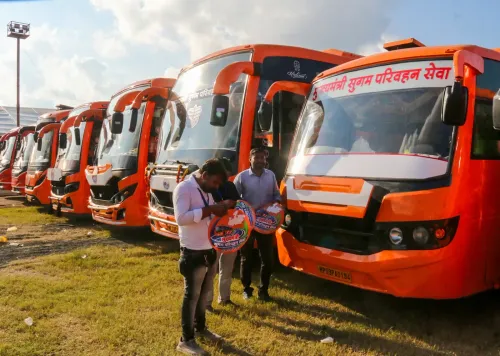
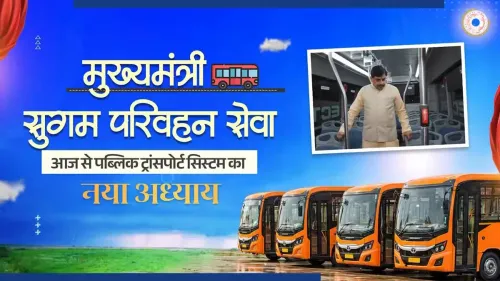
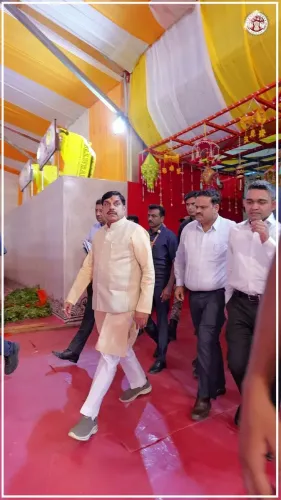
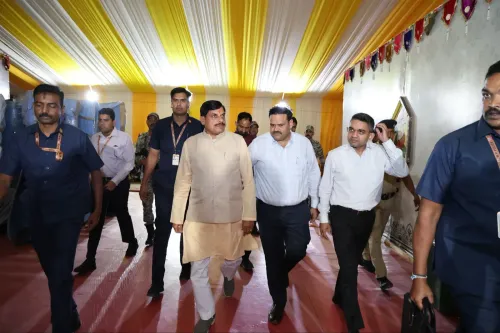
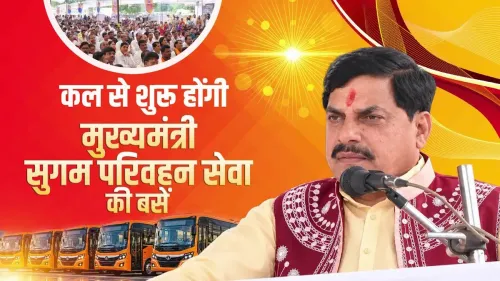
From Bhopal on Friday, 25 September 2026, Madhya Pradesh Chief Minister Dr. Mohan Yadav flagged off 351 buses to inaugurate the Mukhyamantri Sugam Parivahan Seva — a state scheme designed to stitch cities and villages together with safer, more reliable public transport.
351 buses roll out of Bhopal under Gadkari's watch
Union Minister for Road Transport and Highways Nitin Gadkari graced the launch, lending the event a clear signal of centre-state alignment on transport infrastructure. The flagging-off ceremony was held under Seva Sankalp Abhiyan, the Madhya Pradesh government's rolling campaign for welfare and public-outreach launches. Dr. Yadav announced the initiative on X, saying the service will make 'shehron aur gaanvon ke beech aavaagaman aur sugam' — movement between cities and villages even smoother — while giving residents safer and better transport facilities.
The Sugam Parivahan Seva directly targets one of rural India's most persistent friction points: the gap between the last town bus stand and the village. For daily commuters — students, farm workers, small traders — that gap can mean hours lost or fares unaffordable on shared jeeps and tempos. A dedicated, state-operated fleet changes that calculus.
Where this fits in MP's connectivity push
State governments across India have periodically expanded public bus fleets to close last-mile connectivity deficits, but scale and consistency have varied widely. Madhya Pradesh, a large landlocked state with a significant rural population, has particular reason to prioritise road-based public transport — its terrain and settlement pattern make rail coverage uneven at best.
Gadkari's ministry has been a vocal advocate for coordinated funding and policy support to state transport corporations, pushing for fleet modernisation and safety upgrades as national priorities. His presence at the Bhopal launch underlines that this is not a routine state event but one framed within a broader national transport agenda. It also reinforces the BJP's pattern of high-profile centre-state joint optics on infrastructure rollouts in party-governed states.
What commuters and watchdogs will track next
The real test of the Sugam Parivahan Seva lies ahead: route coverage maps, whether buses actually penetrate remote blocks or cluster around semi-urban corridors, ridership figures in the first quarter, and safety audit outcomes. A fleet of 351 buses is a meaningful number, but it needs to be matched by operational discipline — maintenance schedules, driver training, and timely services — to translate into genuine daily-life change for Madhya Pradesh's rural commuters.
A state launch backed by a Union minister, a named scheme, and a hard number of buses: the political scaffolding is up. Now the routes have to run on time.
Point of View
Brandable scheme with a concrete number attached, launched with a senior Union minister present for maximum political optics. Gadkari's involvement ties the state initiative to the national road-transport policy narrative his ministry has been driving. For Dr. Mohan Yadav, barely three years into his tenure, high-visibility welfare-infrastructure launches under umbrella campaigns like Seva Sankalp Abhiyan serve as a steady drumbeat of public engagement. The longer-term question — whether a fleet of 351 buses can meaningfully dent rural connectivity deficits in a state as vast as Madhya Pradesh — is the one neither the ceremony nor the X post answers.
NationPress
25 Sept 2026
Frequently Asked Questions
What is Mukhyamantri Sugam Parivahan Seva in Madhya Pradesh?
It is a Madhya Pradesh government bus service scheme launched on 25 September 2026 to improve transport connectivity between cities and rural villages, offering safer and more affordable travel for residents.
How many buses were flagged off in the Mukhyamantri Sugam Parivahan Seva launch?
351 buses were flagged off from Bhopal at the inauguration of the Mukhyamantri Sugam Parivahan Seva.
What is Seva Sankalp Abhiyan?
Seva Sankalp Abhiyan is a Madhya Pradesh government campaign for launching welfare schemes and conducting public outreach, under which the bus service was inaugurated.
Why was Nitin Gadkari present at the Bhopal bus launch?
Union Minister Nitin Gadkari, who oversees road transport and highways policy at the national level, attended the launch to mark centre-state collaboration on expanding public transport infrastructure in Madhya Pradesh.
Who is Dr. Mohan Yadav and when did he become MP Chief Minister?
Dr. Mohan Yadav is the Chief Minister of Madhya Pradesh and a BJP leader who assumed office in December 2023.