MP CM Mohan Yadav announces UCC rollout on Independence Day
Synopsis
Madhya Pradesh Chief Minister Dr. Mohan Yadav announced on Independence Day, August 15, 2026, that the state is implementing the Uniform Civil Code — a single civil-law framework for all citizens regardless of religion — invoking Article 44 of the Constitution and the BJP's long-standing legislative agenda.
Key Takeaways
Madhya Pradesh CM Dr.
Mohan Yadav announced on Independence Day, August 15, 2026 that the state is implementing the Uniform Civil Code (UCC) .
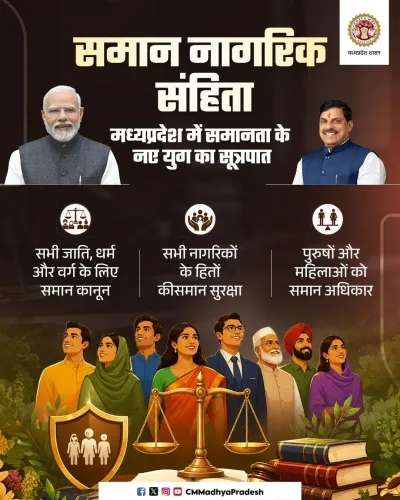
The UCC will create a single civil-law framework for marriage, divorce, inheritance, and adoption for all citizens regardless of religion.
Article 44 of the Indian Constitution has directed the State to pursue a UCC since 1950 — making this a fulfilment of a Directive Principle over seven decades old.
Uttarakhand became the first state to pass a UCC bill in February 2024 ; Madhya Pradesh is now the second BJP-governed state to move toward implementation.
The announcement was framed around constitutional equality and the teachings of Lord Ram, Lord Krishna, and Indian saints and leaders .
Draft UCC rules for Madhya Pradesh are yet to be published — the details of the law's scope and enforcement remain the critical next step.
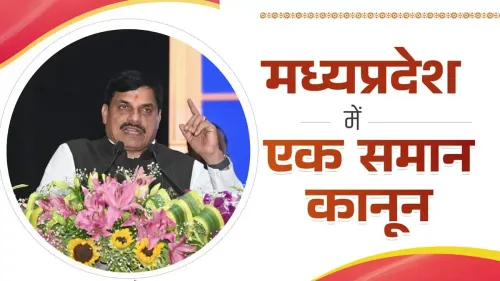
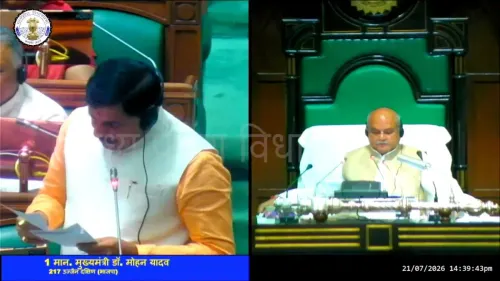
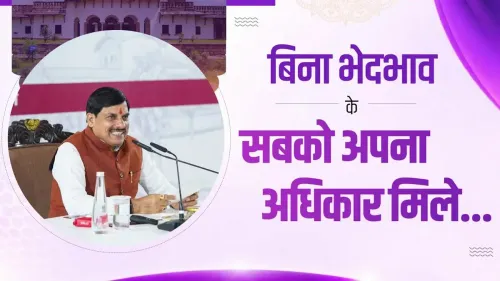
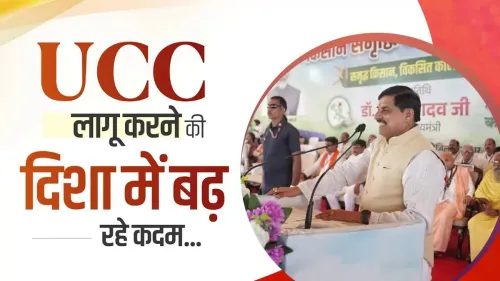
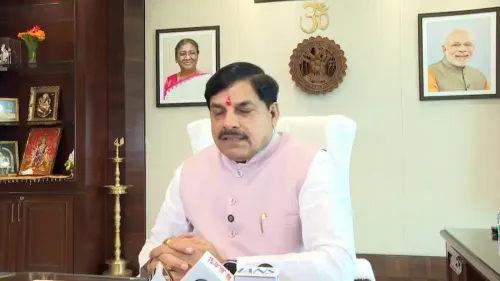
On Independence Day, August 15, 2026, Madhya Pradesh Chief Minister Dr. Mohan Yadav announced that the state is implementing the Uniform Civil Code (UCC) — a single framework of civil laws covering marriage, divorce, inheritance, and adoption for all citizens regardless of religion. The announcement, framed as a constitutional milestone, invokes the civilisational ideals of equality that the CM attributed to figures from Lord Ram and Lord Krishna to saints and great leaders across Indian history.
A constitutional directive, decades in the making
Article 44 of the Indian Constitution (1950) has long directed the State to 'endeavour to secure for the citizens a Uniform Civil Code throughout the territory of India.' For over seven decades, that directive sat in the Directive Principles — aspirational, not enforceable. Uttarakhand broke the deadlock in February 2024, becoming the first state to pass a UCC bill. Now Madhya Pradesh is moving to join it — and the timing, on the nation's Independence Day, is deliberate.
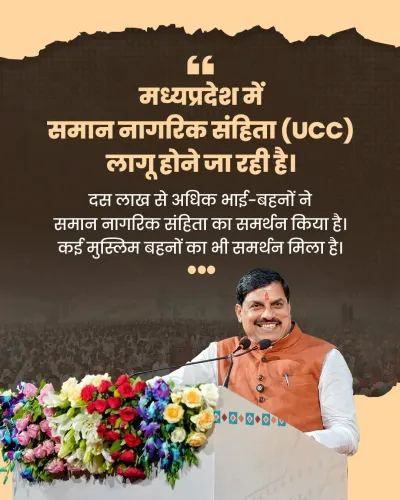
CM Yadav's statement in Hindi captured the framing precisely: 'Bharatiya Sanvidhan ki isi mool bhavna ke anurup, ek aitihasik kadam uthate hue Madhya Pradesh mein Samaan Nagrik Sanhita (UCC) laagu kar rahe hain' — ('In keeping with this very foundational spirit of the Indian Constitution, taking a historic step, we are implementing the Uniform Civil Code in Madhya Pradesh.')
MP's place in the BJP's UCC push
The move fits a clear pattern: BJP-governed states have steadily advanced UCC proposals, citing constitutional equality and the need to replace religion-specific personal laws — governing everything from Muslim personal law on divorce to Hindu succession rules — with a single, secular framework. The party has carried UCC as a core manifesto commitment for decades; state-level implementation is now the chosen vehicle.
Madhya Pradesh, a state of roughly 85 million people and one of the BJP's most enduring strongholds, carries significant symbolic weight. Dr. Yadav, who took office in December 2023, is staking his administration's identity on the reform. The Independence Day platform amplifies the message: equality under law as an act of national self-determination.
What the UCC would change — and what comes next
A Uniform Civil Code would replace the patchwork of personal laws currently governing marriage, divorce, inheritance, and adoption across religious communities. Its proponents argue it is the only path to genuine gender equality — particularly for women whose rights under some personal laws remain restricted. Critics, historically, have raised concerns about minority rights and federal overreach.
The immediate watch-point is the publication of Madhya Pradesh's draft UCC rules and the legislative or judicial proceedings that follow. The announcement signals political intent; the text of the rules will determine the law's actual reach.
Seventy-nine years after independence, Madhya Pradesh is betting that the Constitution's most debated Directive Principle is finally ready to become enforceable reality.
Point of View
Following Uttarakhand's 2024 precedent. By timing the announcement to Independence Day, the CM frames UCC not as a partisan reform but as the completion of a constitutional promise — a framing designed to pre-empt minority-rights critiques with a nationalism-and-equality counter-narrative. The reform's actual impact hinges entirely on the draft rules yet to be published; the political signal, however, is already sent. If MP's UCC withstands judicial scrutiny, it will substantially increase pressure on the Centre to pursue national legislation.
NationPress
15 Aug 2026
Frequently Asked Questions
What is the Uniform Civil Code and why is Madhya Pradesh implementing it?
The Uniform Civil Code (UCC) is a single set of civil laws — covering marriage, divorce, inheritance and adoption — that applies equally to all citizens regardless of religion. Madhya Pradesh CM Dr. Mohan Yadav announced its implementation on August 15, 2026, citing Article 44 of the Indian Constitution and the principle of equal treatment for all.
Is Madhya Pradesh the first state to implement UCC?
No. Uttarakhand passed the Uniform Civil Code Bill in February 2024, making it the first Indian state to enact UCC legislation. Madhya Pradesh is now following with its own implementation announced on Independence Day 2026.
What does Article 44 of the Indian Constitution say about UCC?
Article 44 is a Directive Principle of State Policy that directs the State to 'endeavour to secure for the citizens a Uniform Civil Code throughout the territory of India.' It is not directly enforceable in court but serves as a constitutional goal.
How will UCC affect religious personal laws in Madhya Pradesh?
Once implemented, UCC would replace religion-specific personal laws — currently governing marriage, divorce, inheritance and adoption differently across Hindu, Muslim, Christian and other communities — with a single, uniform legal framework applicable to all residents of Madhya Pradesh.
What happens next after CM Mohan Yadav's UCC announcement?
The key next step is the publication of Madhya Pradesh's draft UCC rules, followed by any legislative debate and potential judicial review. The announcement establishes political intent; the detailed rules will define the law's actual scope and application.