MP CM Mohan Yadav backs Mrignayani, ODOP MP Mart to go global
Synopsis
Chief Minister Mohan Yadav announced that Madhya Pradesh is operationalising PM Modi's 'Vocal for Local' vision through two-way e-commerce platforms Mrignayani and ODOP MP Mart, targeting weavers, artisans, and local producers across the state's districts.
Key Takeaways
Mohan Yadav announced on August 10, 2026 that Madhya Pradesh is implementing PM Modi's 'Vocal for Local' and 'Local to Global' vision through dedicated e-commerce platforms.
Mrignayani , the state's established handloom and handicraft emporium brand, is being deployed as a two-way e-commerce channel.
ODOP MP Mart is Madhya Pradesh's adaptation of the central government's One District One Product scheme, first launched by the Ministry of Commerce in 2018 .
The platforms are designed to connect weavers, artisans, and local producers directly to domestic and potential export markets, bypassing traditional middlemen.
PM Modi's 'Vocal for Local' messaging originated during the Atmanirbhar Bharat announcements of 2020 ; Madhya Pradesh's move is among the state-level operationalisations six years on.
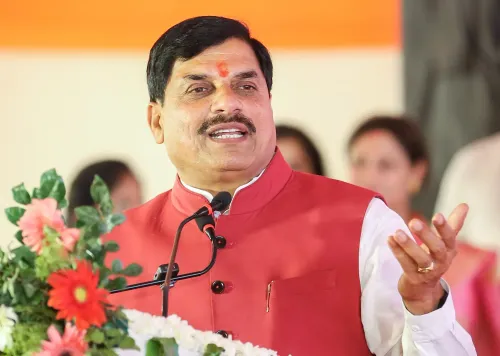
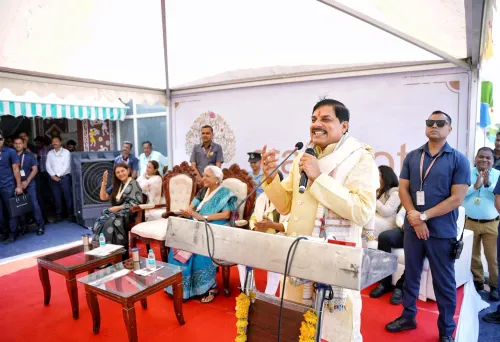
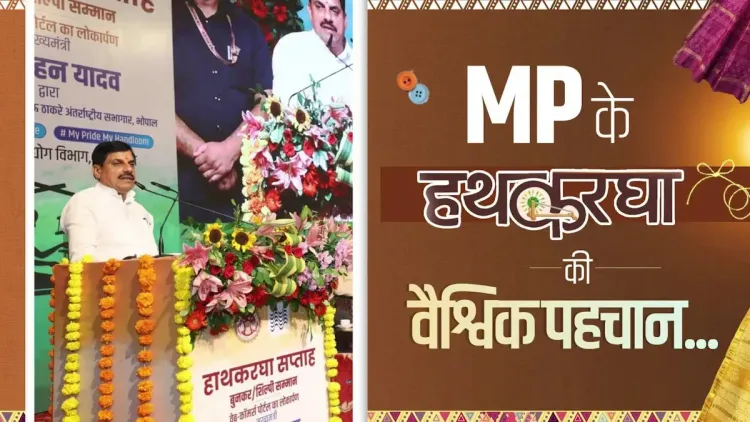
Madhya Pradesh is putting digital muscle behind its weavers and artisans. Chief Minister Dr. Mohan Yadav on Monday, August 10, 2026, announced that the state is taking concrete steps to translate Prime Minister Narendra Modi's 'Vocal for Local' and 'Local to Global' vision into ground-level reality — with two-way e-commerce platforms Mrignayani and ODOP MP Mart as the centrepiece of that push.
Two platforms, one ambition: from village loom to online storefront
In his post, CM Yadav described the launch of Mrignayani and ODOP MP Mart as 'ek badi chhalang' — a big leap — for the state's weavers, artisans, and local producers. The platforms are designed as two-way e-commerce channels, meaning they aim not just to list products but to create active buying-and-selling pipelines that connect craftspeople in Madhya Pradesh's districts directly to consumers and, eventually, export markets.
Mrignayani is the state government's established emporium brand for handloom and handicraft goods — a name already recognised in the sector. ODOP MP Mart is the state's adaptation of the central government's One District One Product (ODOP) scheme, which the Ministry of Commerce and Industry launched in 2018 to identify and promote each district's signature product for domestic sale and export.
The 'Vocal for Local' arc: from Modi's 2020 call to MP's 2026 storefront
Prime Minister Modi first amplified the 'Vocal for Local' and 'Local to Global' messaging during the Atmanirbhar Bharat announcements of 2020, framing homegrown products as both an economic necessity and a national identity statement. Six years on, states are the ones doing the heavy lifting of operationalising that call — and Madhya Pradesh is positioning itself at the front of that queue.
The broader pattern is clear: across India, state governments have increasingly wired traditional crafts and MSME goods into digital marketplaces, using ODOP as a framework and their own emporium brands as trust signals. Madhya Pradesh's move follows this arc but bets on a two-way platform model — not a passive catalogue, but an active commerce engine.
What the state's artisans stand to gain
The direct beneficiaries are Madhya Pradesh's weavers, artisans, and local producers — communities whose livelihoods have historically depended on physical emporia, middlemen, and seasonal fairs. A functioning digital channel changes that calculus: year-round visibility, direct pricing power, and a potential bridge to national and international buyers. The real test will come in the quarters ahead — in sales volumes, export linkages, and whether the platforms integrate with national e-commerce or export promotion portals.
The numbers that matter most — transaction volumes, artisan registrations, export orders — are still to be written. But the infrastructure, at least, is now on the map.
Point of View
Which, if it delivers transaction volumes, would give the state a concrete data story to tell. The real political and policy test is whether Mrignayani and ODOP MP Mart achieve measurable export linkages, or remain showcase platforms with thin actual throughput — a gap that has quietly plagued several similar state initiatives.
NationPress
10 Aug 2026
Frequently Asked Questions
What is ODOP MP Mart?
ODOP MP Mart is Madhya Pradesh's e-commerce platform built around the central government's One District One Product scheme, designed to promote and sell each district's signature product to domestic and global buyers.
What is Mrignayani in Madhya Pradesh?
Mrignayani is the Madhya Pradesh government's established emporium brand for handloom and handicraft products, now being extended as a two-way e-commerce platform to connect artisans with wider markets.
What is the One District One Product scheme?
The One District One Product (ODOP) scheme was launched by India's Ministry of Commerce and Industry in 2018 to identify each district's unique product and promote it for domestic sale and export.
What does 'Vocal for Local' mean and who started it?
'Vocal for Local' is a campaign phrase promoted by Prime Minister Narendra Modi during the Atmanirbhar Bharat announcements in 2020, urging Indians to buy and champion homegrown products to boost local economies.
How will Madhya Pradesh weavers and artisans benefit from these platforms?
Weavers and artisans in Madhya Pradesh stand to gain year-round digital visibility, direct pricing power, and potential access to national and international buyers through Mrignayani and ODOP MP Mart, reducing dependence on middlemen and seasonal fairs.