MP CM Mohan Yadav: Livestock and Fisheries Key to Farm Income
Synopsis
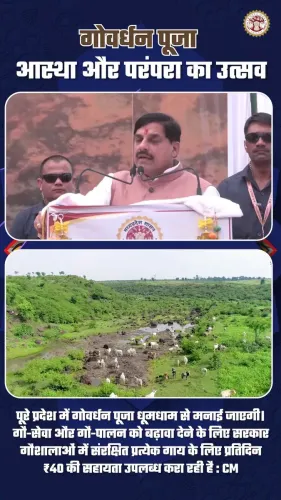
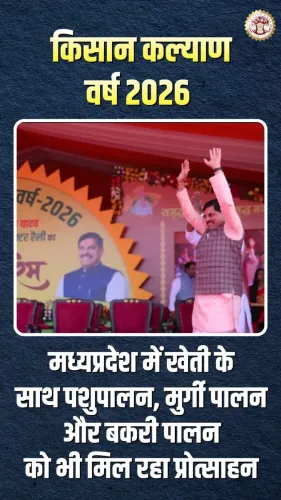
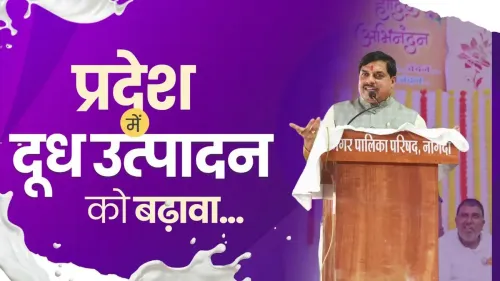
On Govardhan Puja, MP Chief Minister Dr. Mohan Yadav declared that livestock, goat rearing, and fish farming are essential income buffers for farmers, pledging government support to create new livelihood opportunities for farmers, fishermen, and animal rearers across Madhya Pradesh.
Key Takeaways
Mohan Yadav made the statement on Govardhan Puja, November 9, 2026 , linking cultural occasion with agricultural policy.
He identified animal husbandry as a critical economic buffer when crops are damaged by natural causes.
Goat rearing and fish farming were specifically named as additional income sources for rural households in Madhya Pradesh .
The statement explicitly addressed three beneficiary groups: farmers, fishermen, and animal rearers.
The National Livestock Mission (2014) provides the national framework Madhya Pradesh aligns with for livestock and allied sector promotion.
No specific scheme names or financial figures were cited; next legislative session allocations will be the key measure of follow-through.
On the auspicious occasion of Govardhan Puja, Chief Minister Dr. Mohan Yadav of Madhya Pradesh made a pointed case on Monday, November 9, 2026 for treating animal husbandry, goat rearing, and fisheries not as sideline pursuits but as structural pillars of rural income security — a message that lands with particular resonance when the monsoon has been unkind.
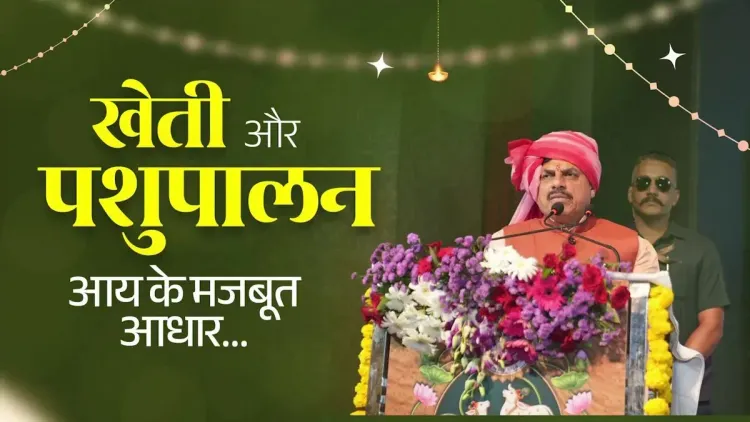
Posting from the official Chief Minister's Office account, Dr. Yadav stated: 'खेती और पशुपालन किसानों की आजीविका के मजबूत आधार हैं' — 'Agriculture and animal husbandry are the strong foundations of farmers' livelihoods.' He went further, underscoring that when crops fail due to natural causes, livestock becomes the farmer's economic lifeline, while businesses like fish farming and goat rearing generate additional income streams that make rural households genuinely self-sufficient.Why Govardhan Puja Is the Right Moment for This Message
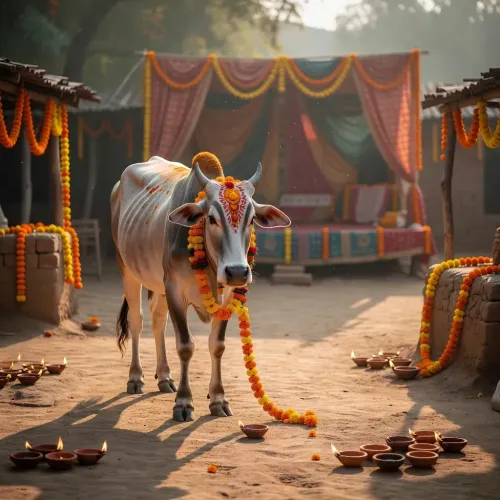
Govardhan Puja, rooted in the Hindu tradition of honouring cattle and the land that sustains them, is one of the rare festivals where cultural reverence and agricultural policy genuinely converge. Madhya Pradesh, with one of India's largest agrarian populations, has long used the occasion to amplify messaging around livestock protection and diversified farming. The timing is deliberate — and effective. Dr. Yadav's statement arrives not as abstract policy language but as a cultural affirmation that the government sees the cow, the goat, and the pond as economic assets, not just religious symbols.
Allied Sectors as a Buffer Against Weather-Dependent Farming
The broader argument Dr. Yadav is making is well-established in Indian agricultural economics. Rain-fed farming remains the dominant mode across much of Madhya Pradesh, leaving millions of smallholders exposed to a single bad monsoon. Animal husbandry — particularly goat rearing, which requires minimal capital and delivers returns in short cycles — has been recognised nationally as an effective hedge. The National Livestock Mission, launched in 2014, created a federal framework for exactly this kind of supplementary income diversification, and state governments including Madhya Pradesh have aligned their schemes to it.
Inland fisheries present a parallel opportunity. With Madhya Pradesh crisscrossed by rivers and dotted with reservoirs, fish farming has the potential to deliver consistent income to communities far from coastal markets. The Chief Minister's explicit mention of 'मछली पालन' (fish farming) alongside 'बकरी पालन' (goat rearing) signals that the government intends to promote both with equal seriousness — not as welfare gestures but as livelihood businesses.
What the Government Says It Is Doing
Dr. Yadav stated directly that his government is actively encouraging all these activities to 'create new livelihood opportunities for farmers, fishermen, and animal rearers'. The statement frames the beneficiaries as three distinct groups — kisans (farmers), machhuwares (fishermen), and pashupalaks (animal rearers) — a segmentation that reflects a more granular approach to rural welfare than the catch-all 'farmer' label typically used in political discourse.
Specific scheme names and budget allocations were not cited in the post, but the direction of travel is clear. The next state legislative session will be a critical test of whether these commitments translate into new guidelines or enhanced allocations for fisheries and small-ruminant programmes.
Madhya Pradesh's farmers have heard the promise of diversification before. The question now is whether the state budget follows where the festival message leads.
Point of View
As for most large agrarian states, is converting the rhetoric of diversification into funded, accessible schemes that reach the smallholder and the marginal fisherman — not just the organised livestock sector. The real test will come in the state budget; until then, this reads as aspirational framing rather than a concrete policy move.
NationPress
9 Nov 2026
Frequently Asked Questions
What did MP CM Mohan Yadav say on Govardhan Puja 2026?
CM Dr. Mohan Yadav stated that agriculture and animal husbandry are the twin foundations of farmers' livelihoods, and that goat rearing and fish farming can serve as additional income sources. He said the Madhya Pradesh government is encouraging all these activities to create new opportunities for farmers, fishermen, and animal rearers.
Why is animal husbandry important for farmers in Madhya Pradesh?
In Madhya Pradesh, where rain-fed farming is widespread, livestock provides an economic cushion when crops are damaged by weather. Animal husbandry, goat rearing, and fisheries offer income that is not tied to the monsoon cycle, reducing financial vulnerability for rural households.
What is the National Livestock Mission and how does it relate to MP?
The National Livestock Mission was launched in 2014 to strengthen livestock development and provide supplementary income to farmers across India. Madhya Pradesh aligns its state-level animal husbandry and fisheries schemes with this national framework.
What is Govardhan Puja and why do politicians use it for farm messaging?
Govardhan Puja is a Hindu festival that celebrates cattle protection and the relationship between farming communities and the land. Because it is culturally linked to cows and agriculture, state governments often use the occasion to reinforce messages about livestock welfare and rural income policies.
What new schemes did CM Mohan Yadav announce for farmers on November 9 2026?
CM Dr. Mohan Yadav did not announce specific new scheme names or financial figures in his Govardhan Puja statement. He reaffirmed the government's commitment to promoting animal husbandry, goat rearing, and fisheries; concrete allocations are expected to emerge in the next state legislative session.