CM MP Office Hails India's Cultural Rise on World Stage
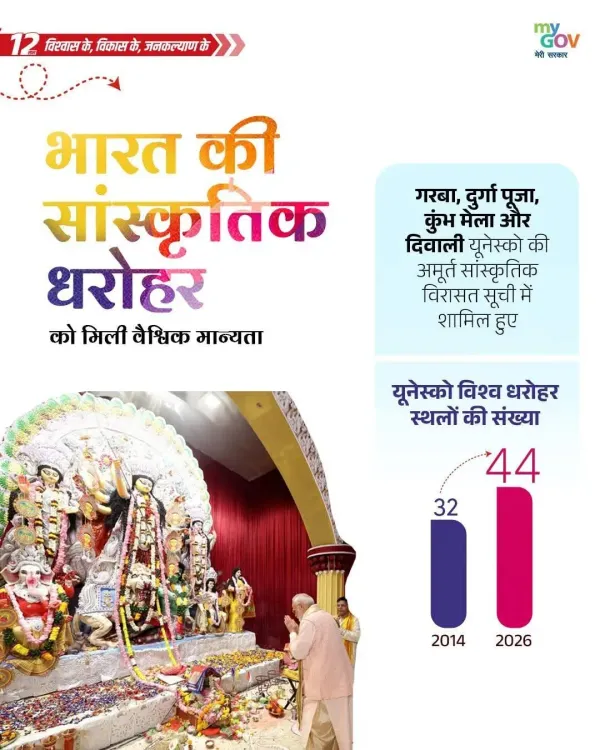
Synopsis
The Chief Minister's Office of Madhya Pradesh marked twelve years of BJP governance by celebrating the global rise of Indian cultural heritage, citing the international recognition of Garba, Durga Puja, Kumbh Mela, and Diwali as milestones of cultural diplomacy under the Vikas Bhi Virasat Bhi vision.
Key Takeaways
The Chief Minister's Office of Madhya Pradesh posted on 18 June 2026 celebrating India's growing cultural stature on the world stage.
The post highlighted Garba, Durga Puja, Kumbh Mela, and Diwali as festivals that have achieved global recognition.
The Kumbh Mela was inscribed on UNESCO's Intangible Cultural Heritage list in 2017 ; Kolkata Durga Puja followed in 2021 .
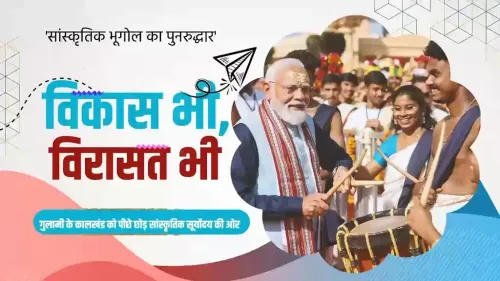
The message was tied to the hashtag #12YearsOfVikasBhiVirasatBhi , marking twelve years of BJP governance in Madhya Pradesh .
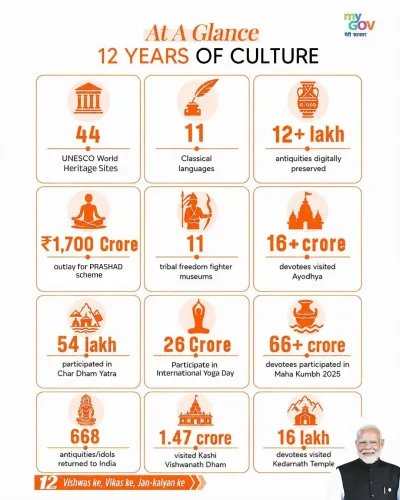
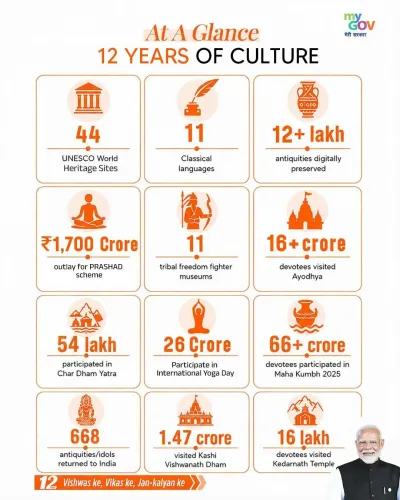
The cultural-diplomacy push is part of a broader national strategy of soft-power projection through UNESCO nominations pursued since 2014 .
The Chief Minister's Office of Madhya Pradesh on Thursday, 18 June 2026, celebrated the growing global recognition of India's cultural heritage, highlighting the international prominence achieved by festivals including Garba, Durga Puja, Kumbh Mela, and Diwali.
Context
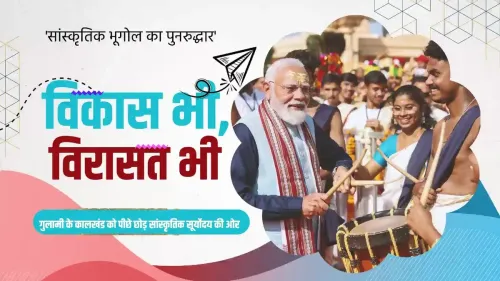
The post, shared under the hashtags #12YearsOfVikasBhiVirasatBhi and #12YearsOfSeva, declared: 'India's cultural pride has grown on the world stage — Garba, Durga Puja, Kumbh and Diwali have achieved global recognition.' The message marks twelve years of governance under the BJP in Madhya Pradesh, framing cultural diplomacy as a central achievement alongside development. The twin slogans — Vikas Bhi Virasat Bhi (Development as well as Heritage) — have been a defining theme of the state government's communication, positioning heritage preservation and infrastructure growth as complementary rather than competing priorities.Policy Backdrop
India's intangible cultural heritage has seen significant international recognition in recent years. The Kumbh Mela was inscribed on UNESCO's Representative List of the Intangible Cultural Heritage of Humanity in 2017, during the 12th session of the Intergovernmental Committee, recognising it as a ritual of pilgrimage and festivity of unique global significance. Kolkata's Durga Puja followed in 2021, when it was added to the same UNESCO list, expanding India's presence on the register of living traditions. These inscriptions form part of a broader pattern of systematic nominations pursued by successive central governments since 2014 as instruments of cultural diplomacy and soft-power projection. Garba, the traditional Gujarati folk dance performed during Navratri, has received sustained national and international cultural promotion. Diwali, the festival of lights, is widely observed by Indian diaspora communities across the world, giving it a de facto global footprint even beyond formal institutional recognition.Stakeholders and Impact
The beneficiaries of this cultural-diplomacy push span multiple groups. Cultural communities — artisans, performers, priests, and local organisers — gain visibility and, often, economic uplift through increased tourism and government support. The tourism sector in states such as Madhya Pradesh, Uttar Pradesh, and West Bengal directly benefits as UNESCO listings and global media attention drive pilgrim and visitor numbers upward. For Madhya Pradesh specifically, aligning local heritage events with nationally recognised cultural milestones reinforces the state's identity as a destination that blends living traditions with modern infrastructure. The state hosts several significant religious and cultural sites, and the government has consistently invested in festival infrastructure around major events.What's Next
Attention will now turn to the next sessions of the UNESCO Intergovernmental Committee for the Safeguarding of the Intangible Cultural Heritage, where further Indian nominations may come up for consideration. The central government has been building a pipeline of candidates, and any new inscription would add to the momentum the Chief Minister's Office of Madhya Pradesh is celebrating. The broader question is whether the cultural-diplomacy push translates into durable economic and social outcomes for the communities that sustain these traditions — a metric that policymakers, tourism boards, and civil society groups will continue to watch.Point of View
The communication borrows the credibility of an international institution to validate a domestic political achievement. This fits a well-established pattern in which state governments align themselves with centrally driven cultural-diplomacy wins to boost their own brand equity. The forward-looking implication is that cultural heritage is now firmly embedded in electoral messaging — 'Virasat' is no longer just policy, it is a campaign plank.
NationPress
19 Sept 2026
Frequently Asked Questions
Which Indian festivals have received UNESCO recognition?
The Kumbh Mela was inscribed on UNESCO's Representative List of the Intangible Cultural Heritage of Humanity in 2017 , and Kolkata Durga Puja was added to the same list in 2021 . Garba and Diwali have received significant international cultural promotion, though their specific UNESCO inscription status as of the post date should be confirmed from official UNESCO records.
What does Vikas Bhi Virasat Bhi mean?
Vikas Bhi Virasat Bhi translates to 'Development as well as Heritage' and is the governing slogan of the Madhya Pradesh BJP government, signalling that economic development and cultural preservation are pursued simultaneously.
Why is the Kumbh Mela significant internationally?
The Kumbh Mela is the world's largest peaceful gathering of people and was recognised by UNESCO in 2017 as an intangible cultural heritage of humanity for its ritual, spiritual, and social dimensions.
What is the significance of the #12YearsOfSeva hashtag?
The hashtag #12YearsOfSeva marks twelve years of BJP governance in Madhya Pradesh , and the associated posts highlight achievements across development and cultural heritage to build a record ahead of future electoral cycles.
How does cultural diplomacy benefit states like Madhya Pradesh?
UNESCO listings and global festival recognition drive tourism, boost local economies, and give state governments a platform to showcase heritage infrastructure, directly benefiting Madhya Pradesh's cultural tourism sector and the communities that sustain these traditions.