MP CM Office Marks Tiger Day, Unveils Tourism Corridor Push

Synopsis
On International Tiger Day 2026, the Chief Minister's Office of Madhya Pradesh declared the state India's safest tiger habitat and announced a Tiger Tourism Corridor aimed at linking conservation with regulated eco-tourism and local economic development.
Key Takeaways
The Chief Minister's Office of Madhya Pradesh marked International Tiger Day on 29 July 2026 by reaffirming the state's position as India's leading tiger habitat.
A new Tiger Tourism Corridor has been announced to connect reserves, regulate visitor footfall, and generate revenue for conservation.
Madhya Pradesh has topped All India Tiger Estimation counts since 2006 , housing reserves such as Kanha, Bandhavgarh, Pench, and Satpura .
The initiative builds on Project Tiger , the national programme launched in 1973 that reversed the species' decline.
Specific operational details and funding for the corridor remain to be officially announced.
The next national tiger estimation cycle will serve as a key benchmark for whether habitat investments are succeeding.
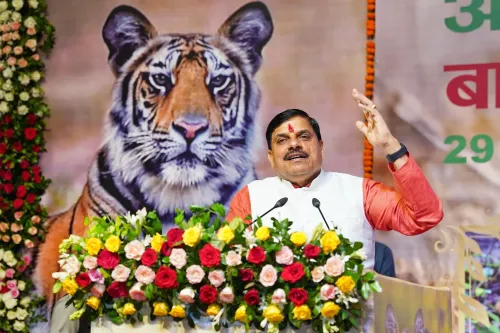
On International Tiger Day, 29 July 2026, the Chief Minister's Office of Madhya Pradesh declared the state the safest sanctuary for tigers in the country — and signalled that a new Tiger Tourism Corridor is now writing the next chapter in the state's twin story of wildlife conservation and economic development.
The post, shared on the occasion of the global observance held every year on 29 July, stated: 'Madhya Pradesh' is the most secure home for tigers, and that with the 'Tiger Tourism Corridor', a new chapter of wildlife conservation and development is being written in the state. Chief Minister Dr. Mohan Yadav was tagged directly, underlining the political ownership the state government is placing on this initiative.
Why MP's Tiger Crown Matters
Madhya Pradesh has not held the title of 'Tiger State' by accident. The state is home to some of India's most celebrated reserves — Kanha, Bandhavgarh, Pench, and Satpura among them — and has consistently topped successive All India Tiger Estimation cycles since 2006. That dominance is the direct dividend of decades of protected-area management and anti-poaching enforcement, built on the foundation of Project Tiger, the national programme launched in 1973 that pulled the species back from the edge of extinction.
India's broader tiger recovery — now widely cited as one of conservation's great modern success stories — has Madhya Pradesh at its centre of gravity. The state's forest corridors, buffer zones, and community-engagement models have become a template studied by other tiger-range states.
The Tiger Tourism Corridor: Conservation Meets Revenue
The announcement of a Tiger Tourism Corridor reflects a sharpening national trend: using regulated eco-tourism not just to fund conservation but to give local communities a direct economic stake in keeping forests intact. Corridor-style frameworks are designed to connect isolated reserves, reduce human-wildlife conflict along the edges, and channel visitor footfall in ways that do not degrade core habitat.
The specific operational details and rollout timeline of Madhya Pradesh's corridor plan have not yet been officially published, but the political signal from the Chief Minister's Office is clear — the state intends to position itself as the destination of choice for wildlife tourism while tightening its grip on the conservation leadership it already holds.
Forest departments, eco-tourism operators, and the communities living on the fringes of tiger reserves all stand to be reshaped by how the corridor model is eventually structured and funded. The next national tiger estimation cycle will be the hard proof of whether the habitat investments are holding.
Madhya Pradesh has spent fifty years proving that tigers and ambition can coexist. The Tiger Tourism Corridor is the state's bet that the next fifty years can make that coexistence pay — for the animal, and for the people who share its land.
Point of View
The state government is doing something strategically deliberate: converting a conservation credential into an economic and political asset. This mirrors a broader shift in Indian wildlife governance where states compete for 'Tiger State' status as both a biodiversity badge and a tourism draw. The corridor model, if funded and executed well, could reduce human-wildlife conflict — a persistent political liability near reserve edges — while building a constituency of local stakeholders invested in forest survival. The real test, however, will come when the corridor's land-use decisions force trade-offs between habitat integrity and development pressure.
NationPress
29 Jul 2026
Frequently Asked Questions
Why is Madhya Pradesh called the Tiger State of India?
Madhya Pradesh has recorded the highest tiger population in India across successive national tiger estimations since 2006, driven by major reserves like Kanha, Bandhavgarh, Pench, and Satpura and strong anti-poaching enforcement.
What is the Tiger Tourism Corridor in Madhya Pradesh?
The Tiger Tourism Corridor is a new initiative announced by the Madhya Pradesh government to connect tiger reserves through regulated eco-tourism routes, aiming to generate revenue for conservation and provide economic opportunities to local communities.
When is International Tiger Day observed?
International Tiger Day is observed globally every year on 29 July to raise awareness about tiger conservation and the threats facing the species.
What is Project Tiger and when was it launched?
Project Tiger is India's national tiger conservation programme launched in 1973 to establish protected reserves and reverse the sharp decline in tiger populations across the country.
Who is the Chief Minister of Madhya Pradesh in 2026?
Dr. Mohan Yadav is the Chief Minister of Madhya Pradesh and has been associated with the state's wildlife conservation and tourism initiatives.