MP CM Office: Sambal Yojana Stands With Labour Families

Synopsis
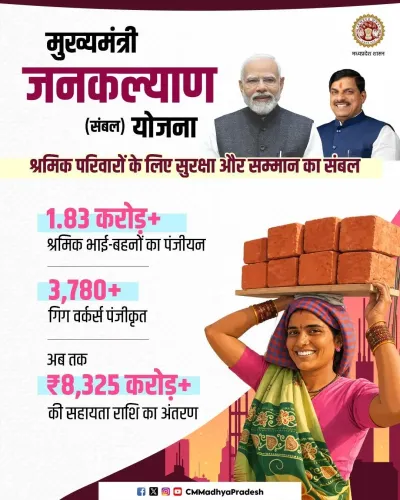
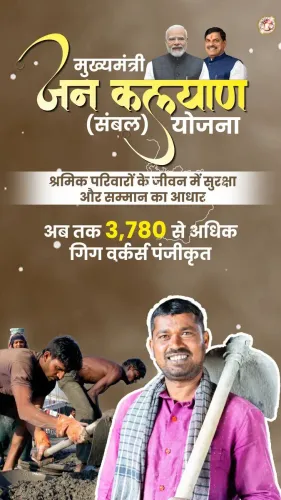
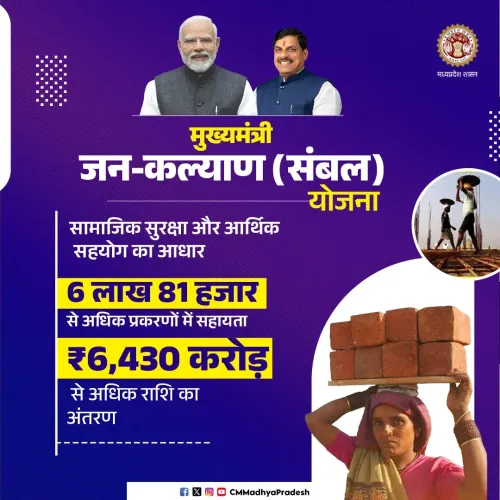
The Chief Minister's Office of Madhya Pradesh has spotlighted Sambal Yojana, the state's 2018 welfare scheme for unorganised workers, highlighting its coverage from emergency financial aid to funeral assistance for labour families across the state.
Key Takeaways
Sambal Yojana was launched in 2018 by the Madhya Pradesh government for unorganised sector workers.
The scheme covers financial assistance in crises, medical support, education aid, and funeral expenses.
The Chief Minister's Office of Madhya Pradesh reaffirmed the scheme on 8 August 2026 .
Primary beneficiaries are construction workers, agricultural labourers, and informal-sector households.
Madhya Pradesh maintains direct-benefit transfers and emergency assistance alongside central programs like PM-JANJ and ESIC.
State budget allocations and Labour Department reviews remain key indicators of the scheme's ongoing reach.
From emergency cash in a crisis to funeral support at the darkest hour, Madhya Pradesh's Sambal Yojana is being held up by the Chief Minister's Office as a cradle-to-grave safety net for the state's unorganised workforce — a quiet but consequential promise to the millions who fall outside formal social security.
The Chief Minister's Office of Madhya Pradesh posted on Saturday, 8 August 2026, reaffirming the scheme's reach: 'Vipreet paristhitiyon mein aarthik sahayata se lekar antyeshti sahayata tak, Sambal Yojana har kadam par shramik parivaron ka sahara ban rahi hai' — ('From financial assistance in adverse circumstances to funeral support, Sambal Yojana is becoming a support for labour families at every step.')What Sambal Covers — and Why It Matters
Sambal Yojana was launched in 2018 by the Madhya Pradesh government to extend a structured social security net to construction workers, agricultural labourers, and others in the unorganised sector — a segment that national frameworks have historically underserved. The scheme bundles financial assistance during crises, medical support, education aid for children, and funeral expense coverage into a single platform, targeting households that have no employer to fall back on.
Madhya Pradesh carries one of India's largest concentrations of informal labour — in construction sites, farms, and small workshops — making targeted state-level interventions like Sambal especially consequential. The scheme sits alongside central programs but fills gaps those programs leave open, particularly in emergency and end-of-life support.
A Consistent State Focus on Direct Benefit
Successive Madhya Pradesh governments have kept direct-benefit transfers to labour households at the centre of social policy. Sambal is the most visible expression of that commitment, and periodic reaffirmations from the Chief Minister's Office signal that the scheme remains an active political and administrative priority — not a dormant line item. The state's Labour Department conducts performance reviews, and budget allocations for the scheme are a key indicator to watch each fiscal year.
Across India, states have raced to plug informal-sector welfare gaps as the national workforce continues to tilt heavily towards unorganised employment. Madhya Pradesh's approach — bundling multiple benefit types under one scheme identity — has become a model that other states have studied. The kicker is simple: when a construction worker's family faces the worst, a scheme that answers both the hospital bill and the funeral cost is not a statistic — it is a lifeline.
Point of View
Medical, and funeral support under one scheme brand is a direct-benefit strategy designed to create visible, personal touchpoints with informal workers — a demographic that is numerically decisive in state elections. The post fits a broader national pattern of state governments competing to demonstrate social security reach as the unorganised sector's share of the workforce resists formalisation. Whether Sambal's on-ground delivery matches its political messaging is the question that Labour Department data — and the next budget allocation — will need to answer.
NationPress
8 Aug 2026
Frequently Asked Questions
What is Sambal Yojana in Madhya Pradesh?
Sambal Yojana is a Madhya Pradesh government welfare scheme launched in 2018 to provide social security to unorganised sector workers, including financial assistance in emergencies, medical support, education aid for children, and funeral expense coverage.
Who is eligible for Sambal Yojana?
Unorganised sector workers in Madhya Pradesh — including construction labourers, agricultural workers, and small-industry employees — are the primary target group for Sambal Yojana benefits.
Does Sambal Yojana cover funeral expenses?
Yes, Sambal Yojana includes funeral or last-rites assistance (antyeshti sahayata) as one of its benefit categories, providing support to labour families at the time of a member's death.
When was Sambal Yojana launched?
Sambal Yojana was launched by the Madhya Pradesh government in 2018 to extend structured social security to workers outside the organised sector.
How does Sambal Yojana differ from central government schemes?
While central programs like PM-JANJ and ESIC provide a baseline, Sambal Yojana is a state-specific scheme designed to fill gaps — particularly in emergency financial aid and funeral support — that national frameworks do not fully address for Madhya Pradesh's large informal workforce.