MP CM Office Unveils GCC Policy-2025 to Woo Investors
Synopsis
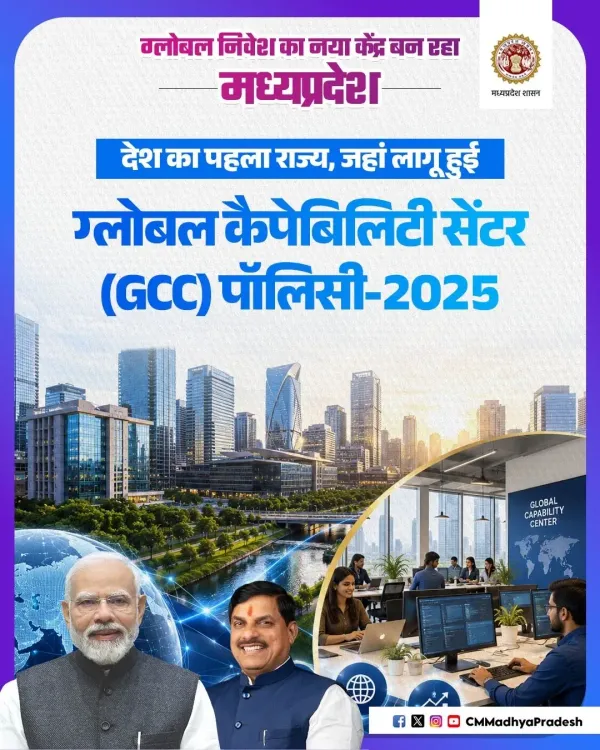
Madhya Pradesh's Chief Minister's Office has announced GCC Policy-2025, declaring the state investors' first choice for Global Capability Centres. The move by CM Dr. Mohan Yadav's administration targets multinational technology firms and aims to diversify the state's economy into high-value services, joining a competitive national race for GCC investment.
Key Takeaways
The Chief Minister's Office of Madhya Pradesh announced GCC Policy-2025 on 25 July 2026 .
Mohan Yadav and the state's industry minister are directly associated with the policy launch.
The policy positions Madhya Pradesh as investors' 'first choice' for setting up Global Capability Centres.
The move targets multinational IT and technology firms currently concentrated in Bengaluru , Hyderabad , and Pune .
Key stakeholders include IT companies, local engineering graduates, and commercial real estate developers in cities like Bhopal and Indore .
Specific incentive provisions and investment outcomes remain to be detailed at forthcoming business events or budget sessions.
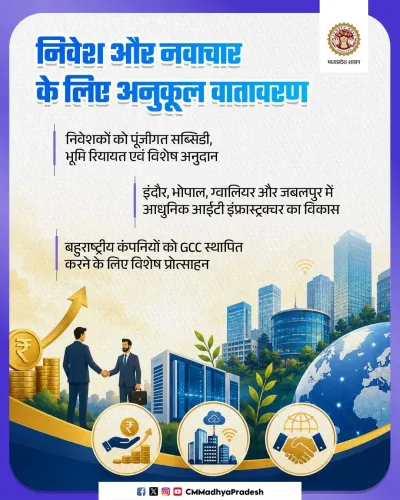
The Chief Minister's Office of Madhya Pradesh announced on Saturday, 25 July 2026 that the state has positioned itself as a top investment destination with the launch of GCC Policy-2025, framing the initiative as a push to promote investment and give innovation a new flight path.
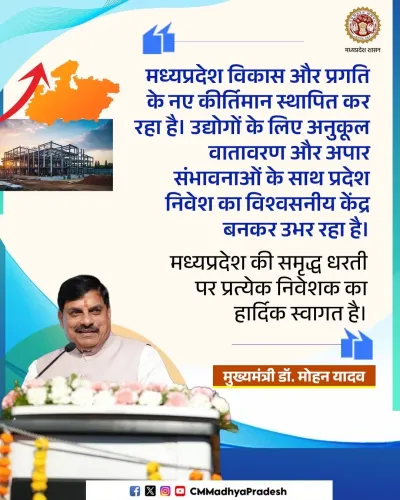
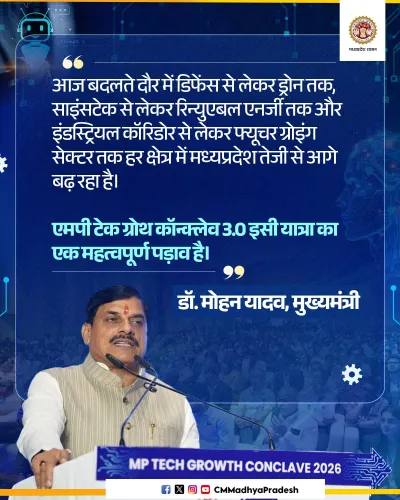
The official post declared, 'निवेश को प्रोत्साहन, नवाचार को नई उड़ान' ('Promoting investment, giving innovation a new flight'), adding that under GCC Policy-2025, Madhya Pradesh has become investors' first choice. The post tagged Chief Minister Dr. Mohan Yadav and the state's industry minister, signalling top-level political ownership of the policy.
Context
Global Capability Centres — commonly called GCCs — are offshore units set up by multinational corporations to handle technology, analytics, research, and back-office functions. India hosts hundreds of such centres, with the bulk historically concentrated in Bengaluru, Hyderabad, and Pune. A dedicated state policy signals Madhya Pradesh's intent to draw a share of this high-value services investment away from saturated metros.
Several Indian states introduced dedicated GCC frameworks from the 2010s onward, riding the wave of national services export growth. Madhya Pradesh's GCC Policy-2025 represents the state's formal entry into this competitive space, reflecting a broader push by CM Dr. Mohan Yadav's administration to diversify the state's economy beyond its traditional strengths in agriculture and manufacturing.
Policy Backdrop
Sub-national policy activism around GCCs has intensified across India in recent years as states recognise the employment and foreign-exchange benefits these centres bring. Fiscal incentives, plug-and-play infrastructure, and access to engineering talent pools are the standard levers states deploy to compete. Madhya Pradesh — a large, centrally located state — has been working to upgrade its IT and services ecosystem to match its growing industrial profile.
The state's administration under Dr. Mohan Yadav has consistently flagged investment attraction as a priority, participating in national and global investor summits. A dedicated GCC policy adds a structured, sector-specific instrument to that broader effort, giving prospective investors a clear regulatory and incentive framework to evaluate.
Stakeholders and Impact
The primary beneficiaries of GCC Policy-2025 would be multinational IT and technology companies seeking cost-effective, talent-rich locations beyond the traditional hubs, as well as domestic IT firms looking to set up captive delivery centres. For the state, successful GCC attraction translates into white-collar employment, higher per-capita income in urban centres, and an expanded tax base.
Local engineering graduates and technology professionals stand to gain from a potential surge in campus hiring if large GCCs establish operations in cities such as Bhopal and Indore. Industry associations and real estate developers focused on commercial office space are also key stakeholders watching the policy's incentive structure closely.
What's Next
Attention will now turn to the specific provisions within GCC Policy-2025 — including fiscal incentives, land allotment norms, and employment-linked benefits — which will determine how competitive the framework is against established rival states. Investment commitments, if any, are likely to be showcased at state-level business summits or during the next budget session.
Implementation rigour and the speed of incentive disbursement will be the true test of the policy's ambition. Analysts and industry bodies will track whether Madhya Pradesh can convert policy intent into signed agreements and operational GCC units within a measurable timeframe.
Point of View
Which has long been dominated by southern metros. By attaching the Chief Minister's and industry minister's names directly to the announcement, the administration is signalling political seriousness rather than bureaucratic routine. The move fits a broader pattern of heartland states using sector-specific policies to leapfrog infrastructure gaps and compete on incentives and talent cost. Whether the policy translates into actual GCC commitments will hinge on the fine print — particularly on land, taxation, and ease-of-doing-business metrics that sophisticated multinationals scrutinise before signing.
NationPress
25 Jul 2026
Frequently Asked Questions
What is GCC Policy-2025 in Madhya Pradesh?
GCC Policy-2025 is a state government framework announced by the Madhya Pradesh Chief Minister's Office to attract Global Capability Centres — offshore units of multinational corporations handling technology and services functions — to the state by offering structured incentives and a clear regulatory environment.
What is a Global Capability Centre (GCC)?
A Global Capability Centre is an offshore or nearshore unit set up by a multinational company to manage technology, analytics, research, or back-office operations. India is one of the world's largest hosts of GCCs, with major clusters in Bengaluru, Hyderabad, and Pune.
Why is Madhya Pradesh launching a GCC policy?
Madhya Pradesh is launching the policy to diversify its economy beyond agriculture and manufacturing into high-value IT and services sectors, and to compete with established GCC hubs by offering cost advantages, a growing talent pool, and state-backed incentives.
Which cities in Madhya Pradesh could benefit from GCC Policy-2025?
Bhopal and Indore are the most likely beneficiaries given their status as the state's largest urban centres with existing IT infrastructure and engineering college ecosystems that can supply talent to incoming GCCs.
Who announced GCC Policy-2025 in Madhya Pradesh?
The announcement was made by the official Chief Minister's Office of Madhya Pradesh on 25 July 2026, with Chief Minister Dr. Mohan Yadav and the state's industry minister tagged, indicating top-level political ownership of the initiative.