MP CMO declares end of 35-year Naxal chapter in state
Synopsis
The Chief Minister's Office of Madhya Pradesh declared on August 8, 2026 that 35 years of Left Wing Extremism in the state has been completely eliminated, attributing the milestone to PM Modi's vision, Home Minister Amit Shah's strategy, and CM Mohan Yadav's resolve.
Key Takeaways
The CMO of Madhya Pradesh declared the state completely free of Naxalism on August 8, 2026 .
The post credits PM Narendra Modi 's vision, Amit Shah 's strategy, and CM Mohan Yadav 's resolve for the outcome.
The declaration describes 35 years of Left Wing Extremism — termed lal aatank (red terror) — as having ended in Madhya Pradesh.
The announcement aligns with a national Ministry of Home Affairs framework tracking the progressive reduction of LWE-affected districts since 2014.
The CMO reframes the state's identity around 'peace, good governance, development, and new opportunities' in former Naxal-affected areas.
The next test is delivery of infrastructure and welfare schemes in previously affected tribal districts.
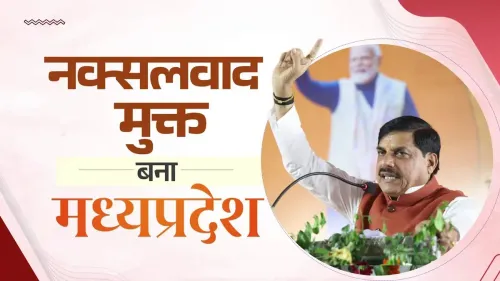
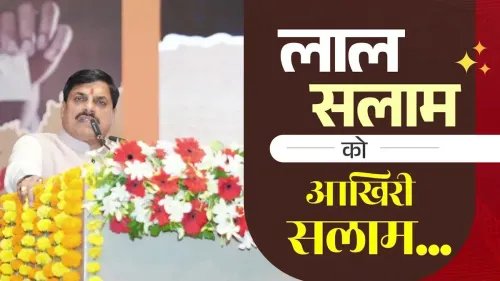
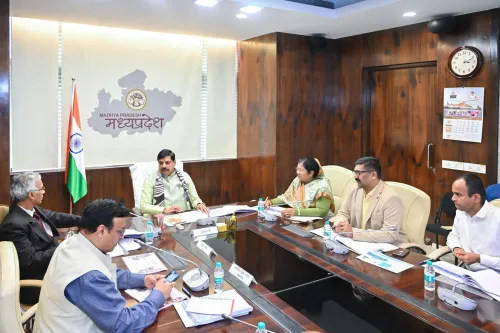
Thirty-five years of what the government called lal aatank — 'red terror' — has ended in Madhya Pradesh, the Chief Minister's Office of Madhya Pradesh declared on Saturday, August 8, 2026, crediting a three-way command chain stretching from New Delhi to Bhopal for finally closing the book on Left Wing Extremism in the state.
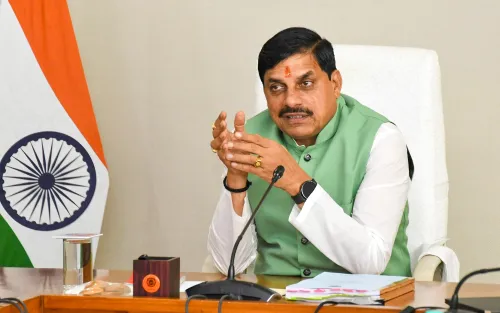
The post, shared by the official CMO handle, states that Prime Minister Narendra Modi's vision, Union Home Minister Amit Shah's 'precise strategy and skilled guidance,' and Chief Minister Dr. Mohan Yadav's 'firm resolve' have together achieved the 'complete elimination of Naxalism from Madhya Pradesh.' The declaration is unambiguous: 'ab iska antim adhyay bhi samapt ho chuka hai' — 'its final chapter too has now ended.'
Three decades of red terror — what MP endured
Madhya Pradesh's forested and tribal districts — particularly in its southern and eastern belts bordering Chhattisgarh — carried a Naxal footprint for the better part of three decades. The violence was not Chhattisgarh-scale, but it was real: ambushes, extortion, and a slow suffocation of development in pockets where the state struggled to project authority. Tribal communities bore the sharpest edge of that uncertainty.
The CMO's post frames the eradication as the culmination of a sustained effort, not a single operation — a deliberate political narrative that distributes credit across the national leadership while anchoring accountability in Bhopal.
The national playbook behind MP's claim
The declaration fits squarely inside a broader national framework. The Ministry of Home Affairs has tracked a progressive reduction in Left Wing Extremism-affected districts across India since 2014, pursuing what security planners describe as a dual track: intensified security operations alongside targeted development — roads, connectivity, welfare schemes — in former insurgent zones. Several states have issued similar 'cleared area' declarations under this framework in recent years.
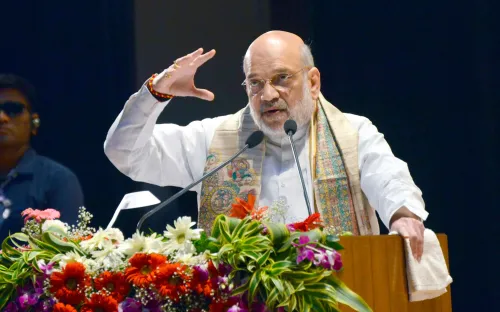
Amit Shah, as the architect of internal security policy, has repeatedly pointed to shrinking LWE geography as a measurable metric of governance. Madhya Pradesh's announcement adds one more state to that column.
What comes after the last chapter
The CMO's post is also a rebranding statement. 'Now Madhya Pradesh's identity is not defined by red terror,' it declares, 'but by peace, good governance, development, and new opportunities.' That pivot matters — because the real test of any Naxal eradication claim is what fills the vacuum.
Tribal communities in formerly affected pockets will be watching whether infrastructure investment, land rights, and welfare delivery actually accelerate now that the security rationale for neglect no longer applies. The rollout of development schemes in these districts — and parallel updates from neighbouring states still managing active LWE zones — will be the hard evidence against which August 8, 2026 is eventually judged.
Madhya Pradesh has turned a page. Whether the new chapter delivers on the promise is the story that begins now.
Point of View
Historically a secondary Naxal theatre compared to Chhattisgarh or Jharkhand, adds symbolic weight to that claim without the operational complexity of the Red Corridor's core. The framing — crediting a trinity of Modi, Shah, and Yadav — is deliberate statecraft, designed to reinforce both central authority and state-level BJP leadership ahead of any future electoral cycle. The real analytical test will come from ground-level data: whether development metrics in formerly affected tribal districts improve measurably now that the security rationale for delayed investment has been formally retired.
NationPress
8 Aug 2026
Frequently Asked Questions
Is Madhya Pradesh now completely free of Naxalism?
The Chief Minister's Office of Madhya Pradesh declared on August 8, 2026 that Naxalism has been completely eliminated from the state after 35 years, though independent verification of operational details beyond 2023 is limited.
Which districts in Madhya Pradesh were affected by Naxalism?
Naxal activity in Madhya Pradesh was historically concentrated in forested and tribal districts in the state's southern and eastern belts, particularly areas bordering Chhattisgarh.
What role did Amit Shah play in ending Naxalism in MP?
As Union Home Minister, Amit Shah oversaw national internal security policy and anti-Naxal strategy. The CMO's post credits his 'precise strategy and skilled guidance' as central to the eradication.
What is India's national policy on Left Wing Extremism?
The Ministry of Home Affairs has pursued a dual-track approach since 2014 — combining intensified security operations with targeted development schemes in LWE-affected zones — and tracks a progressive reduction in affected districts.
What happens to tribal communities in former Naxal areas of MP now?
With the security situation declared resolved, attention shifts to the rollout of infrastructure, land rights, and welfare schemes in formerly affected tribal pockets — the real measure of whether the eradication claim translates into improved lives.