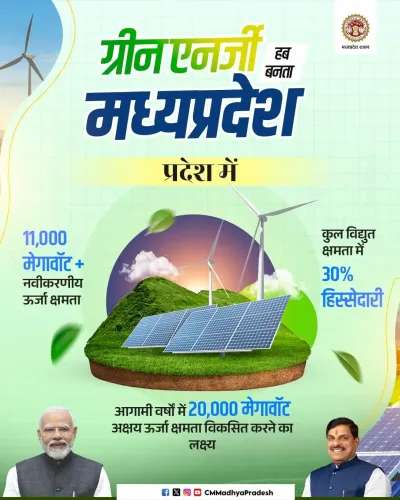
CM Mohan Yadav Highlights MP's Renewable Energy Surge
Synopsis
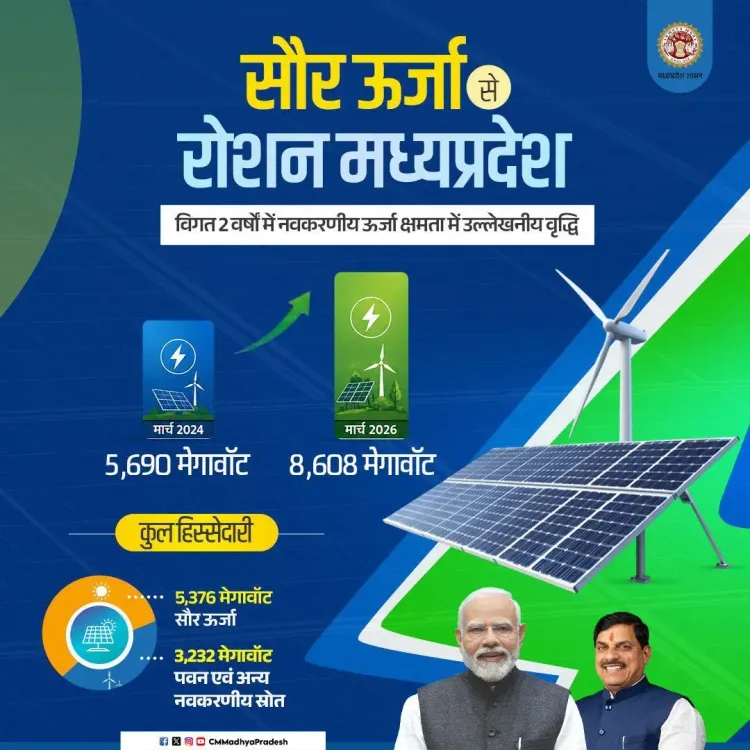
The Chief Minister's Office of Madhya Pradesh announced a significant rise in the state's renewable energy capacity over two years, spotlighting solar expansion under CM Dr. Mohan Yadav and the New Energy Department as part of India's broader 500 GW clean energy drive.
Key Takeaways
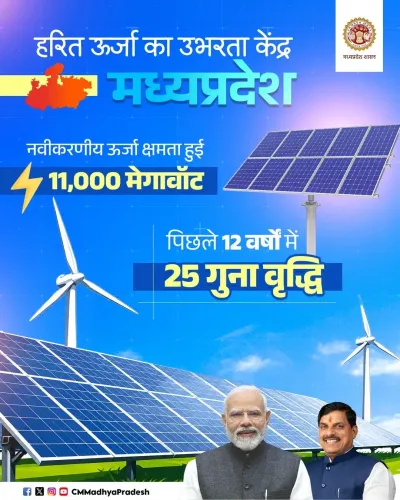
The Chief Minister's Office of Madhya Pradesh announced on 26 May 2026 a 'remarkable increase' in renewable energy capacity over the past two years .
Mohan Yadav and the New Energy Department (@NewenergyMp) were directly tagged, signalling institutional coordination on the energy push.
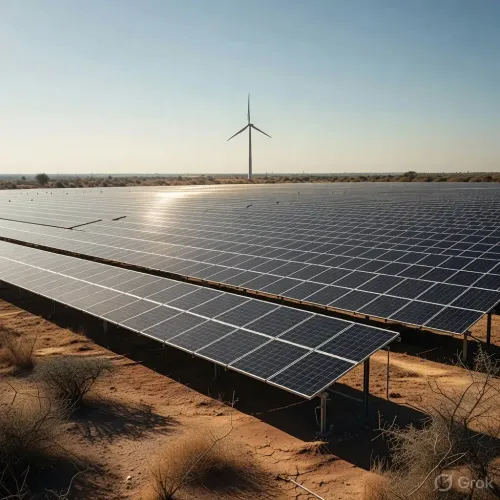
Madhya Pradesh is positioned as a high-potential solar state due to its elevated plateau geography and high solar irradiance levels.
The state's renewable expansion supports India's national target of 500 GW non-fossil capacity by 2030 and the country's net-zero 2070 commitment.
Key beneficiaries include rural households , solar irrigation users, and renewable energy developers operating in the state.
Upcoming state budget allocations and revisions to renewable purchase obligation targets will be critical indicators of the programme's next phase.
The Chief Minister's Office of Madhya Pradesh announced on Tuesday, 26 May 2026, that the state has achieved a 'remarkable increase' in renewable energy capacity over the past two years, highlighting Madhya Pradesh's growing profile as a solar-powered state under Chief Minister Dr. Mohan Yadav.
Context
The post, shared by the official CMO account and tagging both Dr. Mohan Yadav and the state's New Energy Department (@NewenergyMp), declared 'सौर ऊर्जा से समृद्ध मध्यप्रदेश' — meaning 'Madhya Pradesh enriched by solar energy' — and cited a 'notable growth in renewable energy capacity' over the preceding two years. The announcement underscores the state government's intent to position MP as a leader in clean energy within central India.
Madhya Pradesh benefits from high solar irradiance across its plateau regions, making it a natural candidate for large-scale solar deployment. The state has pursued solar expansion through dedicated policies aligned with national targets, with the New Energy Department serving as the nodal agency for project development and execution.
Policy Backdrop
India's national ambition to reach 500 GW of non-fossil energy capacity by 2030 has driven states like Madhya Pradesh to scale up solar parks, rooftop installations, and wind projects. Central viability-gap funding and state-level renewable purchase obligations have provided the financial scaffolding for this expansion.
The policy lineage traces back to the Jawaharlal Nehru National Solar Mission (2010), which set state-level deployment targets that Madhya Pradesh has pursued through successive solar policies. India's net-zero by 2070 pledge and its commitments under the International Solar Alliance further reinforce the urgency of state-level progress.
Stakeholders and Impact
The most direct beneficiaries of expanded renewable capacity are rural households in Madhya Pradesh, where solar electrification programmes have extended reliable power to areas previously dependent on erratic grid supply. Renewable energy developers — both large independent power producers and smaller distributed-energy firms — also stand to gain from the state's continued investment in the sector.
A stronger renewable base reduces the state's dependence on coal-fired thermal power, with downstream benefits for air quality and long-term electricity tariffs. Farmers using solar-powered irrigation pumps represent another significant stakeholder group whose productivity is linked to the state's clean energy rollout.
What's Next
Attention will now turn to Madhya Pradesh's state budget allocations for new solar parks and any revision of the state's renewable purchase obligation targets in the coming fiscal year. The New Energy Department is expected to outline fresh capacity-addition targets that align with both state demand projections and India's national 2030 goals.
As Chief Minister Dr. Mohan Yadav continues to champion clean energy as a pillar of the state's development narrative, the trajectory of Madhya Pradesh's renewable programme will be closely watched as a benchmark for other landlocked, high-irradiance states across central and peninsular India.
Point of View
Using the solar energy narrative to reinforce Chief Minister Dr. Mohan Yadav's development credentials ahead of potential electoral and budgetary cycles. By tagging the New Energy Department directly, the government signals institutional accountability alongside political messaging. The framing of Madhya Pradesh as 'enriched by solar energy' connects state-level action to India's high-profile international climate commitments, lending the announcement a dual domestic and diplomatic resonance. Sustained follow-through on capacity targets — rather than announcements alone — will determine whether this narrative holds.
NationPress
10 Oct 2026
Frequently Asked Questions
What is Madhya Pradesh's renewable energy capacity growth in the last two years?
The Chief Minister's Office of Madhya Pradesh stated on 26 May 2026 that the state has seen a 'remarkable increase' in renewable energy capacity over the past two years, though specific capacity figures were not disclosed in the official post.
Who is responsible for solar energy projects in Madhya Pradesh?
The New Energy Department of Madhya Pradesh (@NewenergyMp) is the state agency tasked with developing solar, wind, and other non-conventional energy projects in the state.
How does Madhya Pradesh's solar push relate to India's national energy targets?
Madhya Pradesh's renewable expansion contributes to India's national goal of achieving 500 GW of non-fossil energy capacity by 2030, as well as the country's net-zero emissions pledge by 2070.
What is CM Mohan Yadav's role in Madhya Pradesh's energy policy?
Dr. Mohan Yadav has served as Chief Minister of Madhya Pradesh since December 2023 and has been actively championing renewable energy expansion as a key pillar of the state's development agenda.
Who benefits from Madhya Pradesh's renewable energy growth?
Rural households gaining reliable electricity, farmers using solar-powered irrigation pumps, and renewable energy developers are among the primary beneficiaries of Madhya Pradesh's expanding clean energy capacity.