CM Yadav highlights Ujjwala Yojana's reach in MP
Synopsis
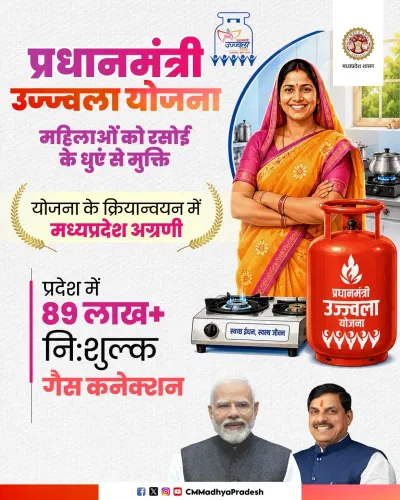
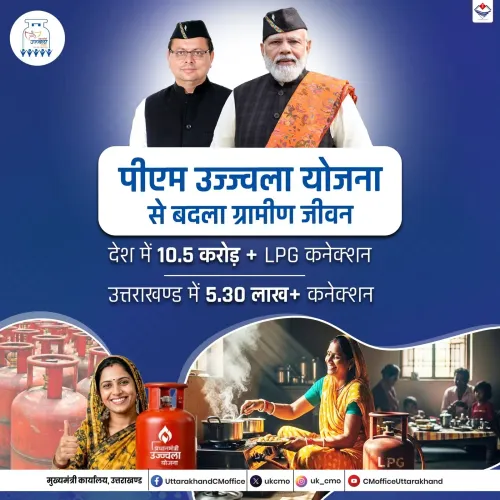
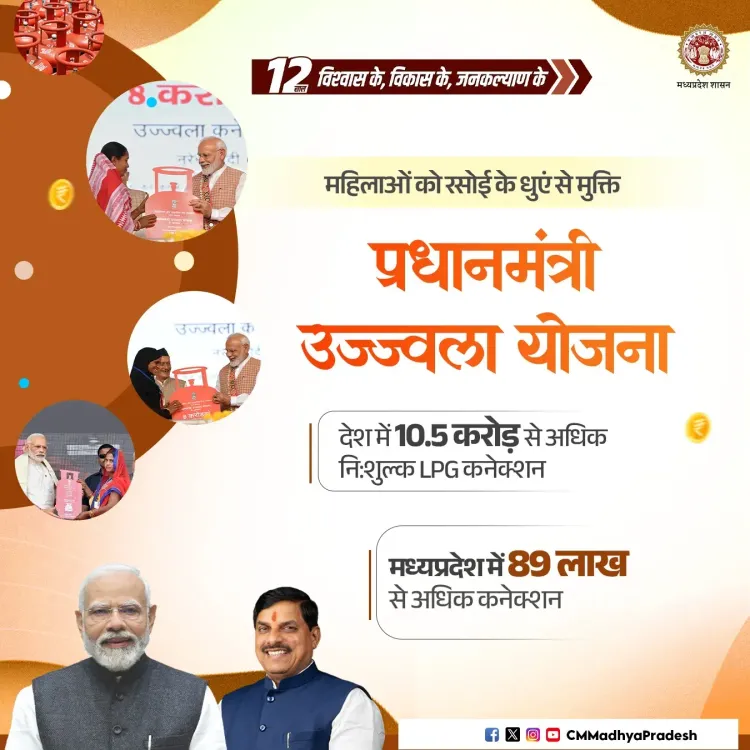
The Chief Minister's Office of Madhya Pradesh marked the reach of PM Ujjwala Yojana, noting over 10.5 crore free LPG connections nationally and 89 lakh-plus in the state, under the #12YearsOfGaribKalyan campaign.
Key Takeaways
The Chief Minister's Office of Madhya Pradesh posted on 8 June 2026 highlighting the reach of Pradhan Mantri Ujjwala Yojana .
Over 10.5 crore free LPG connections have been distributed nationally under the scheme.
Madhya Pradesh accounts for more than 89 lakh of those connections.
The scheme was originally launched on 1 May 2016 in Ballia, Uttar Pradesh to provide clean cooking fuel to BPL women.
The post was tagged under #12YearsOfGaribKalyan , linking it to a broader anniversary welfare campaign.
Key state partners tagged include the Ministry of Women and Child Development and MP Food and Civil Supplies Department .
The Chief Minister's Office of Madhya Pradesh on Monday, 8 June 2026 highlighted the reach of the Pradhan Mantri Ujjwala Yojana, citing over 10.5 crore free LPG connections distributed nationally and more than 89 lakh connections in Madhya Pradesh alone under the central clean-cooking-fuel scheme.
Context
The post, shared on the official @CMMadhyaPradesh handle and tagging Chief Minister Dr. Mohan Yadav, described the scheme as bringing 'घर-घर स्वच्छ ईंधन, हर महिला के जीवन में बदलाव की नई रोशनी' ('clean fuel in every home, a new light of change in every woman's life'). The communication was tagged under #12YearsOfGaribKalyan, situating it within a broader anniversary campaign marking twelve years of the ruling dispensation's poverty-alleviation programmes.
Policy Backdrop
Pradhan Mantri Ujjwala Yojana was launched on 1 May 2016 in Ballia, Uttar Pradesh, by Prime Minister Narendra Modi, with the original mandate of providing free LPG connections to women from below-poverty-line households. The scheme replaced traditional biomass fuels — wood, cow dung, and crop residue — that had long been linked to indoor air pollution and significant health burdens, particularly for rural women and children.
The programme was expanded in 2018 to include all SC/ST households and beneficiaries of the Pradhan Mantri Awaas Yojana (Gramin). A second phase, Ujjwala 2.0, was announced in 2021 to extend coverage to migrant families who had previously been excluded due to documentation requirements. The nodal authority for the scheme is the Ministry of Petroleum and Natural Gas, which coordinates subsidy delivery and distribution targets with state governments.
Stakeholders and Impact
Madhya Pradesh, a large central-Indian state with a substantial rural population, has been among the significant beneficiaries of the scheme. The state government's communication highlights 89 lakh-plus connections as evidence of on-ground delivery, with the Ministry of Women and Child Development and the Madhya Pradesh Food and Civil Supplies Department — both tagged in the post — identified as key implementation partners at the state level.
For BPL women and rural households, access to subsidised LPG reduces dependence on solid fuels, cutting exposure to household air pollution and reducing the time burden associated with collecting firewood. Welfare economists and public-health researchers have consistently flagged clean cooking energy as a multiplier for women's health, productivity, and economic participation.
What's Next
Analysts tracking the scheme will watch for state-level data on average annual refill rates in Madhya Pradesh, which serve as a more granular indicator of sustained usage beyond initial connection uptake. Parliamentary and ministry statements on revised national connection targets and subsidy frameworks will also shape the next phase of the programme's expansion.
The #12YearsOfGaribKalyan framing signals that welfare-scheme communication is likely to intensify across BJP-governed states in the coming weeks, with Ujjwala remaining a flagship reference point for women-centred policy outreach.
Point of View
Designed to consolidate the party's welfare-delivery narrative ahead of electoral cycles. Ujjwala Yojana remains one of the most politically resonant schemes in the BJP's portfolio because it is tangible, household-level, and skews toward women beneficiaries — a demographic the party has consistently courted. By foregrounding state-specific figures alongside national totals, the communication reinforces centre-state alignment under the current dispensation. The deeper policy question — whether connection uptake translates into sustained, affordable refill usage — remains an area where critics and independent researchers continue to push for more granular disclosure.
NationPress
26 Oct 2026
Frequently Asked Questions
What is Pradhan Mantri Ujjwala Yojana?
Pradhan Mantri Ujjwala Yojana is a central government scheme launched on 1 May 2016 that provides free LPG connections to women from below-poverty-line households, replacing traditional solid fuels with clean cooking gas.
How many LPG connections have been given under Ujjwala Yojana in India?
According to the Chief Minister's Office of Madhya Pradesh , over 10.5 crore free LPG connections have been distributed nationally under the scheme as of June 2026 .
How many Ujjwala Yojana connections are there in Madhya Pradesh?
The CMO post states that Madhya Pradesh has received more than 89 lakh free LPG connections under Pradhan Mantri Ujjwala Yojana .
What is Ujjwala 2.0?
Ujjwala 2.0 is the second phase of the scheme, announced in 2021 , which extended LPG connection eligibility to migrant families who were previously excluded due to documentation requirements.
Who oversees the Ujjwala Yojana scheme?
The Ministry of Petroleum and Natural Gas is the nodal central ministry responsible for policy design, subsidy delivery, and distribution targets under the Pradhan Mantri Ujjwala Yojana .