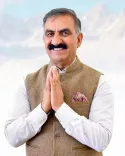
CM Saini Hails Ujjwala Yojana's 12-Year Impact on Poor Women
Synopsis
Haryana CM Nayab Singh Saini on 24 September 2026 praised PM Modi's Ujjwala Yojana, saying 12 years of 'service-driven' governance freed millions of poor mothers and sisters from smoke-filled kitchens by providing LPG connections to BPL households.
Key Takeaways
CM Nayab Singh Saini posted on 24 September 2026 crediting PM Narendra Modi's 12-year leadership for welfare gains among India's poorest households.
He specifically highlighted the Pradhan Mantri Ujjwala Yojana , calling it proof that a 'spirit of service' drives meaningful governance.
Ujjwala Yojana was launched in May 2016 with an initial target of 5 crore LPG connections to below-poverty-line families.
The scheme aims to eliminate indoor smoke pollution that disproportionately harms rural women and children who cook on open biomass fires.
Saini's post fits a broader BJP state-level messaging pattern of linking central welfare schemes to political continuity and household-level impact.
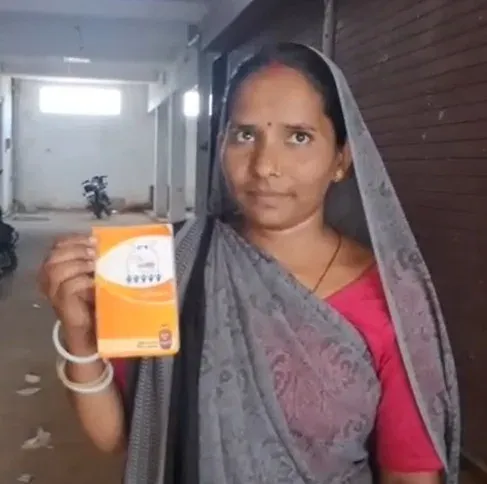
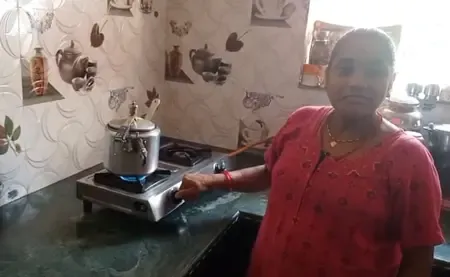
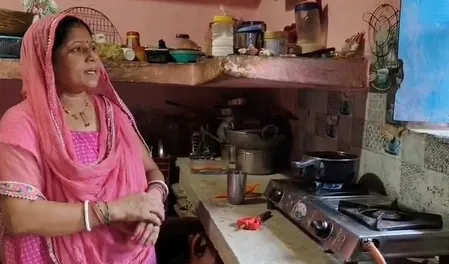
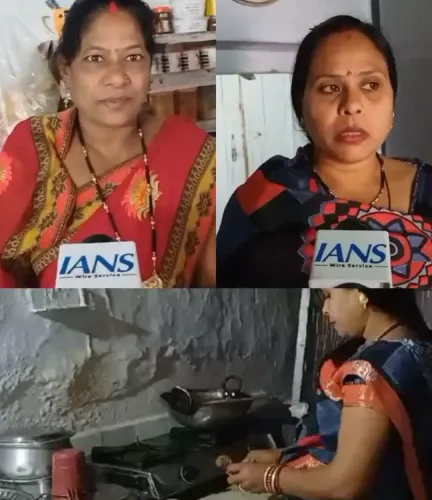
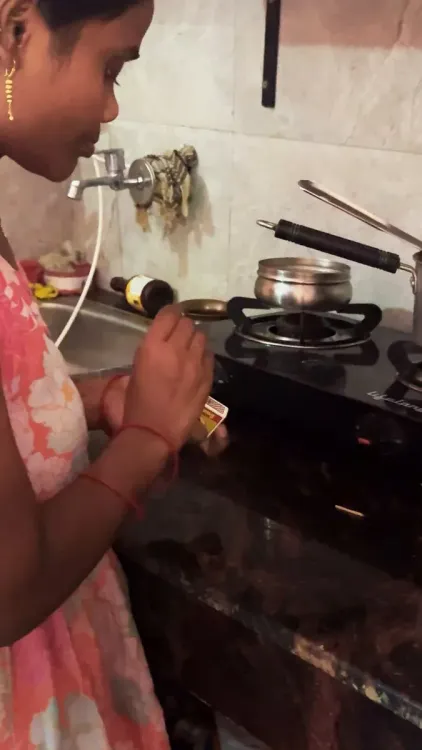
Twelve years of targeted welfare, one defining image: a mother cooking in a smoke-filled kitchen, and then — because of a single government scheme — not anymore. Haryana Chief Minister Nayab Singh Saini on Thursday, 24 September 2026 invoked that transformation to salute Prime Minister Narendra Modi's decade-plus record on delivering basic amenities to India's poorest households.
Posting in Hindi, CM Saini wrote: 'जब सेवा का भाव होता है, तभी धुएँ में जिंदगी गुजारने वाली माताओं-बहनों को उज्ज्वला योजना के माध्यम से धुएँ से मुक्ति मिलती है' — 'When there is a spirit of service, only then can mothers and sisters who spent their lives in smoke be freed from smoke through the Ujjwala Yojana.' The message frames the Pradhan Mantri Ujjwala Yojana (PMUY) not merely as a gas-connection programme but as an expression of political intent: dignity over drudgery.
What Ujjwala Set Out to Do in May 2016
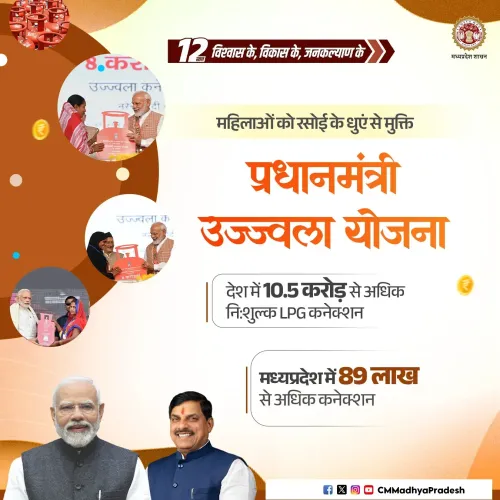
Launched in May 2016, the Pradhan Mantri Ujjwala Yojana had a singular, measurable goal — deliver LPG connections to 5 crore below-poverty-line households, cutting the indoor air pollution that public-health researchers had long flagged as a silent killer disproportionately affecting rural women and children. Cooking on open biomass fires had meant chronic respiratory exposure for millions; clean fuel changed that calculus directly.
The scheme sits within a broader post-2014 welfare architecture that also pushed piped water (Jal Jeevan Mission), individual toilets (Swachh Bharat Abhiyan), electricity (Saubhagya), and low-cost housing (PM Awas Yojana) — each designed to eliminate a specific deprivation rather than offer generic cash transfers. CM Saini's framing on 24 September explicitly ties all of this to the twelve-year leadership span since 2014, positioning continuity of governance as the enabler of scale.
Haryana's Stake in the Clean-Fuel Push
Haryana, with a significant rural and semi-urban BPL population, has been among the states channelling PMUY connections through district-level oil-marketing company networks. While specific post-2023 connection or refill-subsidy figures for Haryana are not independently verified, the state's endorsement of the scheme at the chief-ministerial level signals an ongoing political and administrative investment in its continuation.
The welfare optics also carry electoral weight. BJP-governed states have consistently spotlighted PMUY as proof that central schemes translate into household-level change — a counter to opposition arguments that growth bypasses the poor. CM Saini's post amplifies that narrative on a national platform, with the symbolic weight of a sitting chief minister vouching for the ground-level impact.
A government that can measure its compassion in cylinders delivered is one that has learned to speak the language of the kitchen — and that, CM Saini is betting, is a language no voter forgets.
Point of View
Difficult to rebut with abstractions. For the BJP, Ujjwala has become the single most resonant proof-point that governance reached the last mile — an LPG cylinder is tangible in a way that GDP growth is not. Saini amplifying this from Haryana also signals the state unit's alignment with the central party's pre-campaign welfare narrative.
NationPress
24 Sept 2026
Frequently Asked Questions
What is Pradhan Mantri Ujjwala Yojana?
Pradhan Mantri Ujjwala Yojana (PMUY) is a central government scheme launched in May 2016 that provides free LPG cooking-gas connections to below-poverty-line households, primarily to reduce indoor air pollution and drudgery for women.
What did Haryana CM Nayab Singh Saini say about Ujjwala Yojana?
CM Nayab Singh Saini posted on 24 September 2026 that PM Modi's 12 years of 'service-driven' leadership had freed poor mothers and sisters from smoke-filled kitchens through the Ujjwala Yojana, calling it a symbol of dignity for the poor.
How many LPG connections did Ujjwala Yojana target?
At launch in May 2016 , the scheme initially targeted 5 crore LPG connections to below-poverty-line families across India.
Why is Ujjwala Yojana important for women?
The scheme directly addresses the health burden on women who cook on open biomass fires, which generates indoor smoke linked to chronic respiratory disease. A clean LPG connection eliminates that daily exposure and reduces physical drudgery.
Who is Nayab Singh Saini?
Nayab Singh Saini is the Chief Minister of Haryana and a senior BJP leader. He leads the state government and is a vocal advocate for central welfare schemes targeting poor and rural households.