MP CMO Spotlights State's Push on Har Ghar Jal Mission
Synopsis
The Chief Minister's Office of Madhya Pradesh has highlighted the state's progress on the Har Ghar Jal initiative, projecting Madhya Pradesh as actively realising the pledge of piped drinking water to every rural household under the Jal Jeevan Mission.
Key Takeaways
The Madhya Pradesh CMO posted on the Har Ghar Jal household tap-water push.
Har Ghar Jal is a component of the centrally sponsored Jal Jeevan Mission.
The Jal Jeevan Mission was launched in August 2019 with a target of universal rural tap coverage by 2024.
Rural households, especially in tribal and water-stressed districts, are the principal beneficiaries.
Progress is tracked on a central dashboard recording connections added by each state.
Operations, maintenance and source sustainability are the next big policy challenges.
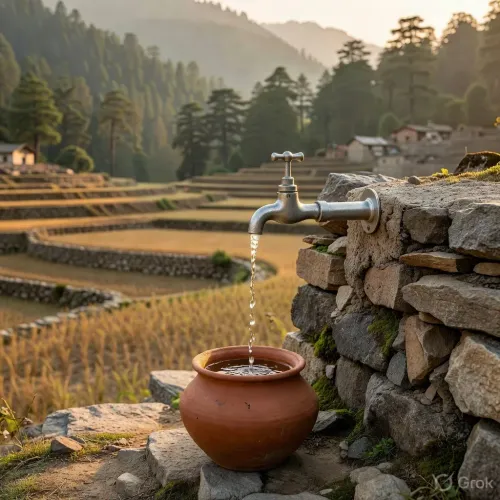
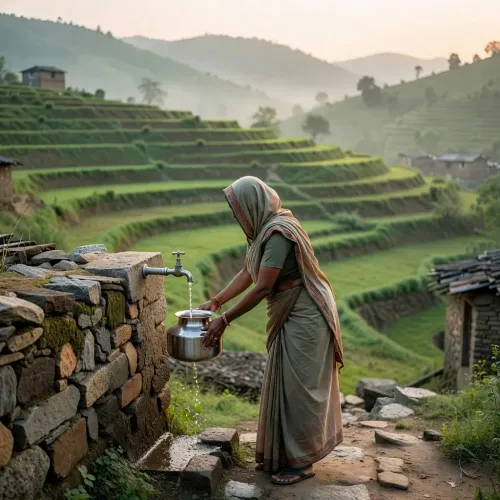
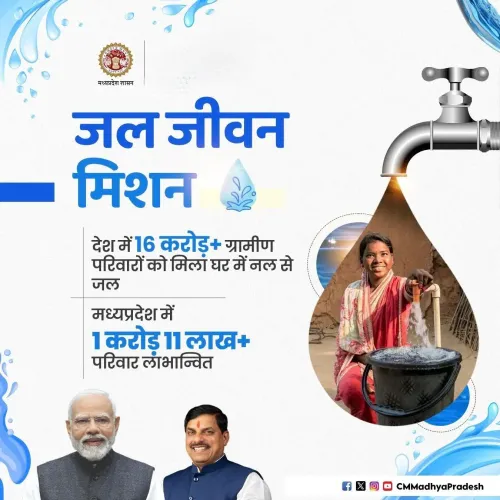
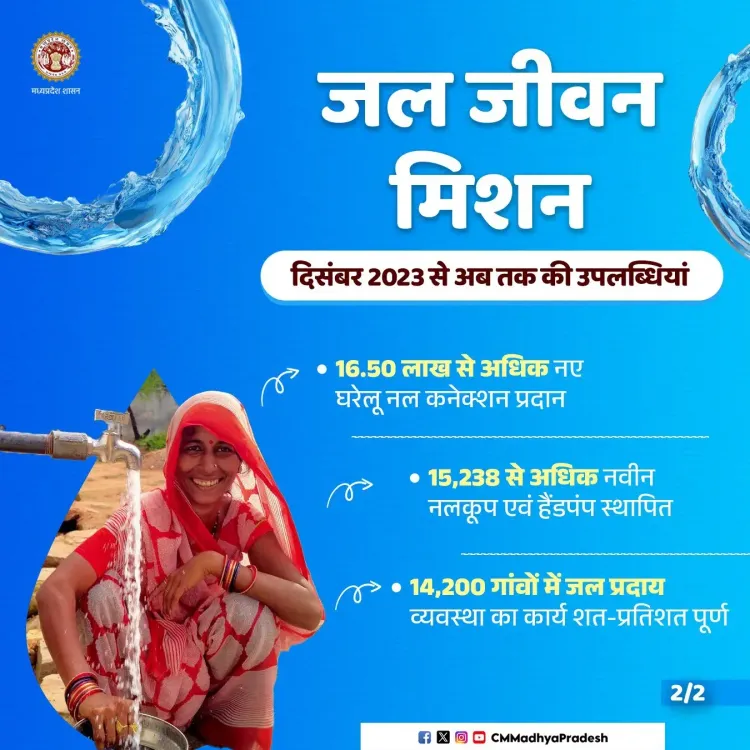
The Chief Minister's Office of Madhya Pradesh on Wednesday highlighted the state's progress under the Har Ghar Jal initiative, framing Madhya Pradesh as a state actively realising the pledge of piped drinking water to every household. The post, accompanied by a visual, projected the rural water connectivity push as a flagship development marker for the state government.
In the post, the CMO wrote in Hindi: 'Har Ghar Jal ke sankalp ko sakar karta Madhyapradesh' ('Madhya Pradesh realising the resolve of water to every household'). The messaging anchors the state's communications around the centrally sponsored rural water mission, signalling that household tap coverage remains a priority talking point for the administration.
Context
Har Ghar Jal is the household tap-connection component of the Jal Jeevan Mission, a flagship rural water programme of the Union government. The mission was launched in August 2019 with the objective of delivering functional household tap connections to every rural home, originally targeting universal coverage by 2024.
Madhya Pradesh, with its large rural population spread across districts such as Mandla, Dindori, Jhabua and Chhindwara, has been one of the larger implementation theatres for the mission. The state's terrain mix — including tribal belts, the Vindhya and Satpura ranges, and water-stressed pockets in the Bundelkhand region — has made household-level pipeline rollout a complex logistical exercise.
Policy backdrop
Under the Jal Jeevan Mission, the Centre and states share funding for capital works including source augmentation, distribution networks and in-village infrastructure. Progress is tracked on a central dashboard that records household connections added by each state, with quarterly updates feeding into Union government reviews.
For Madhya Pradesh, the mission dovetails with parallel rural development efforts on sanitation, women's health and school infrastructure, where reliable drinking water is a foundational input. The state government has previously linked tap-water access to reduced drudgery for rural women, who traditionally bear the burden of fetching water over long distances.
Stakeholders and impact
The principal beneficiaries are rural households, particularly in tribal-majority and water-scarce districts where dependence on hand pumps, open wells and distant standposts has historically been high. Functional household connections are expected to translate into better health outcomes by reducing exposure to contaminated water sources.
For state-level officials and Public Health Engineering Department teams, the messaging also serves as a performance marker. District collectors and panchayat-level institutions are typically responsible for last-mile execution, operations and tariff collection once schemes are commissioned.
For the political leadership, the post fits into a broader narrative that positions Madhya Pradesh as a delivery-focused administration on welfare and basic services — a theme consistent with the state's recent communications on housing, roads and electrification.
What's next
Attention will turn to the next quarterly Jal Jeevan Mission progress review and any state budget announcements on remaining uncovered habitations. Sustaining operations and maintenance of completed schemes — including water quality testing, pipeline repairs and tariff recovery — is expected to emerge as the next big policy challenge once headline coverage numbers plateau.
If Madhya Pradesh maintains its rollout momentum, the state could become a reference case for large rural geographies where source sustainability and last-mile delivery remain the toughest pieces of the drinking water puzzle.
Point of View
And own the outcome locally. For Madhya Pradesh, Har Ghar Jal sits at the intersection of welfare optics and hard infrastructure, both politically resonant in rural belts. The harder test, however, lies beyond headline connection counts — in source sustainability, water quality and tariff-funded maintenance, which rarely make it into celebratory posts but determine whether the scheme endures.
NationPress
17 Oct 2026
Frequently Asked Questions
What is the Har Ghar Jal scheme?
Har Ghar Jal is the household tap-connection component of the Jal Jeevan Mission, aimed at providing functional piped drinking water connections to every rural home in India.
When was the Jal Jeevan Mission launched?
The Jal Jeevan Mission was launched in August 2019 by the Union government with the objective of delivering tap water to every rural household by 2024.
How is Madhya Pradesh implementing Har Ghar Jal?
Madhya Pradesh is implementing Har Ghar Jal through its Public Health Engineering Department, which builds source works, distribution pipelines and in-village infrastructure across rural districts.
Who benefits from the Har Ghar Jal initiative in MP?
Rural households across Madhya Pradesh, particularly in tribal-majority and water-stressed regions like Bundelkhand and the Vindhya-Satpura belts, are the principal beneficiaries.
How is progress under the Jal Jeevan Mission tracked?
Progress is tracked through a central government dashboard that records household tap connections added by each state, feeding into quarterly Union government reviews.