CM Mohan Yadav pitches MP as India's Cotton Hub at BharatTex2026
Synopsis
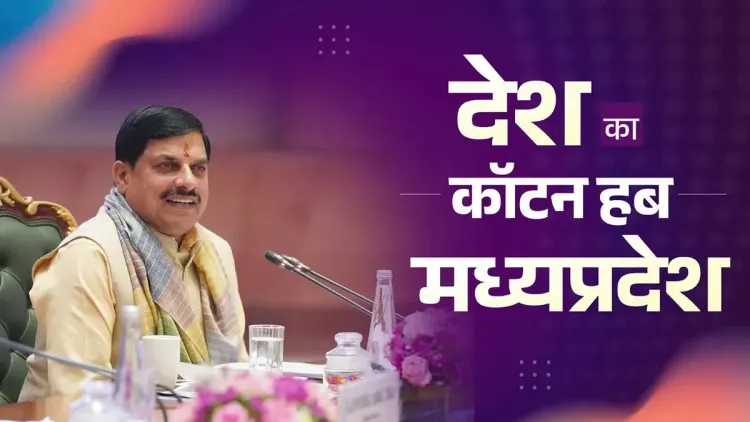
Chief Minister Dr. Mohan Yadav has declared Madhya Pradesh is building a strong identity as India's Cotton Hub, alongside its emerging 'Zari State' and 'Resham State' labels, in a statement made in the context of BharatTex2026 and directed at the Union Ministries of Textiles and MSME.
Key Takeaways
The Chief Minister's Office of Madhya Pradesh announced on 16 July 2026 that the state is positioning itself as India's Cotton Hub.
Mohan Yadav also claims identities as 'Zari State' and 'Resham State', signalling a multi-fibre branding strategy.
The statement was made in the context of BharatTex2026 , India's flagship textile industry event.
The post directly tagged the Ministry of Textiles and the Ministry of MSME , indicating a push for central government convergence.
Key beneficiaries include cotton farmers in Malwa and Nimar, textile MSMEs , and handloom weavers across the state.
Formal policy instruments — such as textile park allocations or cluster funding — are the next milestones to watch.
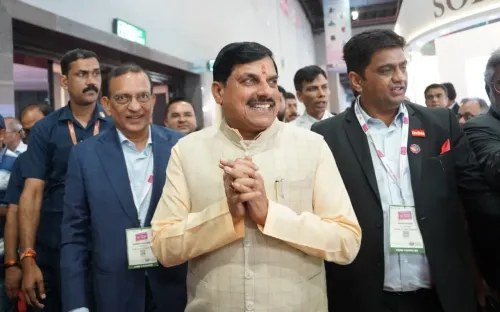
The Chief Minister's Office of Madhya Pradesh, on behalf of Chief Minister Dr. Mohan Yadav, declared on Thursday, 16 July 2026 that the state is forging a strong identity not only as a 'Zari State' and 'Resham State' but also as the country's emerging cotton hub, with the announcement made in the context of BharatTex2026.
Context
The post, addressed to the Ministry of Textiles and the Ministry of MSME, positions Madhya Pradesh as a multi-fibre powerhouse. Quoting Chief Minister Dr. Mohan Yadav, the official handle stated: 'Madhya Pradesh 'Zari State' aur 'Resham State' ke saath-saath desh ke Cotton Hub ke roop mein bhi apni mazboot pehchaan bana raha hai' — ('Madhya Pradesh is building a strong identity not only as the Zari State and Resham State but also as the Cotton Hub of the country'). The statement signals the state government's intent to consolidate its brand across three distinct textile verticals simultaneously.
Policy Backdrop
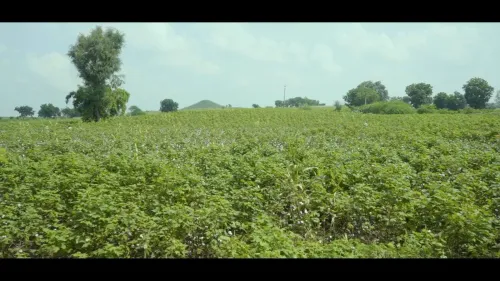
Madhya Pradesh has historically been a significant cotton-growing state, with the Malwa and Nimar regions accounting for a substantial share of the state's agricultural output. The state has also pursued sericulture and handloom cluster development since at least the 2010s, identifying these as priority sectors for rural employment generation. Indian states have increasingly moved toward fibre-specific branding to attract central scheme funding and private investment under the national textile and apparel ecosystem — a trend that aligns with central government efforts to expand domestic cotton processing and silk production capacity.
The tagging of @TexMinIndia (Ministry of Textiles) and @minmpmsme in the post underscores that the state is actively seeking convergence with central programmes. The BharatTex2026 hashtag places this statement within the orbit of India's flagship textile trade and industry event, suggesting the claim is being made on a national platform before industry stakeholders and policymakers.
Stakeholders and Impact
The constituencies most directly affected by this positioning include cotton farmers in Malwa and Nimar, textile MSMEs operating in processing and manufacturing, and weavers engaged in zari and silk-based handloom work. A consolidated multi-fibre identity for the state could strengthen its case for dedicated textile park allocations, cluster modernisation grants, and technology upgradation funds under central schemes. For the MSME sector in particular, formal recognition as a cotton hub could open pathways to raw-material linkage programmes and export facilitation support.
Zari — the intricate metallic thread embroidery synonymous with cities like Surat and parts of Madhya Pradesh — and silk (resham) weaving represent high-value segments of the handloom economy. Anchoring these alongside cotton cultivation signals an attempt to capture the full value chain, from farm to finished fabric, within the state's economic narrative.
What's Next
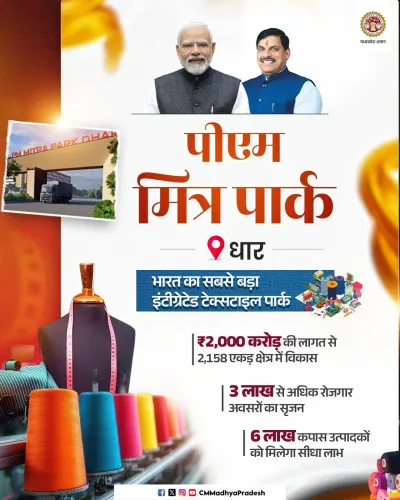
Observers will watch for concrete follow-through in the form of state budget allocations for textile parks or cluster modernisation, and for any formal announcements tied to BharatTex2026 programming. The alignment with the Ministry of Textiles and the Ministry of MSME suggests that joint schemes or memoranda of understanding could follow. Whether the 'Zari State' and 'Resham State' designations translate into formally notified policy instruments — or remain aspirational branding — will determine the long-term economic weight of this positioning.
Point of View
The state is positioning itself at the intersection of two major funding pipelines. The BharatTex2026 platform amplifies the claim before an audience of industry investors and trade delegations, turning a political statement into a commercial pitch. The real test will be whether this branding translates into notified policy instruments and budgetary commitments rather than remaining aspirational positioning.
NationPress
15 Oct 2026
Frequently Asked Questions
What is Madhya Pradesh's claim as a Cotton Hub?
Chief Minister Dr. Mohan Yadav has stated that Madhya Pradesh is building a strong identity as India's Cotton Hub, particularly through cotton cultivation in the Malwa and Nimar regions, alongside its existing positioning as a Zari State and Resham State.
What is BharatTex2026?
BharatTex2026 is India's flagship textile trade and industry event, and CM Mohan Yadav's statement was made in its context, signalling that Madhya Pradesh is presenting its textile ambitions on a national industry platform.
What does 'Zari State' and 'Resham State' mean for Madhya Pradesh?
'Zari' refers to metallic thread embroidery used in high-value textiles, while 'Resham' means silk. The state has been pursuing sericulture and zari cluster development as priority sectors for rural employment, and these labels reflect its ambition to be recognised nationally for these crafts.
Which central ministries is Madhya Pradesh engaging with on textiles?
The Chief Minister's Office tagged the Ministry of Textiles (@TexMinIndia) and the Ministry of MSME (@minmpmsme) in the post, indicating the state is seeking convergence with both central ministries on textile and small-industry policy.
Who are the main beneficiaries of Madhya Pradesh's textile hub ambitions?
Cotton farmers in the Malwa and Nimar regions, textile MSMEs involved in processing and manufacturing, and handloom weavers engaged in zari and silk work stand to benefit most from the state's multi-fibre positioning strategy.