MP High Court allows RTI activist to inspect Governor's reports to Centre

Synopsis
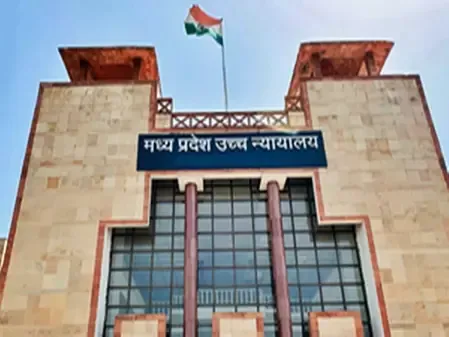
After more than 15 years of legal wrangling, the Madhya Pradesh High Court has ordered the Raj Bhavan Secretariat to allow RTI activist Ajay Dubey to inspect the Governor's monthly reports to the Centre on the state's governance and political situation — a ruling that tests how far constitutional-level communications can be shielded from public scrutiny.
Key Takeaways
The Madhya Pradesh High Court on 2 November 2026 allowed RTI activist Ajay Dubey to inspect Governor's monthly reports sent to the Central government .
The division bench of Chief Justice Alpesh Y.
Kogje and Justice Vivek Jain disposed of Writ Appeal No.
The legal dispute originated from an RTI application filed on 12 December 2011 — over 15 years ago.
Dubey sought month-wise details of Governor's reports to the Centre from 1 January 2011 onwards, covering governance and the political situation in Madhya Pradesh .
Dubey can now approach the Raj Bhavan Secretariat in Bhopal for inspection and subsequently request certified copies of identified documents.
The Madhya Pradesh High Court has allowed RTI activist Ajay Dubey to inspect official records relating to monthly reports sent by the state Governor to the Central government on the state's governance and political situation — a significant development in a legal fight that has stretched over 15 years.
The Court's Order
A division bench comprising Chief Justice Alpesh Y. Kogje and Justice Vivek Jain passed the order on 2 November 2026 while disposing of Writ Appeal No. 3441 of 2026 filed by Dubey. The bench modified a single judge's order dated 17 August 2026 in Writ Petition No. 18347 of 2015 and directed implementation of the First Appellate Authority's order dated 23 February 2012.
Origins of the Dispute
The matter traces back to an RTI application filed on 12 December 2011 by Dubey before the Public Information Officer of the Raj Bhavan Secretariat in Bhopal. He had sought month-wise details of reports sent by the then Governor to the Centre from 1 January 2011 onwards, covering the activities of the Madhya Pradesh government and the political situation in the state. Dubey had also sought details of communications and directions issued by the Central government on the basis of those reports.
What Happened After the RTI Was Filed
After the information was not provided by the Raj Bhavan Secretariat, Dubey approached the First Appellate Authority, which directed that he be allowed to inspect the relevant records and identify the specific documents for which he required copies. The matter subsequently went through further rounds of litigation before the High Court and the Madhya Pradesh State Information Commission.
What the High Court Directed
In its latest order, the division bench took note of the considerable time elapsed since the original appellate direction and modified the single judge's earlier directions to facilitate inspection of the records before Dubey specifies the documents he requires. 'It is open for the appellant to approach the Public Information Officer with an application for inspection and based on such inspection, an application for supply of the documents specified therein may be filed,' the bench observed. Dubey can now approach the Raj Bhavan Secretariat for inspection and subsequently seek certified copies of specific documents identified during the process.
Activist's Reaction
'This order is significant in the context of the long-pending demand for access to official records concerning the Governor's communications with the Centre,' Dubey said in remarks reported on Tuesday. Legal observers note that the ruling reinforces the principle that communications between constitutional authorities and the Centre are not automatically exempt from RTI scrutiny, setting a potential precedent for transparency demands in other states.
Point of View
And the Madhya Pradesh High Court's direction chips at that shield without fully dismantling it. The real significance lies in what the documents may reveal about Centre-state political communication: if routine, the delay was unjustifiable; if substantive, the public interest argument for access is only stronger. Other states should watch this closely — the precedent, if followed, could open a window into a class of communications that has remained largely opaque since the RTI Act came into force in 2005.
NationPress
3 Nov 2026
Frequently Asked Questions
What did the Madhya Pradesh High Court order regarding the Governor's reports?
The Madhya Pradesh High Court directed that RTI activist Ajay Dubey be allowed to inspect records of monthly reports sent by the state Governor to the Central government on the state's governance and political situation. The order was passed on 2 November 2026 by a division bench comprising Chief Justice Alpesh Y. Kogje and Justice Vivek Jain.
What information did Ajay Dubey originally seek through his RTI application?
Dubey sought month-wise details of reports sent by the then Madhya Pradesh Governor to the Centre from 1 January 2011 onwards, covering government activities and the political situation in the state. He also sought details of any communications or directions issued by the Central government based on those reports.
How long has this RTI legal battle been going on?
The dispute originated from an RTI application filed on 12 December 2011, making it a legal battle of over 15 years. It has passed through the First Appellate Authority, the Madhya Pradesh State Information Commission, and multiple rounds of High Court proceedings.
What can Ajay Dubey do now following the High Court's order?
Dubey can now approach the Public Information Officer at the Raj Bhavan Secretariat in Bhopal with an application for inspection of the relevant records. After identifying the specific documents he requires during the inspection, he can file a separate application seeking certified copies of those documents.
Why is this ruling considered significant?
The ruling is significant because it affirms that communications between a state Governor and the Central government are not automatically shielded from RTI scrutiny. Legal observers note it could set a precedent for transparency demands relating to constitutional-level communications in other states as well.