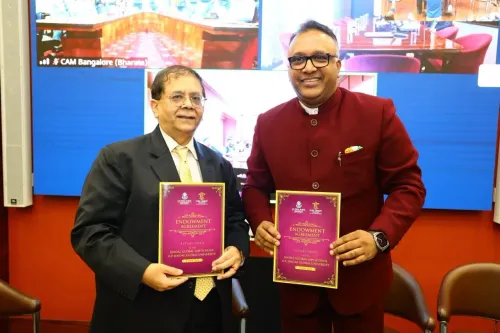
Maharashtra Governor releases JGU's AI Governance Report 2026 at national seminar
Synopsis
Maharashtra Governor Jishnu Dev Varma released JGU's AI Governance Report 2026, signalling a shift toward purposeful AI deployment in higher education. The report advocates embedding AI across academic and administrative domains while anchoring decisions in human judgment, compassion, and cultural preservation—a framework that positions Indian universities as architects of responsible AI transformation rather than passive adopters.
Key Takeaways
Maharashtra Governor Jishnu Dev Varma released the AI Governance Report 2026 by O.P.
Jindal Global University on 27 April in Mumbai .
The report outlines a framework for embedding AI across academic, research, and administrative domains while preserving human judgment and institutional values.
The Cyril Shroff Centre for AI, Law & Regulation recommends phased adoption of immersive technologies including augmented reality, virtual reality, and digital twins in higher education.
Governor Varma emphasized the need for AI deployment rooted in compassion, last-mile delivery, and preservation of Indian culture and schools of thought.
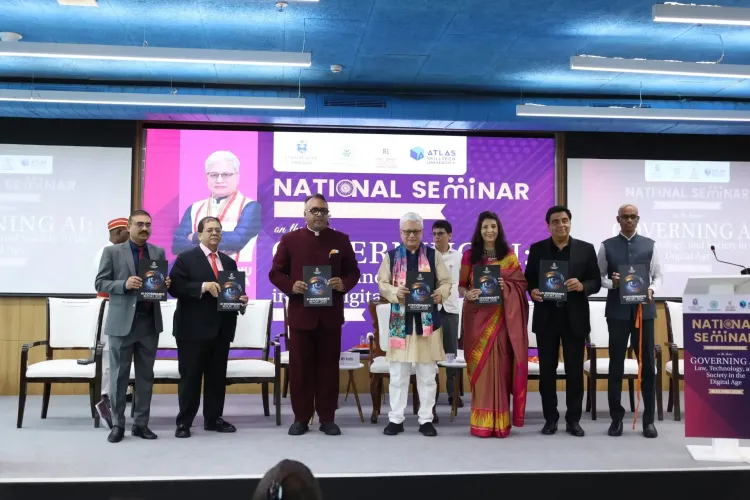
The launch featured a panel discussion on "Governing AI: Law, Technology, and Society in the Digital Age" with legal experts and institutional leaders.
Maharashtra Governor Jishnu Dev Varma on 27 April released the AI Governance Report 2026 by O.P. Jindal Global University (JGU) at a national seminar on AI, Law and Society held in Mumbai. The report, developed by the Cyril Shroff Centre for AI, Law & Regulation, outlines a framework for embedding artificial intelligence across academic, research, and administrative domains in higher education institutions while preserving human judgment and institutional values.
Governor's Vision for AI Governance
Governor Varma stressed the need for AI deployment rooted in compassion and last-mile delivery. "AI is going to solve a lot of problems, but it also comes with challenges. We need to use AI with compassion, with delivery to the last mile, and uplift the masses," he said. He emphasized that technology without purpose poses risks and called for governance infused with empathy, drawing on ancient Vedic principles of universal upliftment. Notably, he flagged the importance of preserving Indian art, culture, and schools of thought as part of national identity amid rapid technological transformation.
Report Framework and Academic Integration
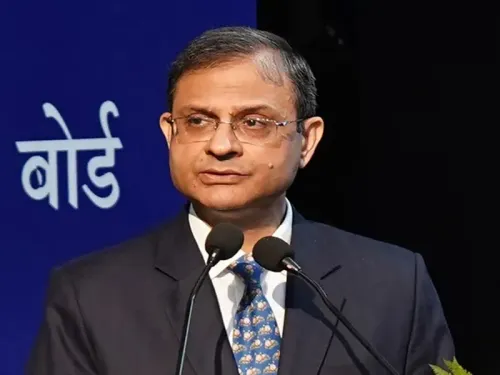
Prof. (Dr.) C. Raj Kumar, Founding Vice Chancellor of JGU, outlined the central question guiding the report: "How can JGU build an education system that uses AI to genuinely enhance learning, research, and institutional efficiency, while ensuring that human judgment, creativity, and agency remain at the core?" The report advocates for experiential learning methodologies aligned with Education 4.0 principles, including structured simulations, interdisciplinary capstone projects, and immersive learning environments across disciplines such as law, business, engineering, public policy, and international relations.
Emerging Technologies in Higher Education
The report identifies augmented reality, virtual reality, digital twins, and AI-enabled tutoring systems as the next frontier in higher education pedagogy. It recommends a phased pilot strategy prioritizing cost-effectiveness, accessibility, inclusivity, and measurable learning outcomes. Strategic partnerships with technology providers and global institutions are flagged as essential for accelerating knowledge transfer and adoption of best practices.
Institutional and Cultural Transformation
The Cyril Shroff Centre emphasizes that sustainable transformation extends beyond policy directives to require cultural change within institutions. By embedding digital transformation within governance structures and institutional identity, universities can transition from incremental adaptation to proactive leadership. This shift encourages faculty and students to view technology as a catalyst for new forms of knowledge creation rather than a mere operational tool.
Panel Discussion on AI Governance
The launch was followed by a panel discussion titled "Governing AI: Law, Technology, and Society in the Digital Age." Participants included Paridhi Adani (Partner, Head—Ahmedabad, Cyril Amarchand Mangaldas), Gaurav Bansal (Founder & Principal Counsel, Equilibria Law Chambers), Adheesh Nargolkar (Partner, Khaitan & Co), Aprajita Rana (Partner, AZB & Partners), Richa Roy (Partner, Cyril Amarchand Mangaldas), Anushree Saha (General Counsel & Company Secretary, Qure.ai), and Siddharth Shahani (Executive President, ATLAS SkillTech University), moderated by Prof. (Dr.) C. Raj Kumar. The discussion explored regulatory frameworks, institutional accountability, and societal implications of AI governance in the digital age.
Industry and Academic Collaboration
Distinguished guests at the launch included Cyril Shroff, Managing Partner of Cyril Amarchand Mangaldas, and Ronnie Screwvala, Co-Founder & Chairman of upGrad. Dr. Indu Shahani, President of ATLAS SkillTech University, highlighted the value of cross-institutional partnerships, noting that her institution blends design, management, technology, entrepreneurship, and law to prepare future-ready graduates. The seminar underscored the growing convergence between legal, technological, and educational domains in shaping responsible AI deployment across sectors.
Point of View
This report tethers AI adoption to values—compassion, cultural preservation, human agency—a distinctly Indian intellectual move. The real test is implementation: whether universities move beyond report-writing to measurable shifts in pedagogy and governance. The emphasis on experiential learning and last-mile accessibility is welcome, but without accountability mechanisms and faculty retraining, it risks remaining aspirational.
NationPress
19 Sept 2026
Frequently Asked Questions
What is the AI Governance Report 2026 released by O.P. Jindal Global University?
It is a framework developed by the Cyril Shroff Centre for AI, Law & Regulation that outlines how higher education institutions can embed AI across academic, research, and administrative domains while preserving human judgment, creativity, and institutional values. The report was released by Maharashtra Governor Jishnu Dev Varma on 27 April in Mumbai.
What does the report recommend for AI adoption in higher education?
The report advocates for experiential learning methodologies, phased pilot adoption of immersive technologies (augmented reality, virtual reality, digital twins), interdisciplinary capstone projects, and strategic partnerships with technology providers. Implementation should prioritise cost-effectiveness, accessibility, inclusivity, and measurable learning outcomes.
Who are the key figures behind the report?
Prof. (Dr.) C. Raj Kumar, Founding Vice Chancellor of O.P. Jindal Global University, led the report's development. The Cyril Shroff Centre for AI, Law & Regulation, named after managing partner Cyril Shroff of Cyril Amarchand Mangaldas, spearheaded the initiative in collaboration with industry and public institutions.
What did Governor Varma emphasize about AI governance?
Governor Varma stressed that AI must be deployed with compassion, focus on last-mile delivery, and respect for Indian culture and schools of thought. He warned that technology without purpose is dangerous and called for governance infused with empathy rooted in ancient Vedic principles of universal upliftment.
What was discussed at the panel session following the report launch?
A panel titled "Governing AI: Law, Technology, and Society in the Digital Age" featured legal experts and institutional leaders discussing regulatory frameworks, accountability mechanisms, and societal implications of AI governance. Panellists included representatives from Cyril Amarchand Mangaldas, Equilibria Law Chambers, Khaitan & Co, AZB & Partners, Qure.ai, and ATLAS SkillTech University.