CM Mohan Yadav Congratulates Students on MP's First Dwitiya Avsar Pariksha
Synopsis
Madhya Pradesh Chief Minister Dr. Mohan Yadav on 12 June 2026 congratulated 84,871 Class 12 students who cleared the state's first Dwitiya Avsar Pariksha, replacing the traditional supplementary exam under NEP 2020. Out of 1,42,468 students who appeared, nearly 60 per cent passed the restructured second-opportunity examination.
Key Takeaways
84,871 students out of 1,42,468 passed the Dwitiya Avsar Pariksha 2026 for Class 12 in Madhya Pradesh.
This is the first year Madhya Pradesh replaced the traditional supplementary examination with the Dwitiya Avsar Pariksha under NEP 2020 .
The examination was conducted by the Board of Secondary Education, Madhya Pradesh .
The reform aligns with National Education Policy 2020 , approved on 29 July 2020 , which advocates flexible, multi-attempt board examinations.
Mohan Yadav described the initiative as a historic step giving students 'a new opportunity for their dreams, confidence, and future.' Madhya Pradesh joins a broader national trend of state boards restructuring high-stakes single-attempt examinations under the NEP 2020 framework.
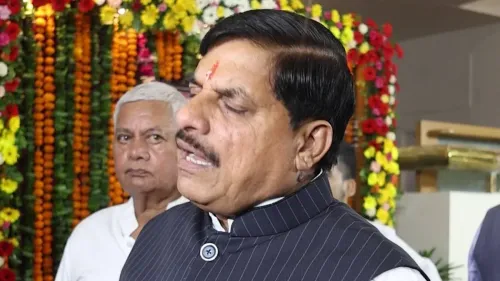
Madhya Pradesh Chief Minister Dr. Mohan Yadav on Friday, 12 June 2026 congratulated higher secondary students who cleared the state's first-ever Dwitiya Avsar Pariksha (Second Opportunity Examination) for Class 12, marking a significant shift in the state's board examination framework under the National Education Policy 2020. Out of a total 1,42,468 students who appeared, 84,871 passed the examination conducted by the Board of Secondary Education, Madhya Pradesh.
Context
In his post, Dr. Mohan Yadav described the initiative as a historic step taken in the interest of students across Madhya Pradesh. He wrote: 'राष्ट्रीय शिक्षा नीति-2020 के अंतर्गत... इस वर्ष पहली बार पूरक परीक्षा के स्थान पर द्वितीय अवसर परीक्षा आयोजित की गई' — meaning, 'Under the National Education Policy 2020, for the first time this year, a Second Opportunity Examination was held in place of the supplementary examination.' The Chief Minister added that the initiative had given 'a new opportunity for the dreams, confidence, and future of thousands of students.'
This is the first time Madhya Pradesh has formally replaced the traditional supplementary exam — historically seen as a remedial measure — with a rebranded, structurally repositioned second examination under the NEP 2020 framework.
Policy Backdrop
The National Education Policy 2020, approved by the Union Cabinet on 29 July 2020, replaced India's education framework that had been in place since 1986. A central recommendation of the policy is to reduce the high-stakes, single-attempt nature of board examinations and move toward more flexible, competency-based assessment models. Allowing students multiple structured attempts at board-level examinations is explicitly aligned with this philosophy.
Madhya Pradesh, governed by the BJP, has been among the states actively implementing school-level reforms under the NEP 2020 umbrella. The renaming and restructuring of the supplementary examination into the Dwitiya Avsar Pariksha signals a policy-level commitment to treating the second attempt not as a remedial fallback, but as an equal opportunity for students.
Stakeholders and Impact
The examination directly concerned 1,42,468 Class 12 students who had not cleared their board examinations in the primary attempt. Of these, 84,871 students — nearly 60 per cent — successfully passed, gaining eligibility to pursue higher education, vocational courses, or employment pathways that require a Class 12 certificate. For many students from rural and semi-urban Madhya Pradesh, clearing this examination opens access to college admissions and competitive examinations.
The Board of Secondary Education, Madhya Pradesh, which administers both Class 10 and Class 12 public examinations across the state, conducted the Dwitiya Avsar Pariksha 2026 as the implementing body for this reform.
What's Next
The success of Madhya Pradesh's first Dwitiya Avsar Pariksha is likely to inform how the state structures future examination cycles, potentially institutionalising the second-opportunity format as a permanent feature of the Class 12 calendar. Nationally, several other state boards and central bodies are watching such pilots as they consider their own NEP 2020-aligned examination reforms. A broader rollout of twice-yearly or structured multi-attempt board formats — including possible adaptations by the CBSE — remains a key policy question for India's school education sector in the coming academic years.
Point of View
Consistent with NEP 2020's student-welfare philosophy. For the BJP government in Bhopal, the reform offers a tangible, student-facing deliverable under the Centre's flagship education policy, reinforcing alignment between state and central priorities. The near-60 per cent pass rate among appearing students will be cited as early evidence of the reform's effectiveness, though the more meaningful test will be whether the format is institutionalised and expanded to Class 10 in subsequent years. Nationally, this move adds pressure on other state boards still running conventional supplementary formats to accelerate their own NEP-aligned transitions.
NationPress
26 Oct 2026
Frequently Asked Questions
What is the Dwitiya Avsar Pariksha in Madhya Pradesh?
The Dwitiya Avsar Pariksha is a second-opportunity board examination introduced in Madhya Pradesh in 2026, replacing the traditional supplementary exam for Class 12 students under the National Education Policy 2020 framework.
How many students passed the MP Dwitiya Avsar Pariksha 2026?
Out of 1,42,468 students who appeared in the Dwitiya Avsar Pariksha 2026 for Class 12, a total of 84,871 students passed the examination.
What is the difference between a supplementary exam and the Dwitiya Avsar Pariksha?
While both serve students who did not clear their board exams in the primary attempt, the Dwitiya Avsar Pariksha is a structurally repositioned examination under NEP 2020, treating the second attempt as an equal opportunity rather than a remedial measure.
Is the Dwitiya Avsar Pariksha applicable to Class 10 as well?
The 2026 Dwitiya Avsar Pariksha was conducted for Class 12 (Higher Secondary) students by the Board of Secondary Education, Madhya Pradesh. Its extension to Class 10 has not been officially announced.
Which states are implementing NEP 2020 board exam reforms?
Several Indian states have been introducing examination reforms aligned with NEP 2020, including shifting from single-attempt high-stakes exams to more flexible formats. Madhya Pradesh's Dwitiya Avsar Pariksha is among the more structured implementations of this approach at the Class 12 level.