MP CM Office unveils Indore Economic Region plan at Urban Conclave

Synopsis
The Chief Minister's Office of Madhya Pradesh announced the launch of the Indore Economic Region Economic Plan at MP Urban Growth Conclave 2.0, co-developed with NITI Aayog under the G-Hub initiative, targeting investment-led integrated regional urban development.
Key Takeaways
The Indore Economic Region (IER) Economic Plan will be formally launched at MP Urban Growth Conclave 2.0 on 28 October 2026 .
The plan was co-developed with NITI Aayog under the G-Hub initiative , giving it strong central institutional backing.
Mohan Yadav is directly associated with the launch, underlining top political ownership.
Indore was among the first 20 cities selected under India's Smart Cities Mission in 2015 , providing the reform foundation for this regional scale-up.
The IER framework positions the broader Indore region — not just the city — as a unified economic and investment zone.
The plan aligns with India's broader cooperative-federalism model of NITI Aayog-facilitated state economic planning.
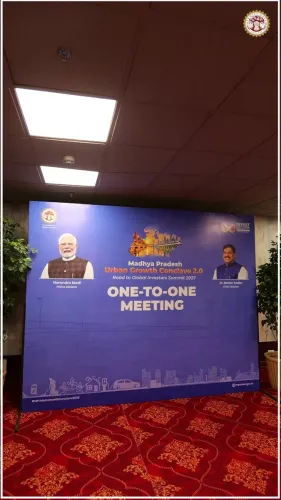
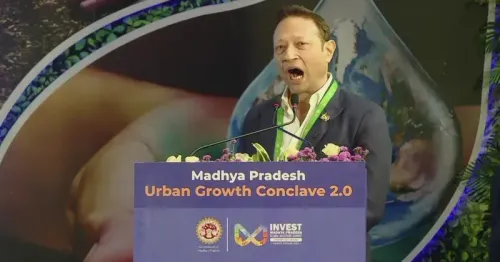
A blueprint for transforming Indore into the anchor of an integrated economic powerhouse is about to go public. The Chief Minister's Office of Madhya Pradesh announced on Wednesday, 28 October 2026 that the Indore Economic Region (IER) Economic Plan — developed in partnership with NITI Aayog under the G-Hub initiative — will be launched at MP Urban Growth Conclave 2.0, laying out a comprehensive roadmap for investment-led urban development across the region.
What the IER Economic Plan promises for Indore's region
The plan is designed around integrated regional growth — knitting together urban infrastructure, economic investment corridors, and municipal governance into a single coherent vision. Chief Minister Dr. Mohan Yadav, tagged directly in the post, anchors the political commitment to the initiative. The conclave, styled as MPUrbanGrowthConclave 2026, serves as the formal launchpad — signalling that this is not a working-paper exercise but an actionable economic agenda going live before investors and policymakers simultaneously.
The NITI Aayog partnership gives the plan significant institutional weight. Since replacing the Planning Commission in 2015, NITI Aayog has increasingly served as the architecture firm behind state-level regional economic blueprints — bringing data frameworks, inter-ministerial linkages, and credibility with the investment community that individual state departments cannot always command on their own.
Indore's long run as MP's urban laboratory
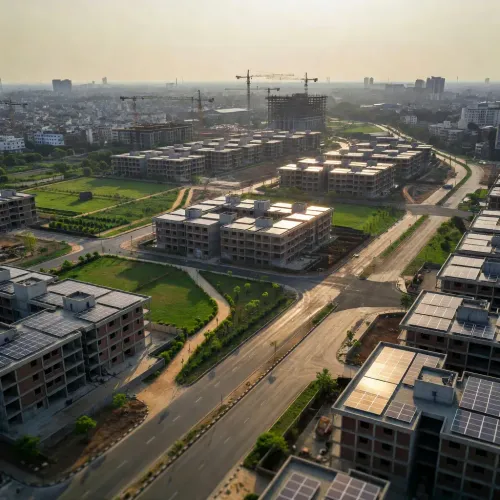
Indore, Madhya Pradesh's largest city, has been at the front of national urban reform for over a decade. Selected as one of the first 20 cities under the Smart Cities Mission in 2015, it has since layered national schemes — including AMRUT — onto a foundation of relatively strong municipal governance. The city has consistently ranked at or near the top of national cleanliness surveys, which has bolstered investor confidence and made it a credible candidate for the kind of economic-region designation the IER plan now formalises.
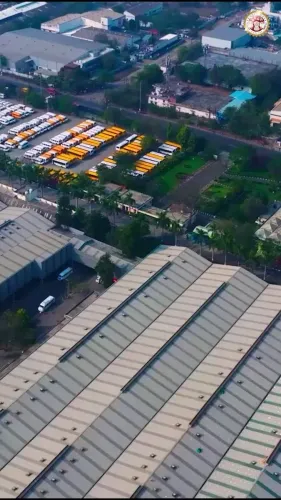
The IER framework extends that logic outward: instead of treating Indore as a standalone smart city, it positions the surrounding region as a unified economic zone — capturing supply chains, land banks, logistics nodes, and satellite towns in a single investment narrative. That is a meaningful scale-up, and one that mirrors approaches already tested in larger metropolitan regions elsewhere in India.
Cooperative federalism in action — and what comes next
The Madhya Pradesh model fits a clear national pattern. Central and state governments have increasingly co-produced regional economic plans through NITI Aayog, using the think tank as a neutral convenor that can align state ambitions with central scheme funding and private-sector confidence. For CM Dr. Mohan Yadav, who took office in December 2023, the IER launch is an early, concrete deliverable on the urban-growth agenda his government has been building toward.
The immediate questions investors and urban planners will ask: What investment commitments are on the table at the conclave? Which pilot infrastructure projects get first-mover funding? And will the G-Hub framework be replicated for other emerging economic regions within Madhya Pradesh? The answers will determine whether this blueprint stays a roadmap — or becomes a construction site.
Point of View
Longer-horizon investment. For CM Dr. Mohan Yadav, still in his first full year in office, anchoring a NITI Aayog-endorsed regional plan to his name is a meaningful signal of governance ambition. The G-Hub framework, if it gains traction at the conclave, could also set a template that other aspirational-state governments adopt under the cooperative federalism architecture. The real test will be whether investment commitments announced at the conclave translate into ground-level project announcements within the next two quarters.
NationPress
28 Oct 2026
Frequently Asked Questions
What is the Indore Economic Region Economic Plan?
It is a government-backed blueprint for integrated regional growth and investment-led urban development centred on Indore, Madhya Pradesh's largest city, co-developed with NITI Aayog under the G-Hub initiative and to be launched at MP Urban Growth Conclave 2.0.
What is the G-Hub initiative?
The G-Hub initiative is the framework under which NITI Aayog partnered with Madhya Pradesh to develop the Indore Economic Region Economic Plan; specific details of its scope have not yet been officially published.
What is MP Urban Growth Conclave 2.0?
MP Urban Growth Conclave 2.0 is a state-level policy and investment event organised by the Madhya Pradesh Urban Development Department, at which the Indore Economic Region plan is being formally unveiled on 28 October 2026.
What is NITI Aayog's role in state economic planning?
NITI Aayog, India's apex public policy think tank established in 2015, facilitates cooperative federalism by co-producing regional economic plans with state governments, providing data frameworks, inter-ministerial linkages, and policy credibility.
Why is Indore chosen for this economic region plan?
Indore is Madhya Pradesh's largest city, was among the first 20 cities selected under India's Smart Cities Mission in 2015, and has a strong municipal governance track record, making it the natural anchor for a broader regional economic zone.