MP Launches Sugam Parivahan Seva with GPS, CCTV on Buses
Synopsis
Madhya Pradesh's CMO announced the Mukhya Mantri Sugam Parivahan Seva on November 15, 2026, deploying CCTV cameras, GPS tracking, and real-time monitoring on state buses to make public transport safer and smarter for daily commuters.
Key Takeaways
The Chief Minister's Office of Madhya Pradesh announced the Mukhya Mantri Sugam Parivahan Seva on November 15, 2026 .
The scheme deploys CCTV cameras , GPS tracking , and real-time bus monitoring across the state's public bus fleet.
The initiative is implemented by the Madhya Pradesh Transport Department under CM Dr.
Madhya Pradesh had earlier introduced GPS on select bus routes in the 2010s and early 2020s ; this scheme consolidates and expands those efforts.
The move aligns with national frameworks including the Smart Cities Mission and the National Urban Mobility Policy .
District-wise rollout timelines and fleet coverage numbers have not yet been officially disclosed.
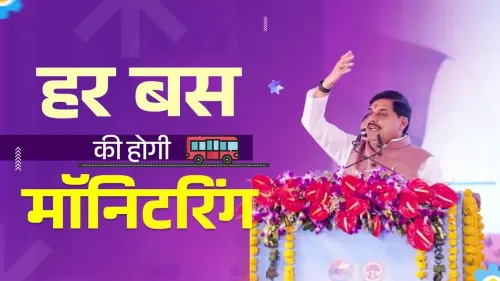
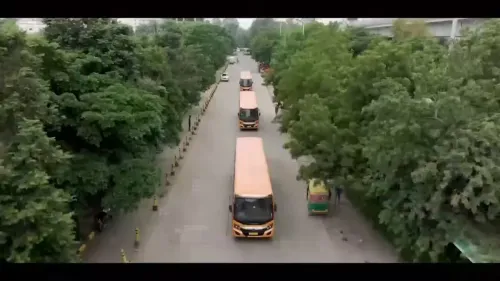
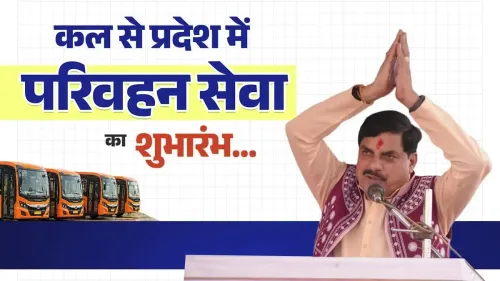
Every bus journey in Madhya Pradesh is getting a digital upgrade — and the state government wants commuters to know it. The Chief Minister's Office of Madhya Pradesh announced on Sunday, November 15, 2026, that the Mukhya Mantri Sugam Parivahan Seva is rolling out CCTV cameras, GPS tracking, and real-time bus monitoring across the state's public transport network, positioning Madhya Pradesh as a frontrunner in smart urban mobility.
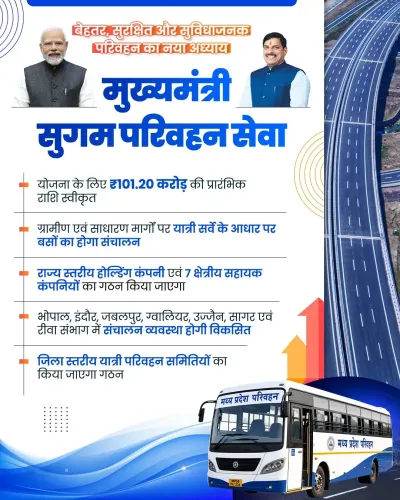
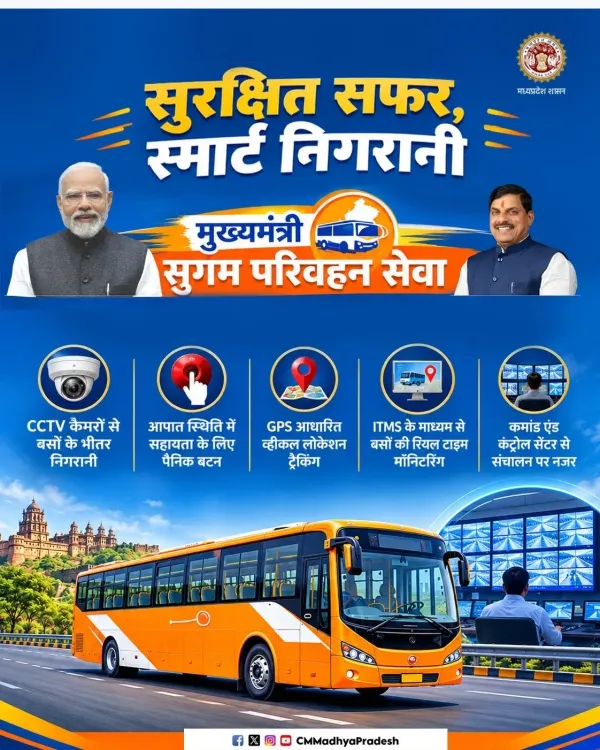
The post, shared by the official CMO account tagging Chief Minister Dr. Mohan Yadav and the Madhya Pradesh Transport Department, framed the initiative in both Hindi and English: 'मुख्यमंत्री सुगम परिवहन सेवा' — the Chief Minister's Smooth Transport Service — with the stated goal of making 'every journey safe and smart' ('हर सफर सुरक्षित और स्मार्ट').
What the Sugam Parivahan Seva Actually Does
At its core, the scheme deploys three interlocking technologies. CCTV cameras inside and outside buses create an on-board surveillance layer that deters harassment and captures incident records. GPS tracking pins each bus on a live map, giving transport officials — and potentially passengers — accurate location data. Real-time monitoring ties both feeds into a central system, enabling operators to respond to breakdowns, delays, or security concerns without waiting for a driver's call.
Taken together, the trio addresses the two most persistent complaints about state bus travel in India: physical safety, particularly for women passengers, and operational unreliability. The scheme is led by the Madhya Pradesh Transport Department, the state agency that oversees bus operations, vehicle regulation, and road safety enforcement.
MP's Transport Tech Timeline — and the Bigger National Picture
This is not Madhya Pradesh's first brush with digital transport tools. The state had introduced GPS tracking on select routes in earlier phases during the 2010s and early 2020s, but coverage remained patchy and the monitoring back-end was limited. The Sugam Parivahan Seva appears to be a consolidation and expansion of those earlier experiments under a single branded scheme.
Nationally, the push fits squarely within two central frameworks: the Smart Cities Mission and the National Urban Mobility Policy, both of which explicitly encourage states to embed technology in public transport. Several other states have already rolled out comparable integrated monitoring systems on their bus fleets. Madhya Pradesh's announcement signals it is closing that gap.
Who Benefits — and What Remains to Be Seen
The immediate beneficiaries are daily bus commuters across Madhya Pradesh's urban and semi-urban corridors, with women passengers and late-night travellers standing to gain most from the safety layer. Transport department staff gain a live operational dashboard. For CM Dr. Mohan Yadav, who has emphasised infrastructure and governance since taking office in December 2023, the scheme adds a visible, technology-forward credential ahead of a string of local body elections.
What the announcement does not yet specify — and what will ultimately determine the scheme's impact — is the district-wise rollout timeline, the total number of buses brought under live monitoring, and any independent data on whether safety incidents or passenger numbers shift once the system is fully operational. Those figures will be the real scorecard.
Madhya Pradesh has drawn the blueprint. Now commuters are waiting to see how many buses actually show up on that live map.
Point of View
Branding the initiative under his own title signals an intent to own the infrastructure narrative heading into a busy electoral cycle. The scheme's real test will come in the data: whether CCTV and GPS translate into measurable drops in incidents and improvements in on-time performance, or remain a monitoring layer that is live in name only. Madhya Pradesh's ability to publish transparent performance benchmarks will determine whether this is a genuine mobility upgrade or a well-packaged announcement.
NationPress
15 Nov 2026
Frequently Asked Questions
What is the Mukhya Mantri Sugam Parivahan Seva in Madhya Pradesh?
The Mukhya Mantri Sugam Parivahan Seva is a Madhya Pradesh government scheme that installs CCTV cameras, GPS tracking, and real-time monitoring systems on state public buses to improve passenger safety and operational efficiency.
Which department is implementing the MP bus monitoring scheme?
The Madhya Pradesh Transport Department, the state agency responsible for public bus operations and road safety, is implementing the scheme under the direction of Chief Minister Dr. Mohan Yadav.
How does GPS tracking help bus passengers in Madhya Pradesh?
GPS tracking pins each bus on a live map, allowing transport authorities to monitor routes in real time, respond faster to breakdowns or delays, and provide passengers with more reliable service information.
Is Madhya Pradesh the first Indian state to use CCTV on buses?
No. Several Indian states have already implemented CCTV and GPS monitoring on their bus fleets. Madhya Pradesh itself had GPS on select routes since the early 2020s; the Sugam Parivahan Seva consolidates and expands that coverage under a unified scheme.
When was the Mukhya Mantri Sugam Parivahan Seva announced?
The Chief Minister's Office of Madhya Pradesh announced the scheme on Sunday, November 15, 2026, via an official post on X, tagging CM Dr. Mohan Yadav and the MP Transport Department.