MP ambulance oxygen runs out, 21-year-old kidney patient dies in Mandla

Synopsis
A 21-year-old kidney patient allegedly died in a Madhya Pradesh ambulance because the oxygen cylinder ran dry three kilometres into his transfer — a detail captured on a pressure gauge video that has since gone viral. The Mandla Collector has ordered a four-member probe, but the case cuts deeper: it exposes chronic maintenance and oversight gaps in India's rural emergency transport network.
Key Takeaways
Ajit Baraiya , 21 , a kidney patient from Sunhara Mal village , died on 27 July during an ambulance transfer in Mandla, Madhya Pradesh .
His family alleged the 108 ambulance oxygen cylinder ran out approximately 3 kilometres into the journey to the district hospital.
A video purportedly showing the ambulance oxygen pressure gauge at zero surfaced after the incident.
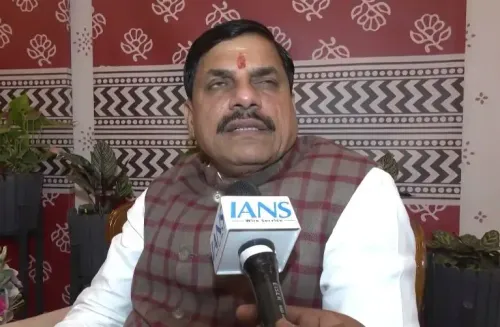
Mandla Collector Rahul Namdev Dhote constituted a four-member inquiry committee of doctors and revenue officials.
The Collector warned that if negligence is established, 'the strictest legal action' will be taken against those responsible.
A 21-year-old kidney patient died on 27 July while being transferred between hospitals in Mandla, Madhya Pradesh, after the oxygen cylinder in the ambulance allegedly ran empty mid-journey, his family has alleged. The district administration has since ordered a formal inquiry into the incident.
What Happened
Ajit Baraiya, a resident of Sunhara Mal village, was being shifted from Bamhani Hospital to the district hospital when, according to his family, the oxygen supply failed approximately three kilometres into the journey. They alleged that oxygen was not administered until after the ambulance had already departed, and that the cylinder was exhausted shortly thereafter, leaving Ajit gasping for breath before he died.
The family stated they had specifically informed the 108 ambulance service that Ajit was in severe respiratory distress and required continuous oxygen. A video that circulated following the incident purportedly shows the ambulance's oxygen pressure gauge reading zero, lending weight to the family's account, though its authenticity has not been independently verified.
Family's Account
Speaking to reporters outside a government hospital, Ajit's father said the tragedy was preventable. 'My son was struggling to breathe. I repeatedly told the ambulance staff that he needed oxygen. If oxygen had been available throughout the journey, my son would have survived,' he said.
The family alleged that basic operational protocols for emergency vehicles were not followed, and that the lapse directly cost Ajit his life.
Administration Orders Probe
Mandla Collector Rahul Namdev Dhote constituted a four-member inquiry committee comprising doctors and revenue officials to investigate the case. Describing the incident as 'unfortunate', Dhote said the panel would examine both the medical treatment provided to Ajit and the functioning of the ambulance service.
'The inquiry committee will investigate the medical aspects of the case as well as any negligence in the maintenance and operation of the ambulance. The report has been sought at the earliest,' Dhote said.
The Collector added that the probe would specifically assess whether the ambulance service adhered to operational guidelines prescribed for emergency vehicles. 'If the inquiry finds any violation of the rules or negligence on the part of any individual or agency, the strictest legal action will be taken,' he said.
Wider Context
The Mandla incident is not an isolated case. Across India, lapses in ambulance readiness — ranging from equipment failure to delayed response — have repeatedly come under scrutiny, particularly in rural and semi-urban areas where oversight mechanisms are weaker. The 108 emergency ambulance service, operated under public-private partnerships in several states including Madhya Pradesh, has faced criticism in the past over maintenance standards and staff training. This incident adds to a pattern of systemic gaps in last-mile emergency healthcare delivery.
What Comes Next
The inquiry committee's findings are awaited, and the Collector has indicated that the report is expected on priority. Depending on the outcome, action could be initiated against individual ambulance staff, the service operator, or both. The case has drawn attention to whether emergency vehicles in the state undergo mandatory pre-dispatch oxygen checks — a protocol whose enforcement remains unclear.
Point of View
Not merely an individual lapse. An oxygen cylinder that runs dry three kilometres into a journey points to a pre-dispatch check that either did not happen or was not enforced — a basic protocol failure. The 108 ambulance network, touted as a lifeline for rural India, operates under public-private contracts that often lack rigorous third-party audits of equipment readiness. Inquiries in such cases tend to produce reports; what they rarely produce is structural reform. Unless the Mandla probe results in mandatory pre-dispatch checklists with verifiable logs and punitive contract clauses for operators, the next family will be telling the same story at a different district hospital gate.
NationPress
1 Aug 2026
Frequently Asked Questions
What happened to Ajit Baraiya in Mandla, Madhya Pradesh?
Ajit Baraiya, a 21-year-old kidney patient, died on 27 July while being transferred by ambulance from Bamhani Hospital to the district hospital in Mandla. His family alleged the ambulance's oxygen cylinder ran out roughly three kilometres into the journey, leaving him unable to breathe.
What action has the administration taken?
Mandla Collector Rahul Namdev Dhote ordered a four-member inquiry committee comprising doctors and revenue officials to investigate the incident. The Collector has sought the report on priority and warned of the strictest legal action if negligence is found.
What does the viral video show?
A video that surfaced after the incident purportedly shows the oxygen pressure gauge inside the ambulance reading zero. The video has not been independently verified but is part of the evidence the inquiry committee is expected to examine.
Who is responsible for the 108 ambulance service in Madhya Pradesh?
The 108 emergency ambulance service in Madhya Pradesh operates under a public-private partnership model. The inquiry will assess whether the service provider followed prescribed operational and maintenance guidelines for emergency vehicles.
What broader issue does this case highlight?
The incident draws attention to systemic gaps in ambulance readiness across rural India, particularly regarding equipment maintenance, pre-dispatch checks, and staff training. It raises questions about whether mandatory oxygen-level verification protocols exist and are enforced before emergency vehicles are dispatched.