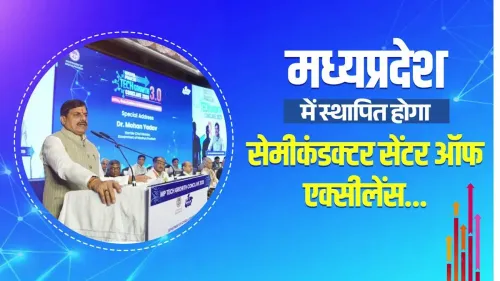
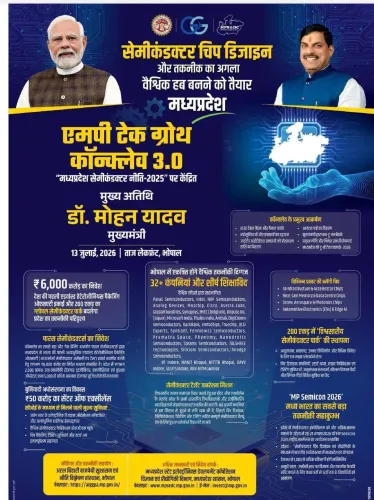
MP Semiconductor Summit 2026 kicks off in Indore under CM Yadav
Synopsis
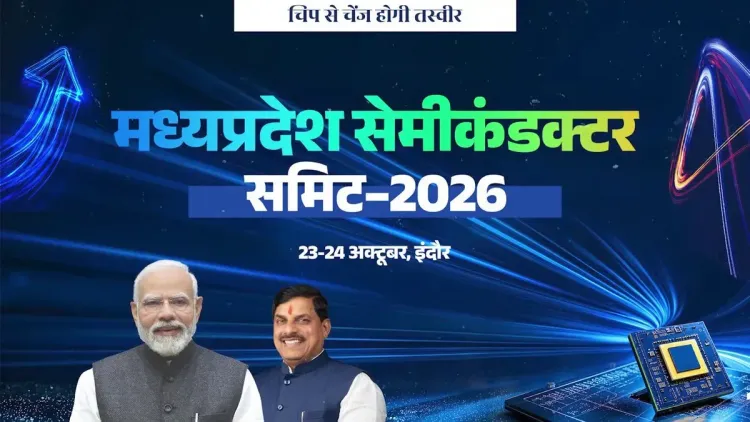
The Madhya Pradesh Semiconductor Summit 2026 opens in Indore on 23-24 October under Chief Minister Dr. Mohan Yadav, bringing together investors and researchers to deliberate on chip design, manufacturing, advanced packaging, AI infrastructure, and skill development.
Key Takeaways
Madhya Pradesh Semiconductor Summit 2026 is being held on 23-24 October 2026 in Indore .
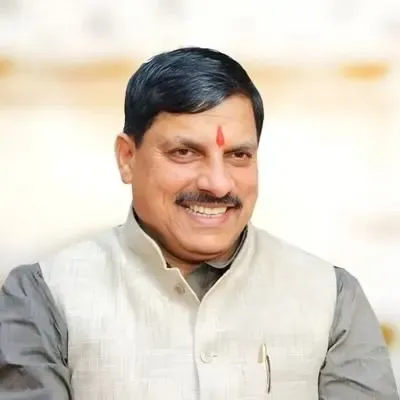
The summit is convened under Chief Minister Dr.
Mohan Yadav and organised with MAPIT , the state's IT promotion agency.
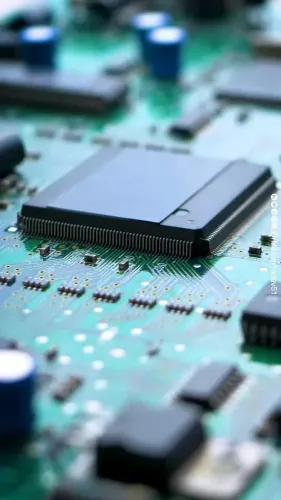
Focus areas include chip design, semiconductor manufacturing, advanced packaging, AI infrastructure, and electronics .
Investment, research, and skill development are the three pillars of the summit's agenda.
The event aligns with India's India Semiconductor Mission (2021) and the Atmanirbhar Bharat drive for chip self-reliance.
Madhya Pradesh joins a growing list of states competing to attract semiconductor investment as global supply-chain diversification accelerates.
Chips, circuits, and competitive ambition converge in Indore today — as the Madhya Pradesh Semiconductor Summit 2026, a two-day conclave convened under the leadership of Chief Minister Dr. Mohan Yadav, opens its doors on 23 October 2026 to chart the state's course in one of the world's most strategically contested industries.
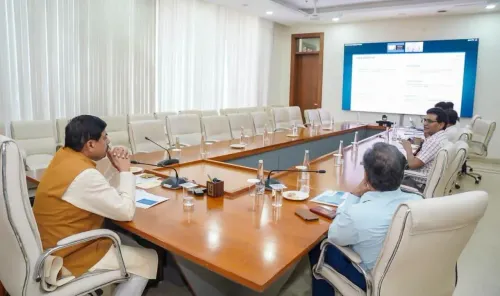
The Chief Minister's Office of Madhya Pradesh announced the summit on X, describing it as a platform for deliberation on investment, research, and skill development across chip design, semiconductor manufacturing, advanced packaging, AI infrastructure, and electronics. निवेश और नवाचार को नई उड़ान — 'new flight for investment and innovation' — is how the CMO framed it. The event, running through 24 October 2026, is being organised in partnership with MAPIT (Madhya Pradesh Agency for Promotion of Information Technology).
Why Indore, why now
Indore is not a random choice. Madhya Pradesh's commercial capital has steadily positioned itself as a tech-services hub, and the state government is betting that semiconductor investment — currently a gold rush across India — can find fertile ground here. The summit arrives as India's broader push for chip self-reliance, anchored by the India Semiconductor Mission launched in 2021 under Atmanirbhar Bharat, has supercharged competition among states to attract design houses and fabrication-adjacent facilities.
Global supply-chain anxiety — crystallised by pandemic-era shortages and the geopolitical concentration of chip production in East Asia — has made semiconductor policy one of the rare arenas where every tier of Indian government, from the Centre down to the state, is moving with unusual urgency. Madhya Pradesh is now staking its claim.
Chip design to AI infrastructure: the full spectrum on the table
The summit's stated agenda is deliberately wide. It covers the entire value chain: chip design, the high-skill, high-margin end of the industry; semiconductor manufacturing; advanced packaging, the rapidly growing segment that global giants are racing to expand; AI infrastructure; and electronics broadly. Bringing this range under one roof signals that Madhya Pradesh is not targeting a single niche — it wants conversations that could seed anything from design start-ups to assembly operations.
Skill development is an explicit pillar of the agenda, reflecting a practical reality: India's semiconductor ambitions have long outpaced its available talent pipeline. A state that can credibly promise a trained workforce will have a genuine edge in attracting investors looking beyond the big metro clusters.
MAPIT's role and the state's tech infrastructure play
MAPIT, the state's IT promotion agency, is co-organising the summit — a signal that this is an institutional effort, not a one-off event. The agency has historically served as the operational arm for Madhya Pradesh's digital and tech-sector outreach, giving the summit administrative muscle and continuity beyond the political calendar.
Whether the two days produce binding investment commitments or memoranda of understanding will determine how this summit is remembered — but the act of convening itself signals that Dr. Mohan Yadav's government is positioning technology and manufacturing as central planks of its economic identity, not afterthoughts.
India's semiconductor map is being drawn in real time. Madhya Pradesh just picked up the pen.
Point of View
But it is individual states that must convert central intent into ground-level investment. By staging this summit in Indore rather than Bhopal, the Yadav government signals it wants the commercial and industrial energy of the state's economic capital behind the pitch. The explicit inclusion of skill development alongside investment attraction is strategically shrewd: talent availability is the choke point most semiconductor investors cite for looking beyond established clusters. If Indore emerges from this summit with even a handful of design-centre commitments, it could anchor a longer-term technology identity for Madhya Pradesh that outlasts a single electoral cycle.
NationPress
23 Oct 2026
Frequently Asked Questions
What is the Madhya Pradesh Semiconductor Summit 2026?
It is a two-day state-level conclave held on 23-24 October 2026 in Indore, organised by the Madhya Pradesh government and MAPIT to attract investment and discuss research and skill development in semiconductor and electronics sectors.
Who is organising the MP Semiconductor Summit 2026?
The summit is being convened under Chief Minister Dr. Mohan Yadav and co-organised by MAPIT — the Madhya Pradesh Agency for Promotion of Information Technology.
What topics will be covered at the Indore semiconductor summit?
The summit will cover chip design, semiconductor manufacturing, advanced packaging, AI infrastructure, electronics, and skill development for the tech workforce.
How does this summit relate to India's national semiconductor policy?
The summit aligns with the India Semiconductor Mission launched in 2021, which provides financial incentives for chip design and manufacturing. States like Madhya Pradesh are now competing to attract investors enabled by that central framework.
Why is the semiconductor summit being held in Indore?
Indore is Madhya Pradesh's commercial and industrial hub and has been growing as a tech-services centre, making it a strategic venue to attract semiconductor investors and signal the state's economic ambitions.