CM Mohan Yadav: MP buys wheat from record 14 lakh farmers
Synopsis
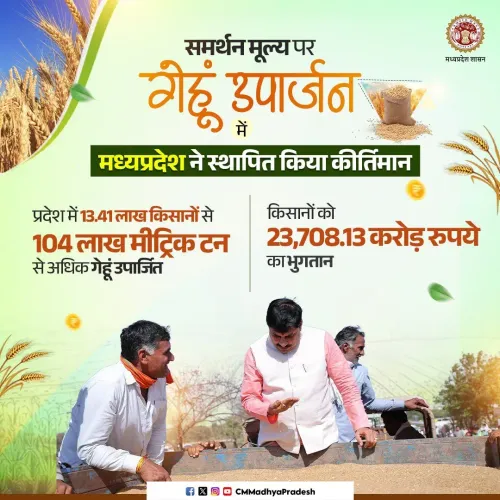
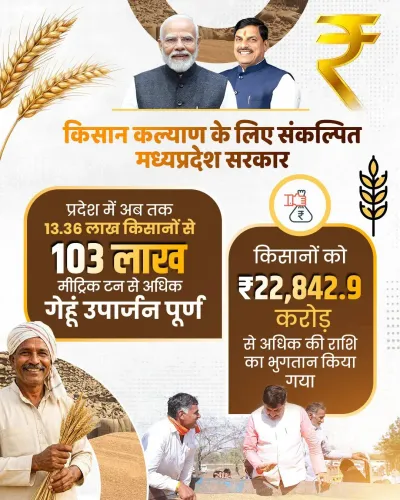
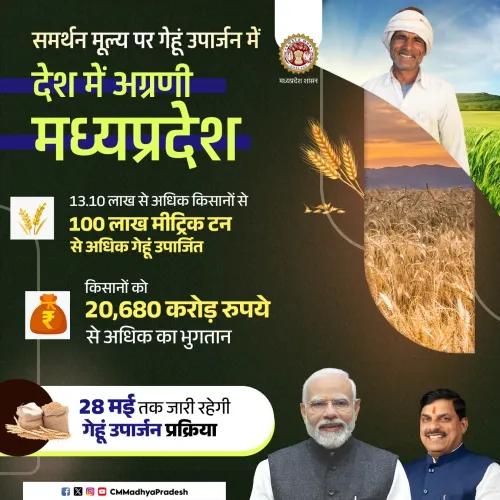
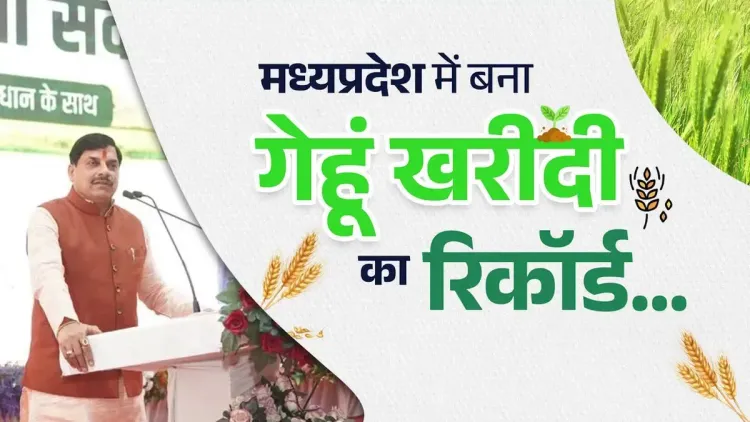
Madhya Pradesh has set a national record by purchasing wheat from approximately 14 lakh farmers — the highest farmer-participation figure in any state — Chief Minister Dr. Mohan Yadav announced on 31 May 2026, framing it as a milestone under the state's Farmer Welfare Year 2026 campaign.
Key Takeaways
Madhya Pradesh claims to have procured wheat from approximately 14 lakh farmers , the highest number in any Indian state.
Mohan Yadav described the achievement as fulfilling a government promise: 'We said it, we did it.' The milestone is being highlighted under the state's #किसान_कल्याण_वर्ष_2026 (Farmer Welfare Year 2026) campaign.
Procurement under the Minimum Support Price (MSP) system ensures farmers receive a government-guaranteed floor price, bypassing private market risks.
Final verification of the procurement figures is expected from the Food Corporation of India .
Madhya Pradesh has been expanding farmer registration and digital payment systems for MSP procurement since 2023–24 .
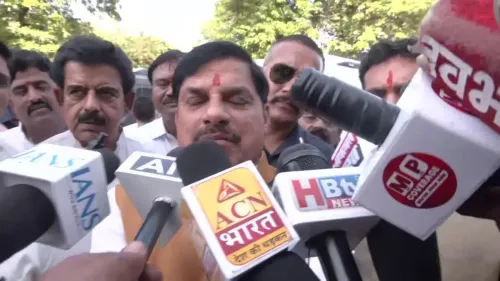
The Chief Minister's Office of Madhya Pradesh announced on Sunday, 31 May 2026, that the state has set a national record by procuring wheat from approximately 14 lakh farmers — the highest number of farmer-sellers in any state in the country. Chief Minister Dr. Mohan Yadav framed the achievement as proof of the government delivering on its promises, invoking the phrase 'Humne jo kaha, wo kiya' ('We said it, we did it').
Context
The announcement, made through the official @CMMadhyaPradesh handle and tagged to Dr. Mohan Yadav and the state agriculture ministry, positions Madhya Pradesh as the leading state in farmer participation under the wheat procurement drive for the current rabi marketing season. The government's declaration — 'We said it, we did it' — echoes a recurring campaign message of the state's BJP administration, which has consistently highlighted measurable agricultural outcomes since Dr. Yadav assumed office in December 2023.
The post was shared under the hashtag #किसान_कल्याण_वर्ष_2026 (Farmer Welfare Year 2026), suggesting the procurement milestone is being positioned as a centrepiece of a broader year-long farmer-welfare campaign.
Policy Backdrop
Madhya Pradesh has been among India's leading wheat-producing states since the early 2010s, with successive governments expanding the network of procurement centres and farmer registration under the Minimum Support Price (MSP) system. Under the MSP procurement model, state agencies purchase wheat directly from registered farmers at a government-guaranteed floor price, shielding cultivators from market volatility.
The state undertook a significant push in 2023–24 to widen farmer registration for MSP procurement and to integrate digital payment systems for faster disbursal. These structural improvements are widely credited with enabling higher farmer participation in subsequent seasons. Grain-surplus states across India have intensified such direct procurement drives both to support rural incomes and to contribute to central foodgrain pool requirements.
Stakeholders and Impact
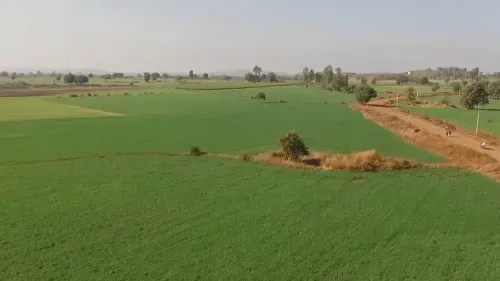
The primary beneficiaries of this procurement drive are Madhya Pradesh's wheat farmers, who gain assured income through MSP-linked sales rather than having to negotiate with private traders. With approximately 14 lakh farmers participating, the scale of the operation implies a substantial flow of government funds directly into rural households across the state's wheat belt — districts such as Hoshangabad, Vidisha, Sehore, and Raisen that form the core of the state's rabi output.
State procurement agencies and the Food Corporation of India (FCI) are the institutional stakeholders responsible for storage, logistics, and payment settlement. A record farmer-participation figure also carries political weight, reinforcing the government's narrative of farmer-first governance ahead of any future electoral cycle.
What's Next
Final, audited procurement figures for the 2025–26 rabi marketing season are expected to be released by the Food Corporation of India, which will independently verify state-level claims. Observers will watch whether Madhya Pradesh translates this procurement record into concrete announcements — such as expanded storage infrastructure or enhanced MSP bonuses — under the #किसान_कल्याण_वर्ष_2026 framework.
If the state sustains this trajectory, it could set a benchmark that pressures other major wheat-producing states to accelerate their own procurement operations, intensifying competition for farmer registrations and central pool allocations in the seasons ahead.
Point of View
Making the claim more relatable to rural voters than an abstract tonnage statistic. CM Dr. Mohan Yadav's invocation of 'We said it, we did it' signals an intent to convert administrative outputs into electoral capital ahead of the 2026–27 cycle. The announcement fits a broader pattern of BJP-governed states competing on measurable agricultural welfare metrics to consolidate their farmer-voter base. Until the Food Corporation of India releases audited data, however, the '14 lakh farmers' figure remains a government claim rather than a verified record.
NationPress
14 Oct 2026
Frequently Asked Questions
How many farmers did Madhya Pradesh buy wheat from in 2026?
The Madhya Pradesh government announced it procured wheat from approximately 14 lakh farmers in the current rabi marketing season, which it claims is the highest figure for any state in India. The number is yet to be independently verified by the Food Corporation of India.
What is the MSP wheat procurement scheme in Madhya Pradesh?
Under the Minimum Support Price (MSP) procurement scheme, state agencies purchase wheat directly from registered farmers at a government-guaranteed floor price. This protects farmers from market price fluctuations and ensures a stable income from their rabi crop.
Who is CM Mohan Yadav and what has he done for farmers?
Dr. Mohan Yadav is the Chief Minister of Madhya Pradesh , in office since December 2023 . His administration has focused on expanding farmer registration for MSP procurement, integrating digital payment systems, and launching the Farmer Welfare Year 2026 campaign.
What is Kisan Kalyan Varsh 2026 in Madhya Pradesh?
Kisan Kalyan Varsh 2026 ( किसान_कल्याण_वर्ष_2026 ) is a year-long farmer-welfare campaign framing by the Madhya Pradesh government, under which agricultural milestones such as the record wheat procurement are being announced and publicised.
Is Madhya Pradesh the largest wheat-producing state in India?
Madhya Pradesh is among India's leading wheat-producing states, particularly strong in rabi output from districts such as Hoshangabad, Sehore, and Vidisha. While it competes with states like Punjab and Haryana in total production, its 2026 claim relates specifically to the number of farmers who sold wheat to government agencies under MSP procurement.